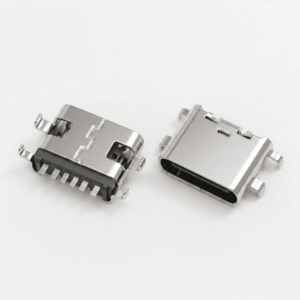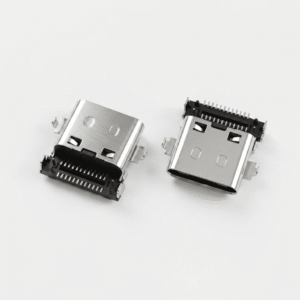
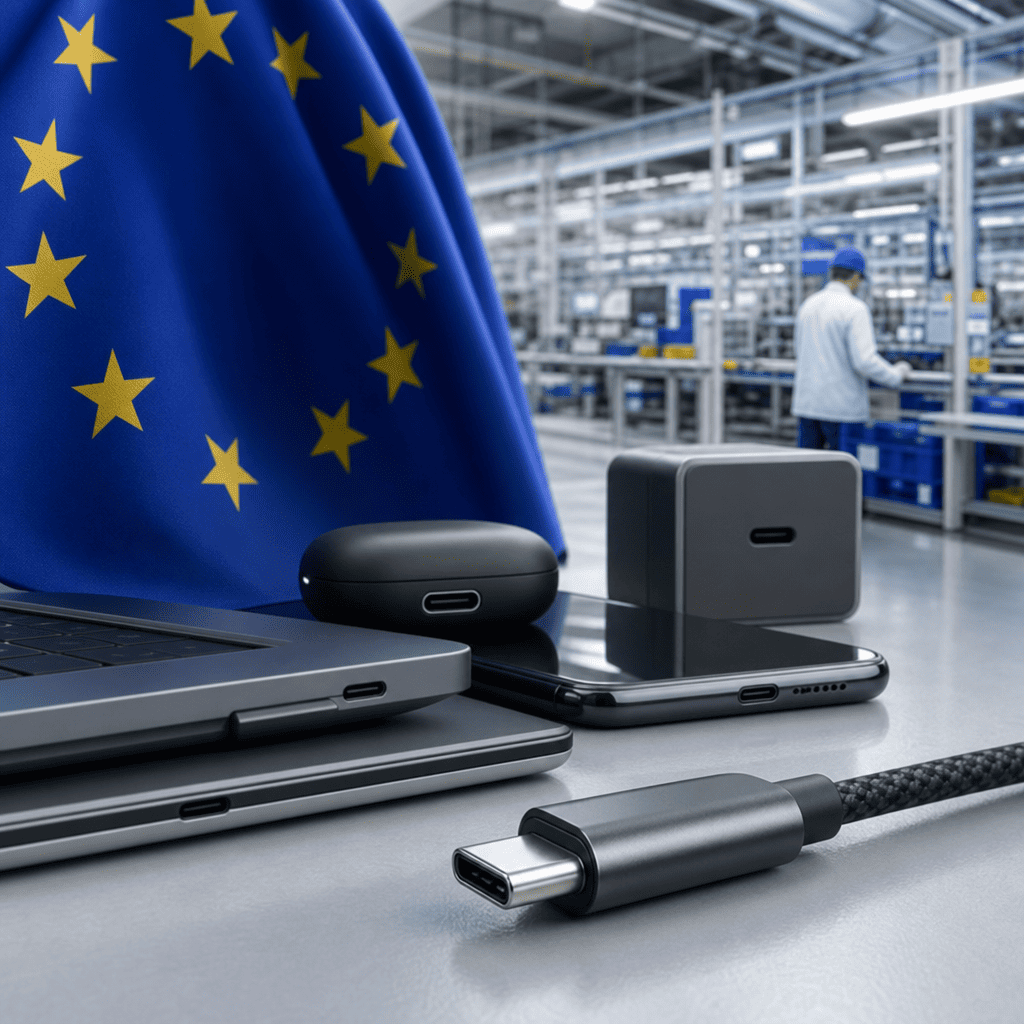
The European Union's mandate requiring USB-C ports on all portable electronics by 20241 has sent ripples through supply chains worldwide. Device makers are scrambling to redesign products. Distributors are evaluating inventory risks. But most discussions miss the real issue: this isn't about swapping one connector for another.
The USB-C mandate forces manufacturers to rethink protocol compatibility, certification pathways, and inventory transitions simultaneously. The businesses that survive this shift won't be those who react fastest—they'll be the ones who understand that USB-C is a connector standard hiding multiple internal specifications, each with different cost structures and compliance requirements.
When clients contact us at EDOM Electronics asking for USB-C cable quotes, I notice a pattern. They treat the regulation as a simple plug replacement. But after 15 years manufacturing wire harnesses, I've learned that the connector is the easiest part. The real challenge lies beneath the surface—in wire gauge choices, protocol chips, and certification documentation that determines whether your product actually complies.
What Does the USB-C Mandate Actually Require?
The regulation sounds straightforward: all phones, tablets, cameras, headphones, and portable speakers sold in the EU must use USB-C charging ports by late 20242. Laptops get until 20263. But the devil lives in the details that most summaries skip.
The mandate targets the physical charging port. It does not specify internal data protocols or power delivery capabilities. This means a device can legally use a USB-C port with USB 2.0 speeds inside, or include Power Delivery support for fast charging. Both satisfy the regulation, but they require completely different cable constructions.
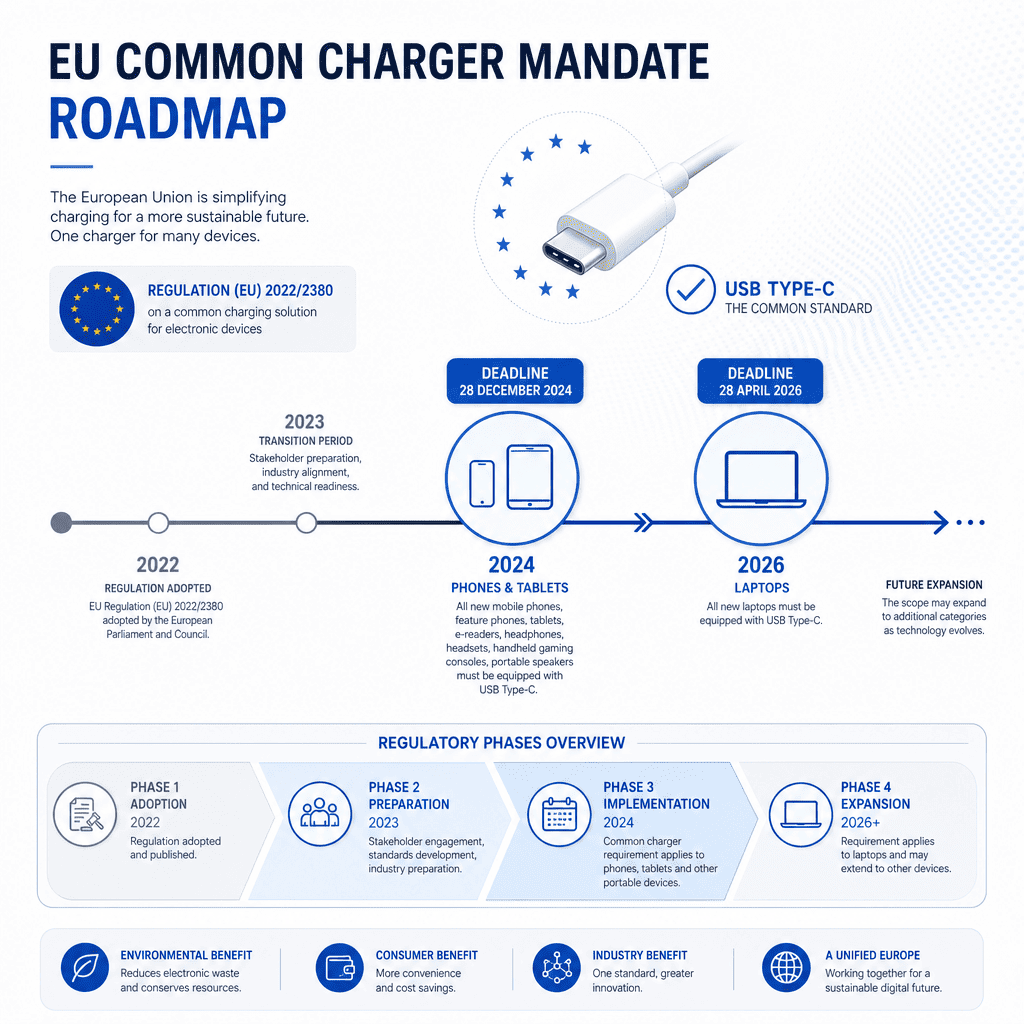
The regulation also includes exemptions. Medical devices, industrial equipment, and products where water resistance makes USB-C impractical get carve-outs. More importantly, existing inventory doesn't need immediate disposal. Products manufactured before the deadline can still be sold until stock depletes. This creates a transition window that smart manufacturers can exploit.
We see confusion about this at the quoting stage. A client will send a request: "We need USB-C cables to replace our Micro-B inventory." My first question back: "What does your device actually need?" If their product only charges and doesn't transfer data, they don't need the expensive shielded cables required for USB 3.1 speeds. If their device doesn't support fast charging, they don't need Power Delivery negotiation chips. These choices change cable costs by 30-50%.
The enforcement mechanism matters too. The regulation applies at the point of sale in EU markets. This means US or Asian manufacturers don't face immediate compliance pressure for domestic sales. But if you export to Europe—or plan to—the deadline is hard. And other regions are watching. If California or India adopts similar rules, you'll face a patchwork of requirements that makes early adoption cheaper than scrambling later.
Why Doesn't Switching Connectors Solve the Problem?
Most manufacturers think the transition works like this: source USB-C connectors, update product packaging, ship new units. We've had clients request quotes assuming the cable internal structure stays identical except for the plug. This approach fails in three ways.
First, USB-C connectors use different pin configurations than Micro-B or Lightning. A USB 2.0 cable has four wires. A USB-C cable that supports USB 3.1 and Power Delivery needs up to 24 pins4 with specific wire gauges and shielding. If you keep your old cable structure and just swap the ends, you'll get a connector that physically fits but doesn't perform.
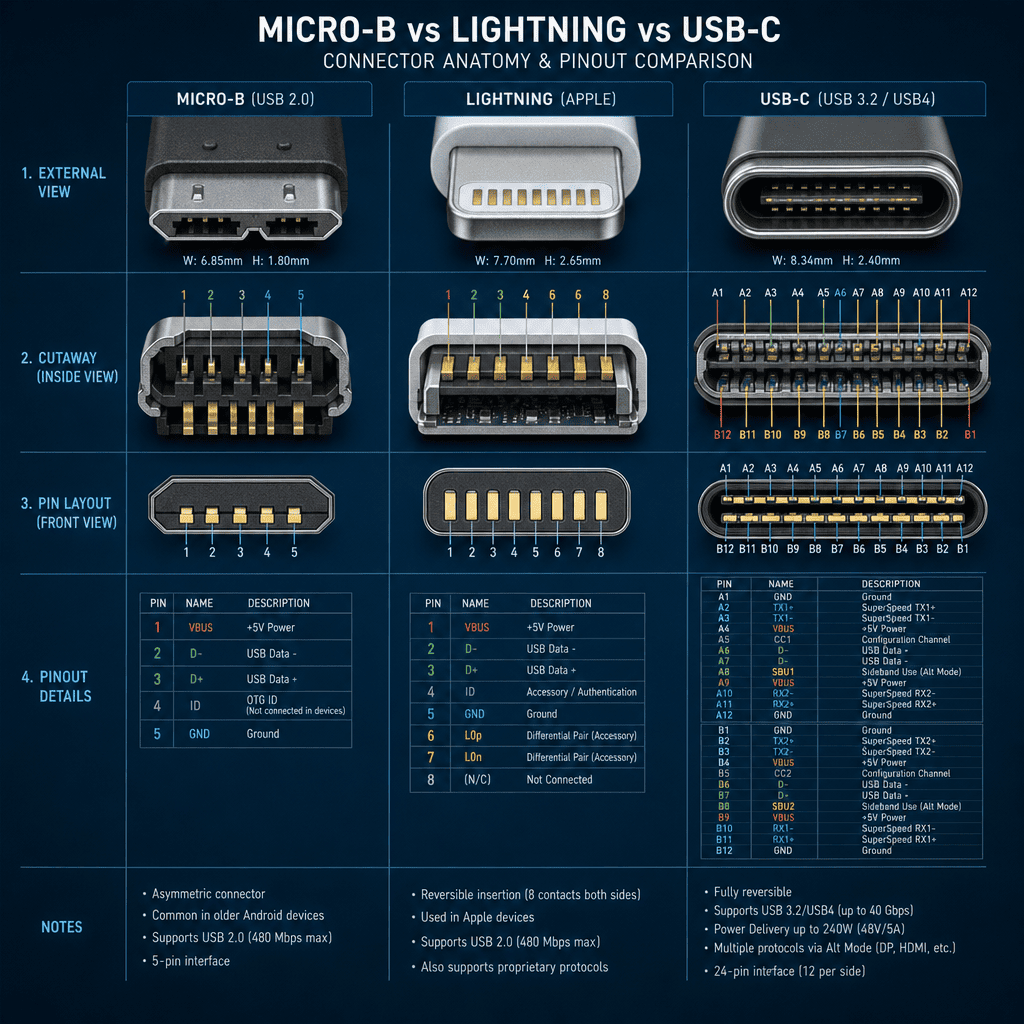
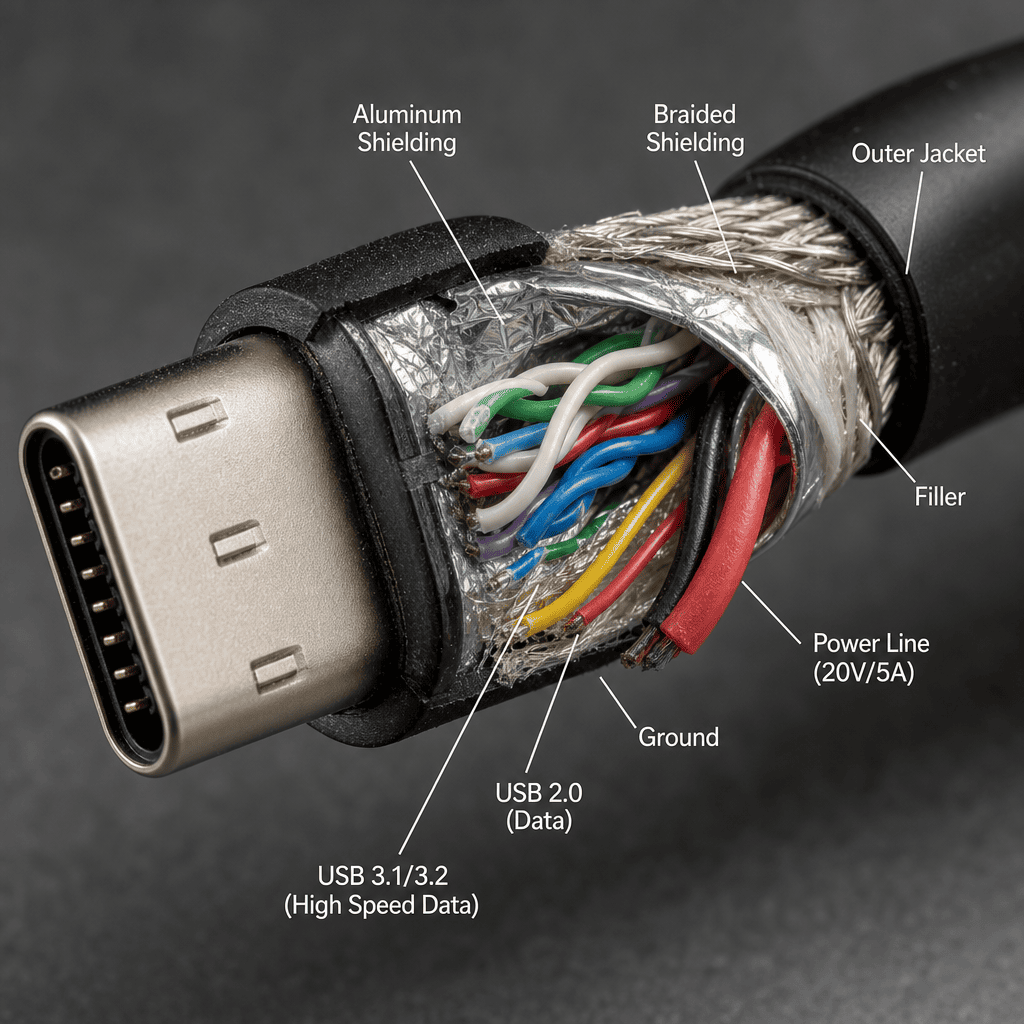
I've seen this happen. A client sent us a competitor's sample—USB-C on both ends, but when we opened it, the internal structure only had four wires. It charged their device slowly. It couldn't transfer data faster than USB 2.0 speeds. Technically legal under the EU mandate, but customers complained. Returns spiked. The client came back asking for a proper cable with full USB 3.1 support, which cost 40% more because we had to add shielding and thicker power wires.
Second, certification requirements change. A basic Micro-B charging cable might only need CE marking for electrical safety. But a USB-C cable claiming Power Delivery support must pass USB-IF certification tests5. If your cable can't prove it negotiates power correctly, device makers won't accept it. They can't risk shipping products that fail their own compliance testing because a supplier's cable didn't meet spec.
We build this into our quotes now. When a client asks for USB-C cables, we clarify what certifications they need before we finalize pricing. USB 2.0 speed? We use standard copper wire. USB 3.1? We add shielding and adjust wire gauge. Power Delivery? We include negotiation chips and recommend testing protocols. Each step up adds cost, but it prevents the disaster of delivering 10,000 cables that fail the client's incoming QC.
Third, inventory management becomes complex. You can't flip a switch and convert all existing stock to USB-C overnight. Most of our clients manufacture multiple product lines. Some need USB-C immediately for EU export models. Others serve domestic markets where the mandate doesn't apply. Running parallel SKUs—old connector for certain markets, USB-C for others—means juggling MOQs, lead times, and warehouse space.
We've started offering mixed-batch production. A client orders 5,000 Micro-B cables and 5,000 USB-C cables in one purchase order. This lets them meet MOQ thresholds while transitioning gradually. They phase out old inventory without getting stuck with obsolete stock. It requires more coordination on our end—separate molds, different QC checks—but it solves the real-world problem better than forcing an all-or-nothing switch.
How Do Protocol Differences Inside USB-C Affect Your Costs?
Here's what confuses people: USB-C is a connector shape, not a performance standard. You can have three cables that all look identical but work completely differently inside. This matters because regulations care about the port, but your customers care about what the cable actually does.
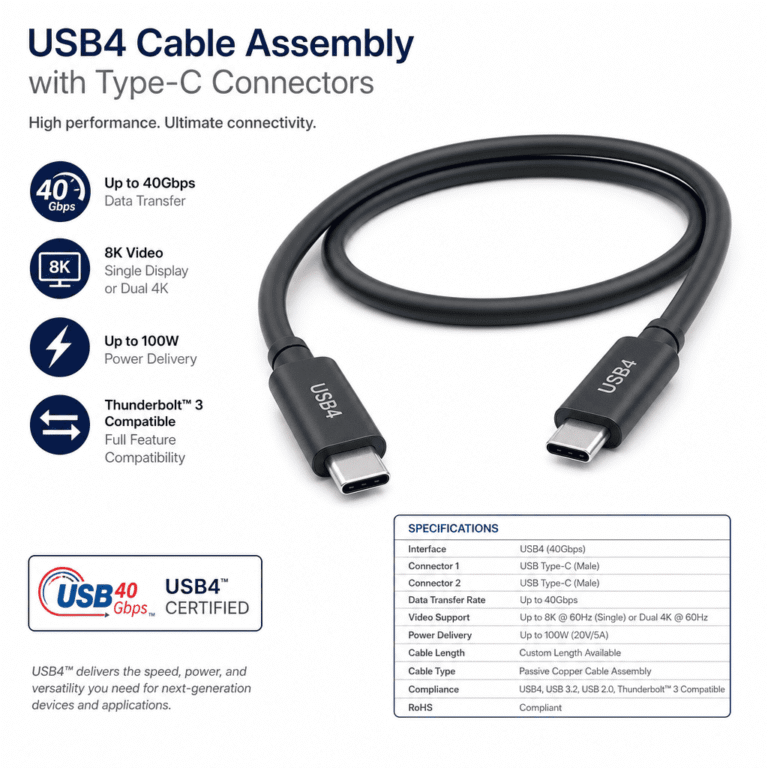
A USB-C cable can support USB 2.0 speeds (480 Mbps), USB 3.1 Gen 1 speeds (5 Gbps), USB 3.1 Gen 2 speeds (10 Gbps), or Thunderbolt 3 (40 Gbps)6. It can deliver 5V/3A standard charging, or use Power Delivery to negotiate up to 100W7. Each variant requires different internal construction, and that construction determines your cost structure.
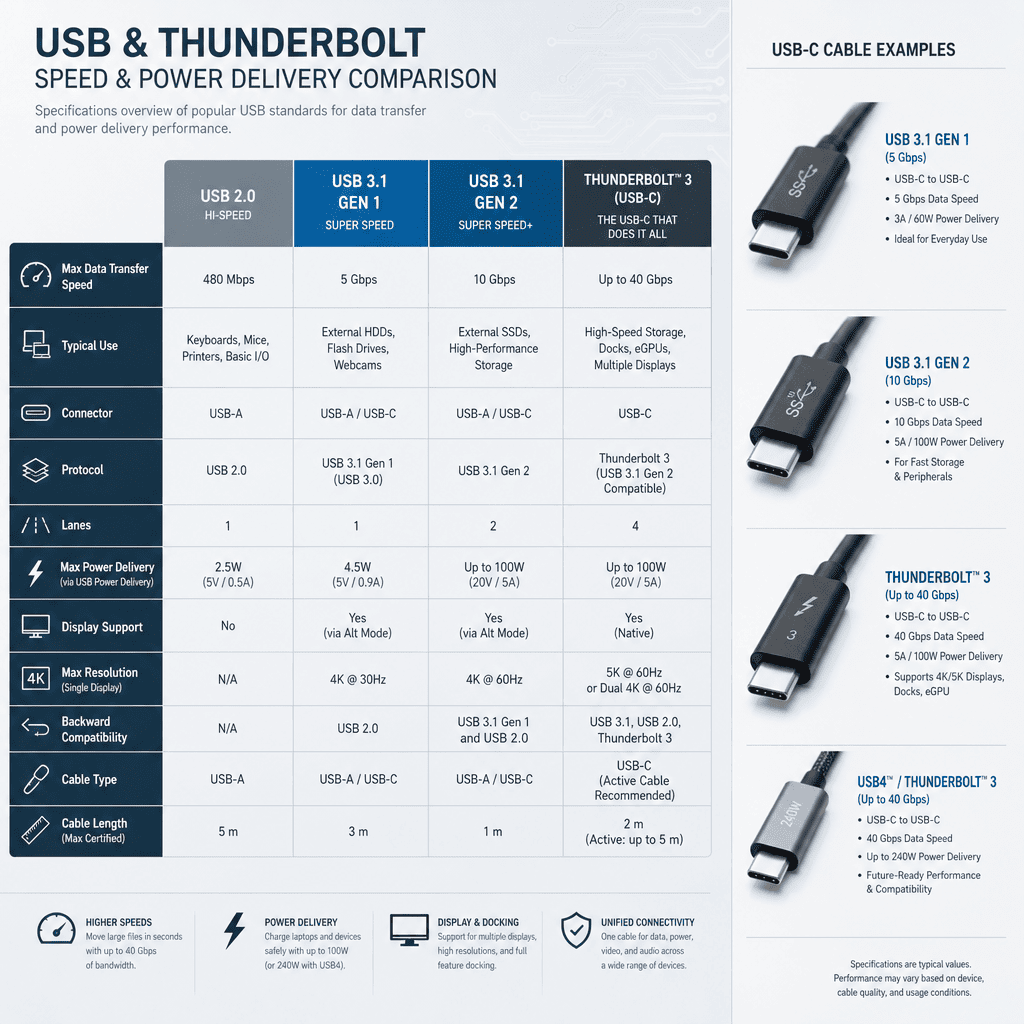
Let me break this down with real numbers from our production floor. A basic USB-C cable with USB 2.0 support uses four wires—two for power, two for data. The connector molding is straightforward. We don't need shielding because data speeds are low. This cable costs us about $0.45 per unit at 10,000-piece volumes. It satisfies the EU mandate because it has the right port shape. It works for simple charging applications.
Now consider a USB 3.1 Gen 1 cable. We need to add four more wires for SuperSpeed data lanes. Those wires need twisted-pair construction and foil shielding to prevent electromagnetic interference8. The connector molding gets more complex because we're terminating more pins. This cable costs us about $0.72 per unit at the same volume. That's a 60% price increase for 10x faster data transfer.
Add Power Delivery support, and costs jump again. We need thicker power wires—usually 22 AWG instead of 28 AWG9—to handle higher current safely. We add an E-marker chip in the cable that communicates with the device to negotiate voltage and current levels. This chip alone adds $0.15-0.20 to component costs. Total cable cost reaches $0.95 per unit. But now your customer can fast-charge a laptop, not just a phone.
The decision matrix looks like this:
| Cable Type | Data Speed | Max Power | Cost per Unit (10k MOQ) | Use Case |
|---|---|---|---|---|
| USB-C 2.0 | 480 Mbps | 15W | $0.45 | Basic charging, legacy devices |
| USB-C 3.1 Gen 1 | 5 Gbps | 15W | $0.72 | Data transfer, standard charging |
| USB-C 3.1 Gen 1 + PD | 5 Gbps | 100W | $0.95 | Fast charging, laptop power |
| USB-C 3.1 Gen 2 + PD | 10 Gbps | 100W | $1.25 | High-speed peripherals, professional use |
Most clients don't need the top-tier option. But they often don't know which tier they actually need until we ask specific questions about their product requirements. This is where manufacturer experience matters. We've seen enough applications to guide the decision. If your device doesn't have USB 3.0 hardware inside, spending extra on Gen 2 cables wastes money. If your device only draws 18W maximum, you don't need 100W Power Delivery cables.
The certification layer adds another variable. USB-IF maintains a certified cable list. Getting your cable on that list costs $4,000-8,000 depending on what performance claims you make10. For large-volume manufacturers, that's a rounding error. For smaller brands or traders working on tight margins, it's a real expense. We don't provide certification ourselves—we're a manufacturer, not a testing lab—but we can build cables to spec so that when our clients send samples to certified labs, they pass on the first attempt.
What Inventory Strategies Prevent Write-Offs During Transition?
The biggest fear I hear from clients: "We have six months of Micro-B cable inventory. Does the regulation make it worthless?" Short answer: no. But managing the transition requires planning, not panic.
The EU mandate doesn't ban the sale of existing inventory. Products manufactured before the compliance deadline can be sold until stock runs out.11 This means you can continue selling legacy-connector products to certain markets while simultaneously launching USB-C versions for EU export. The key is matching your production timeline to your sales channels.
We work with clients on blended inventory strategies. Here's a typical scenario: A US-based electronics manufacturer sells Bluetooth speakers. They have 15,000 Micro-B charging cables in stock. They export 40% of production to Europe. Instead of scrapping existing inventory, we plan a phased approach.
First, we calculate their EU sales velocity. If they ship 2,000 units per month to European distributors, they'll need roughly 10,000 USB-C cables by the compliance deadline. We quote that quantity with a lead time that delivers cables 60 days before the deadline, leaving buffer for testing and packaging updates. Meanwhile, they keep selling Micro-B versions to US and Asian markets where the mandate doesn't apply.
Second, we negotiate flexible MOQs. Normally our minimum order is 3,000 pieces for custom cables. But for transition scenarios, we'll accept mixed orders—3,000 Micro-B cables plus 2,000 USB-C cables in one PO—so clients don't get stuck with excess stock of either type. This requires more setup work on our end because we're running smaller batches of each variant, but it solves the client's real problem.
Third, we time production to match compliance windows. The EU deadline is late 2024 for phones and tablets, but mid-2026 for laptops. If a client makes both products, we don't force them to convert everything at once. We'll schedule laptop cable production for 2025, giving them another year to deplete existing stock. This staggers their capital outlay and reduces waste.
Some clients ask about adapter strategies—selling USB-C devices with a USB-C to Micro-B adapter included. This technically complies with the letter of the regulation because the device itself has a USB-C port. But it defeats the regulation's purpose (reducing cable waste) and risks negative customer reactions. We've seen online reviews tank when users feel a brand is "cheating" the spirit of the rule. Better to commit to proper USB-C implementation.
Fourth, we help clients evaluate regional divergence. If the US doesn't adopt a USB-C mandate, you can continue manufacturing Micro-B products for domestic sale indefinitely. This creates a long tail for legacy inventory. But if California or New York state legislatures pass their own versions—which seems likely given their history of following EU electronics standards12—you'll need to convert eventually anyway. Planning for USB-C now, even in non-mandate markets, avoids scrambling later.
One practical example: We had a client who manufactures dashcams. They sell 60% in the US, 30% in Europe, 10% in Asia. When the EU mandate was announced, they panicked and asked us to convert all production to USB-C immediately. We walked them through the math. Their European distributors had four months of inventory in the channel. The compliance deadline was nine months away. They didn't need new USB-C stock for five months. By waiting, they saved three months of carrying costs on early inventory and avoided obsoleting cables already in their warehouse.
How Should You Evaluate Suppliers for USB-C Transition Support?
Not all cable manufacturers handle transitions the same way. The supplier you've worked with for five years on Micro-B cables might not have the technical capability or flexibility to support a smooth USB-C migration. Here's what to check.
Ask whether the supplier can provide cable samples with different internal specifications using the same USB-C connector shell. If they can't quickly produce a USB 2.0 version, a USB 3.1 version, and a Power Delivery version for comparison testing, they probably don't understand the protocol differences and will struggle to match your actual device requirements.

When we quote USB-C projects, we send three samples by default: basic 2.0, full 3.1, and 3.1 with PD. This costs us extra in sampling, but it prevents the client from overbuying. They can test each version with their actual device and see what performance level they need. I've had clients come back and say, "We thought we needed the expensive version, but the middle option works fine." That saves them money and builds trust.
Second, check MOQ flexibility. Standard cable manufacturers often have 5,000-10,000 piece minimums because they're optimized for high-volume production. But during a transition period, you might need smaller batches of multiple variants. We've adjusted our MOQ structure for transition orders—clients can start with 2,000-3,000 pieces split across multiple connector types. Yes, per-unit cost is higher on smaller runs, but total cash outlay is lower, and you're not stuck with obsolete inventory if your product roadmap changes.
Third, verify testing and documentation capabilities. If your supplier can't provide test reports showing data transfer speeds, voltage drop under load, and connector insertion cycle durability, you're gambling. We use calibrated equipment to measure electrical performance on every production batch. Clients get a test report with their shipment. When they send cables to their own QC lab or a certification body, the results match our pre-delivery testing. No surprises.
Fourth, ask about their component sourcing. USB-C connectors have multiple suppliers—some good, some problematic. Cheap connectors use thinner contact pins that wear out faster. Poor-quality plastic housings crack during insertion. We've reverse-engineered competitor cables that failed in the field, and the root cause was almost always connector component quality, not wire construction. A good supplier will tell you which connector brand they use and why. If they dodge the question, that's a red flag.
Fifth, evaluate their communication on technical requirements. When you send an RFQ, does the supplier just quote a price, or do they ask clarifying questions? "What data speed does your device support?" "What charging voltage and current?" "Do you need UL certification or just CE?" A supplier who asks these questions has experience navigating transition complexity. One who just sends a number probably doesn't understand what you're actually buying.
We've built these questions into our intake process. When a client sends a USB-C cable inquiry, our sales team follows a checklist. We don't finalize quotes until we understand the device application, required certifications, and volume timeline. This takes more upfront time, but it eliminates the back-and-forth of "this cable doesn't work" after delivery.
Lastly, check whether the supplier can support mixed shipments. If you need 5,000 USB-C cables and 3,000 Micro-B cables for different product lines, can they pack and label them separately in one container? This sounds trivial, but it matters for inventory management. We label cartons by connector type and SKU, and we can split shipments to different warehouses if needed. Clients who work with multiple suppliers for different cable types end up paying extra freight and dealing with receiving logistics at two locations.
Conclusion
The USB-C mandate isn't a simple connector swap. It's a trigger to rethink cable specifications, certification requirements, and inventory transitions together. The manufacturers who navigate this successfully will treat USB-C as a family of options—not a single product—and work with suppliers who understand protocol differences
"Long-awaited common charger for mobile devices will be a reality in ...", https://www.europarl.europa.eu/news/en/press-room/20220930IPR41928/long-awaited-common-charger-for-mobile-devices-will-be-a-reality-in-2024. The European Union adopted amendments to the Radio Equipment Directive requiring a common charging interface for portable electronic devices, with implementation dates varying by device category. Evidence role: general_support; source type: government. Supports: the existence and timeline of the EU's USB-C charging port requirement. Scope note: Official sources should be consulted to verify exact device categories, exemptions, and enforcement dates ↩
"EU common charger rules: Power all your devices with a single ...", https://commission.europa.eu/news-and-media/news/eu-common-charger-rules-power-all-your-devices-single-charger-2024-12-28_en. The EU directive specifies covered device categories and phase-in dates, with different timelines for various product types. Evidence role: definition; source type: government. Supports: which device categories are subject to the USB-C requirement and their compliance deadlines. Scope note: The exact categorization and any subsequent amendments should be verified in the official directive text ↩
"Radio Equipment Directive (2022) - Wikipedia", https://en.wikipedia.org/wiki/Radio_Equipment_Directive_(2022). The EU regulation provides a later implementation date for laptops compared to smaller portable devices. Evidence role: general_support; source type: government. Supports: the extended timeline for laptop compliance with USB-C requirements. Scope note: The exact date and any conditions for this extension should be confirmed in official regulatory documents ↩
"USB-C - Wikipedia", https://en.wikipedia.org/wiki/USB-C. The USB Type-C specification defines a 24-pin connector design that supports multiple protocols and power delivery levels, contrasting with simpler earlier USB connector designs. Evidence role: mechanism; source type: institution. Supports: the technical pin configuration differences between USB connector types. Scope note: Pin counts may vary based on implementation; full-featured cables use all 24 pins while simpler implementations may use fewer ↩
"USB Power Delivery Compliance Test Specification", https://www.usb.org/document-library/usb-power-delivery-compliance-test-specification-0. The USB Implementers Forum maintains certification programs for USB cables and devices, including testing protocols for Power Delivery functionality. Evidence role: general_support; source type: institution. Supports: certification requirements for USB cables claiming Power Delivery support. Scope note: Certification may be voluntary in some jurisdictions; requirements vary by market and product claims ↩
"USB-C - Wikipedia", https://en.wikipedia.org/wiki/USB-C. USB technical specifications define maximum theoretical data transfer rates for each protocol generation, with USB 2.0 at 480 Mbps, USB 3.1 Gen 1 at 5 Gbps, USB 3.1 Gen 2 at 10 Gbps, and Thunderbolt 3 supporting up to 40 Gbps over USB-C connectors. Evidence role: statistic; source type: institution. Supports: the data transfer speeds associated with different USB and Thunderbolt protocol versions. Scope note: Actual speeds may be lower than theoretical maximums depending on implementation and environmental factors ↩
"USB hardware - Wikipedia", https://en.wikipedia.org/wiki/USB_hardware. The USB Power Delivery specification defines power profiles up to 100W (20V at 5A) for compatible devices and cables. Evidence role: statistic; source type: institution. Supports: the maximum power delivery capability defined in USB Power Delivery specifications. Scope note: Newer versions of the specification may support higher power levels; actual power delivery depends on device and cable capabilities ↩
"EMI Shielding for Cable Assemblies | Prevent Interference - Meritec", https://www.meritec.com/electromagnetic-shielding-techniques-for-cable-assemblies. Electromagnetic shielding in cables uses conductive materials to block external electromagnetic fields and prevent signal degradation, a principle particularly important for high-frequency data transmission. Evidence role: mechanism; source type: education. Supports: the technical principle by which cable shielding reduces electromagnetic interference. Scope note: Shielding effectiveness depends on implementation quality, grounding, and frequency range ↩
"American wire gauge - Wikipedia", https://en.wikipedia.org/wiki/American_wire_gauge. American Wire Gauge (AWG) standards define wire diameter and current-carrying capacity, with lower AWG numbers indicating thicker wires capable of safely conducting higher currents. Evidence role: mechanism; source type: education. Supports: the technical relationship between wire gauge and current-carrying capacity. Scope note: Specific gauge requirements for USB applications depend on cable length, ambient temperature, and other factors beyond the gauge number alone ↩
"USB Implementers Forum - Wikipedia", https://en.wikipedia.org/wiki/USB_Implementers_Forum. USB-IF certification involves testing fees that vary based on product type, performance claims, and membership status. Evidence role: statistic; source type: institution. Supports: the approximate cost range for USB-IF certification testing. Scope note: Costs may have changed since publication; actual fees should be confirmed with USB-IF current fee schedules ↩
"Radio Equipment Directive (2014) - Wikipedia", https://en.wikipedia.org/wiki/Radio_Equipment_Directive_(2014). EU product regulations typically include transition provisions addressing inventory manufactured before compliance deadlines. Evidence role: general_support; source type: government. Supports: provisions regarding existing inventory during the regulatory transition period. Scope note: Specific provisions should be verified in the official directive text and implementing regulations ↩
"How does California's Restriction of Certain Hazardous Substances ...", https://dtsc.ca.gov/how-do-the-california-restrictions-on-the-use-of-certain-hazardous-substances-rohs-law-and-regulations-compare-to-the-european-unions-rohs-directive/. Policy research has documented instances where California and other US states have adopted product regulations similar to or influenced by EU standards, a phenomenon sometimes termed the 'California effect.' Evidence role: historical_context; source type: education. Supports: the pattern of certain US states adopting regulations similar to EU standards. Scope note: This describes a general pattern rather than predicting specific future regulatory actions ↩