
In the race toward fully autonomous production lines, the quiet hero isn’t always a robot or a cloud platform — it’s the meticulously engineered wire harness that carries signals, power, and data to every node on the factory floor. A single compromised connection can idle an entire cell, costing thousands per minute[1]. For procurement engineers and plant managers, understanding where and how high-performance harness assemblies deliver value is no longer optional — it is a competitive necessity.
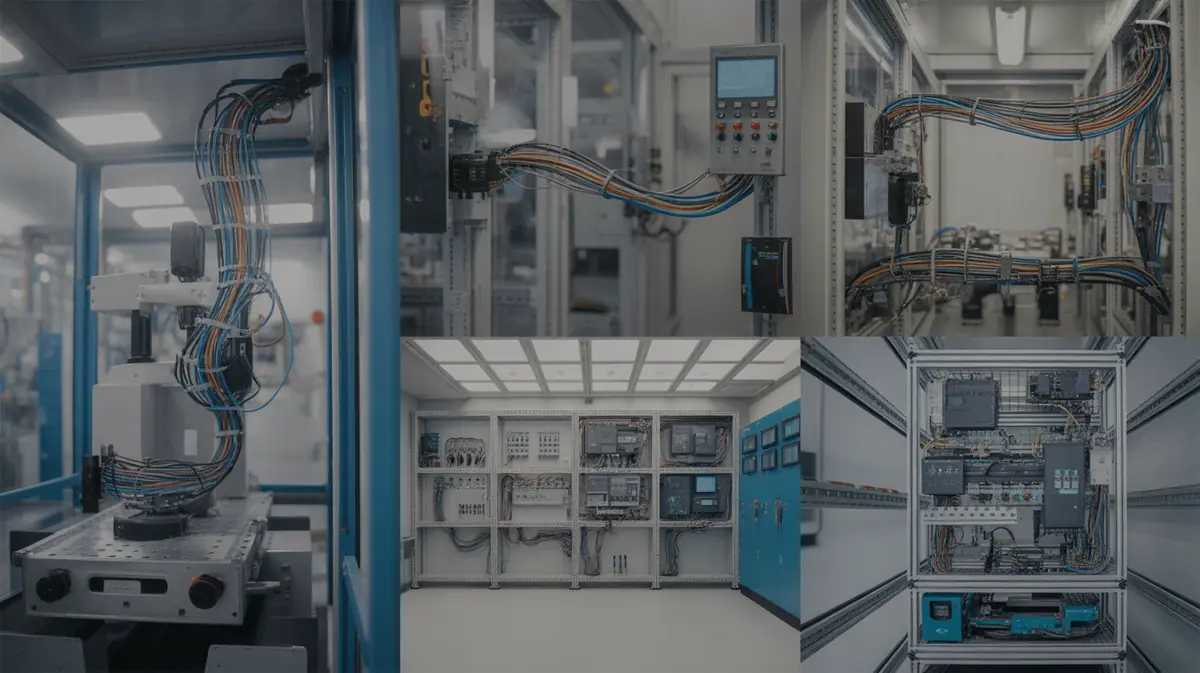
The Wiring Backbone of Industry 4.0
A wire harness is far more than a bundle of cables. It is a pre-assembled, tested, and often custom-shaped assembly that integrates conductors, connectors, protective sleeving, strain relief, and labeling into a single installable unit. In industrial automation, these harnesses serve as the nervous system linking programmable logic controllers (PLCs), sensors, actuators, vision systems, safety interlocks, and distributed I/O modules. Without them, the digital twin remains a theoretical model disconnected from physical reality.
The complexity of modern automation demands harnesses that can handle mixed signal types — analog 4–20 mA loops, high-speed Ethernet, servo feedback, and high-current power — all within the same compact footprint. As factories adopt more modular, reconfigurable layouts, the wiring infrastructure must keep pace. Uptime, after all, is directly proportional to the quality of every crimp, every connector mate, and every shield termination in the harness assembly. A poorly designed harness introduces intermittent faults that erode overall equipment effectiveness (OEE) and frustrate maintenance teams with elusive root causes.
Reliability in this context is not a specification on a datasheet; it is a measurable outcome reflected in mean time between failures (MTBF) and total cost of ownership (TCO). This reality elevates the wire harness from a commodity component to a strategic engineering decision — one that shapes the performance envelope of the entire automation system.
Key Connector Technologies and Components Behind Reliable Harnesses
The integrity of any wire harness begins at its termination points. Connectors are the electromechanical interfaces where environmental sealing, contact resistance, and mechanical retention converge. In industrial automation, three broad families dominate: circular connectors (M8, M12, M23, and beyond), rectangular heavy-duty connectors for power and multi-pin signals, and terminal blocks for in-cabinet wiring. Each brings distinct advantages depending on vibration exposure, mating frequency, and ingress protection requirements.
Leading the innovation in this space are manufacturers that have built decades of application expertise. TE Connectivity offers a vast portfolio including the M12 series for industrial Ethernet and the heavy-duty HDC connectors widely deployed in machinery and robotics. Molex brings its Brad connectivity line and the Mega-Fit power connectors, engineered for high-current density in compact form factors. Amphenol is synonymous with ruggedized circular connectors — the Amphe-Lite and SurLok series are staples in automation environments demanding resistance to shock, fluids, and extreme temperatures. JST, while often associated with board-level interconnects, provides the JWPF and GEH series frequently used in sensor wiring and small actuator harnesses within automated equipment.
Material selection is equally critical. Contact platings — gold over nickel for low-level signals, silver for higher currents — directly affect long-term resistance stability. Housing materials must withstand cutting fluids, cleaning agents, and UV exposure in outdoor installations. Silicone sealing gaskets maintain IP67 or IP69K ratings even after thousands of thermal cycles. A harness is only as durable as its weakest connector, making component qualification a gate that cannot be bypassed in the name of cost savings.
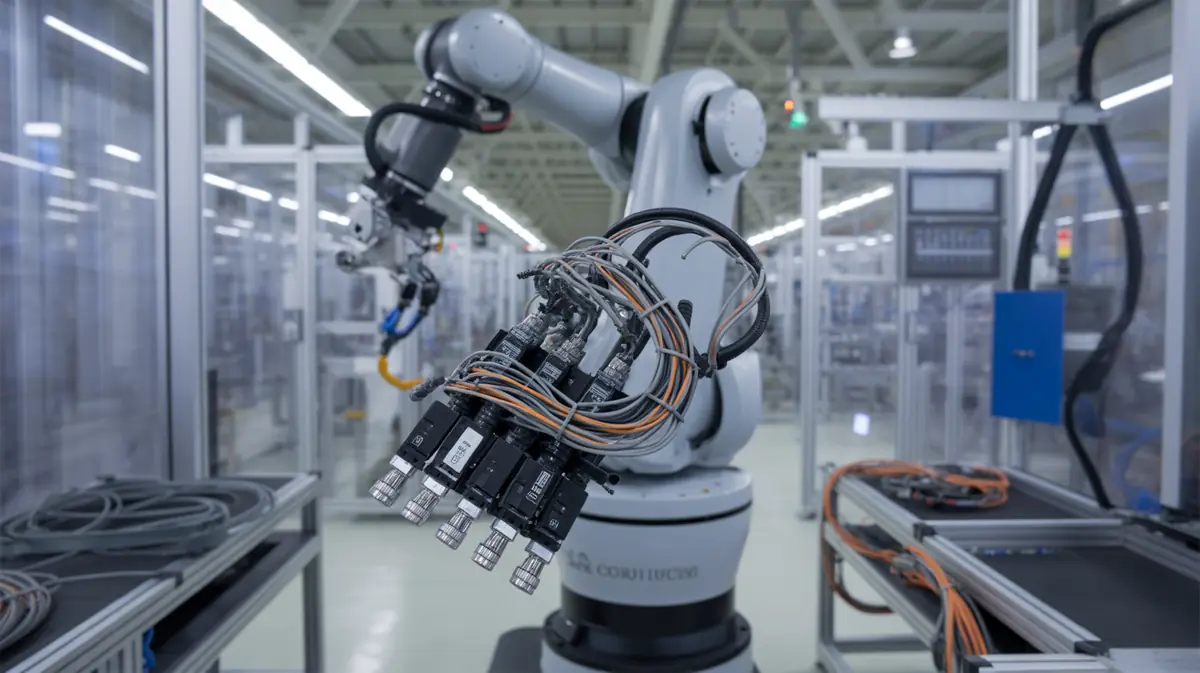
Comparative Analysis: Connector Reliability in Automation Environments
For OEM buyers evaluating connector platforms, the selection matrix can be daunting. A head-to-head comparison across key performance vectors reveals the trade-offs. Molex connectors, particularly the Brad series, are renowned for ease of field installation and a robust supply chain that simplifies high-volume procurement. Their vibration resistance ratings and broad offering of pre-wired cord sets reduce assembly labor, though custom configurations can carry longer lead times.
TE Connectivity excels in harsh environment sealing and high mating cycle endurance. Industrial Ethernet connectors from TE routinely achieve over 500 mating cycles[2] with consistent IP67 performance — a crucial metric for machinery undergoing frequent tooling changes. Their global distribution presence also supports aftermarket service parts availability, a consideration often undervalued during initial sourcing.
Amphenol distinguishes itself in extreme mechanical stress scenarios. The SurLok power connectors, for instance, handle up to 70A per contact[3] with a locking mechanism that resists accidental unmating — an essential feature in high-vibration environments like stamping presses and injection molding machines. The cost profile is typically positioned between mid-range and premium, reflecting the engineering investment in contact stability.
JST connectors, while smaller in physical scale, punch above their weight in sensor and signal-level applications. The crimp reliability of JST contacts, verified through extensive cycle testing[4], contributes to harness assemblies where space constraints demand miniature interfaces without compromising connection quality. For high-mix, low-volume automation builders, JST offers an attractive price point with proven consistency.
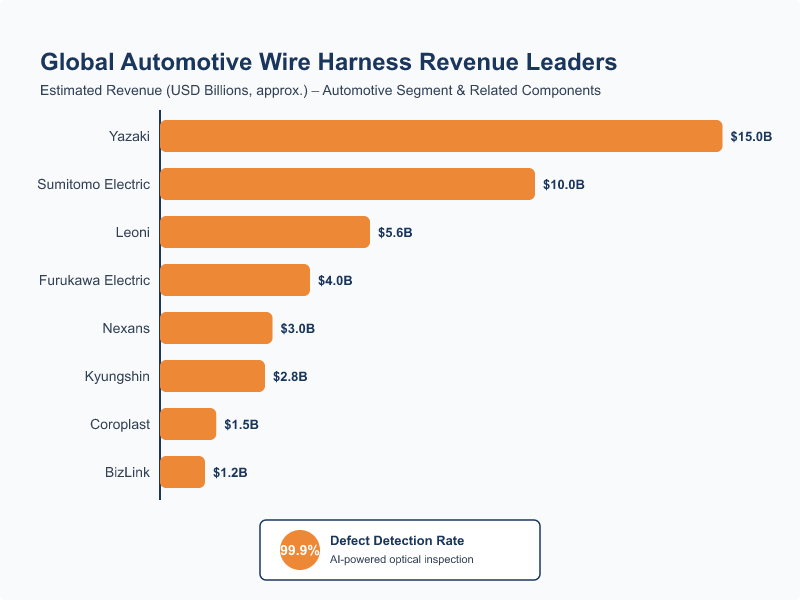
Data from field failure analyses consistently point to one finding: certified harness assemblies using connectors from these established manufacturers reduce connection-related failures by an estimated 40–60%[5] compared to unbranded or improperly specified alternatives. The upfront component cost premium is overwhelmingly offset by reduced troubleshooting time, fewer line stoppages, and simplified spare parts management.
Application Spotlight: Wire Harnesses in Robotic Assembly and Motion Control
Robotic automation represents one of the most demanding physical environments for wire harnesses. A six-axis articulated robot performing automotive spot welding or material handling executes millions of cycles over its service life, with cables flexing continuously through cable chains, twisting at axis joints, and absorbing the shock of rapid acceleration and deceleration. The harness inside a robot is not static — it is a dynamic component subjected to bending radii as tight as 75 millimeters[6] and torsional rotation exceeding 180 degrees in some wrist assemblies.
Continuous-flex cables, engineered with finely stranded conductors and pressure-extruded jacketing, are the foundation of robotic harnesses. Torsion-rated data cables preserve signal integrity for encoder feedback and Ethernet-based servo communication even as the robot articulates through its full range of motion. EMI shielding — typically a combination of aluminum-foil and tinned-copper braid — prevents the high-frequency noise from servo drives from corrupting sensitive position feedback signals. Without effective shielding, the robot’s path accuracy degrades, impacting weld quality or pick-and-place precision.
Consider a real-world integration in an automotive body shop: a harness bundle routing through the hollow wrist of a robot carrying a laser welding head. The assembly must deliver power, cooling water sensor signals, high-speed bus communication, and safety circuit monitoring — all while surviving millions of flex cycles[7]. Harness designs here often incorporate specialty connector backshells with strain-relief grommets that distribute bending stress away from the termination point, dramatically extending service intervals.
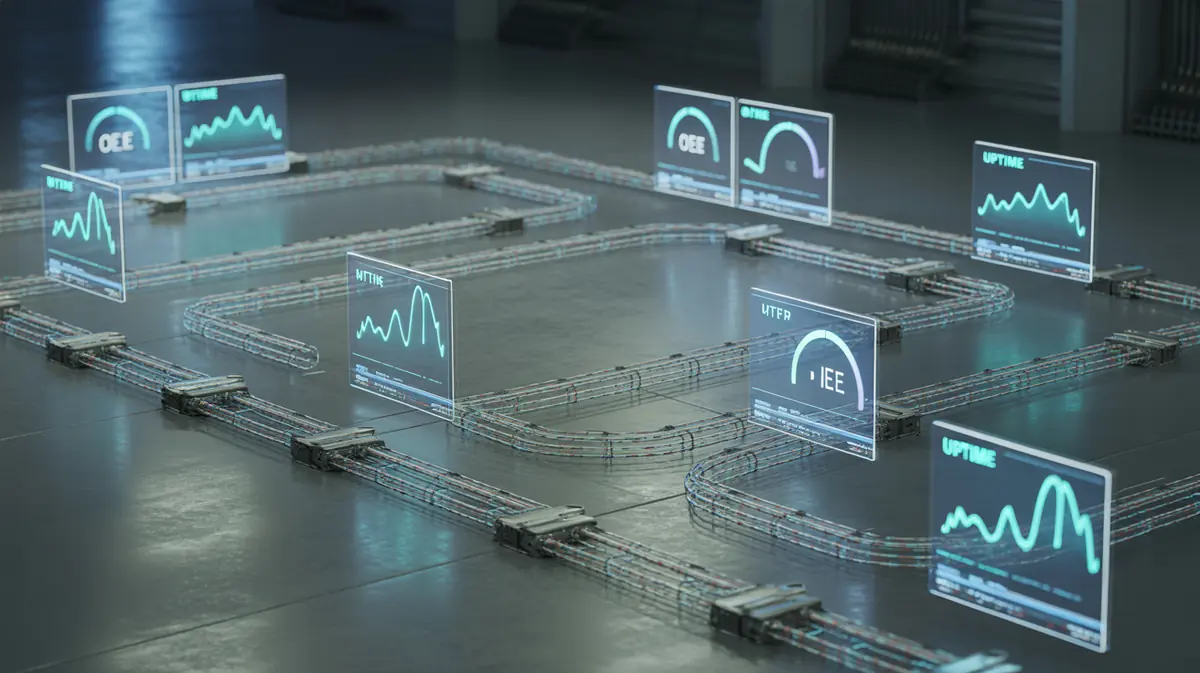
Enabling Smart Factories: Harness Solutions for Sensor and IIoT Networks
The proliferation of Industrial Internet of Things (IIoT) sensors and edge computing nodes has transformed factory networking topology. Where once a centralized PLC gathered all inputs via long homerun cables, today’s architectures push I/O blocks and condition-monitoring nodes closer to the process. This distributed model demands harness solutions optimized for short-to-medium runs, daisy-chaining capability, and ruggedized data integrity.
M8 and M12 circular connectors form the backbone of this sensor infrastructure. Products from Amphenol and TE Connectivity dominate these landing points, offering field-attachable versions that allow maintenance teams to replace a single damaged cable without replacing an entire pre-molded cord set. Industrial Ethernet harnesses carrying PROFINET or EtherNet/IP traffic between distributed I/O islands rely on these connector platforms to maintain Category 6A performance under factory conditions that would render office-grade RJ45 connections unreliable within weeks.
Hybrid harnesses represent the next frontier. By combining power conductors (24V DC or even 48V DC for PoDL-enabled devices) with shielded data pairs in a single overmolded assembly, system integrators reduce installation time and eliminate the cable clutter that complicates troubleshooting. A single hybrid harness can connect a vibration sensor, deliver its operating voltage, and stream condition data to an edge analytics gateway — all through a single connector interface rated for washdown environments. This integration directly supports predictive maintenance strategies that depend on uninterrupted data streams from hundreds of sensing points across a facility.
Power Distribution and Control Cabinets: Safely Handling High Currents
Behind every automated production line stands a row of control and power distribution cabinets that manage the flow of energy to motors, drives, heaters, and actuators. These enclosures demand harness assemblies that can carry substantial currents — often exceeding 100 amps[8] — while maintaining safe touch temperatures and respecting the clearance and creepage distances mandated by UL 508A and IEC 61439 standards.
Heavy-duty connectors from Molex and Amphenol are purpose-built for this environment. Molex Mega-Fit connectors, with their 23.0A per contact rating and positive latching, appear frequently in variable frequency drive (VFD) wiring where space inside the cabinet is at a premium. Amphenol SurLok connectors, by contrast, serve the higher-current interconnects between bus bars, power supplies, and motor starters, offering touch-safe female terminals that reduce arc-flash risk[9] during maintenance procedures.
Thermal management considerations permeate every design decision. Wire gauges are selected not just for ampacity at ambient, but for temperature rise under sustained full-load conditions inside a sealed enclosure that may reach 45°C internally[10]. Harness assemblers apply derating factors and perform thermal imaging during prototype validation to identify hotspots before they become field failures. Additionally, UL and CE compliance is not a one-time certification checkbox — it governs material flammability ratings (UL 94 V-0 for connector housings), voltage ratings that account for altitude derating, and the use of ferrules on stranded conductors entering terminal blocks to prevent strand separation and hot spots.
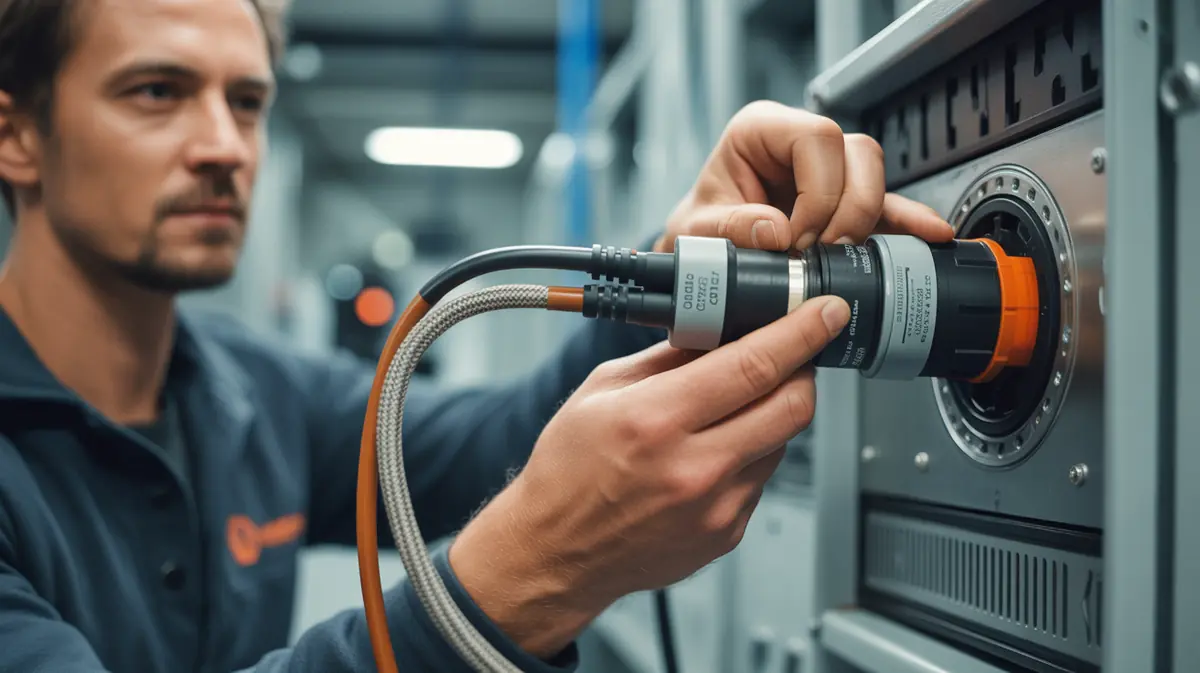
Actionable Guide: How OEMs Can Source and Validate Wire Harnesses for Long-Term Reliability
Selecting a wire harness partner is a decision with multi-year consequences. Too often, purchasing departments treat harness assemblies as interchangeable commodities, awarding business on unit price alone. This approach ignores the engineering validation, testing, and supply chain management that distinguish a reliable source from a transactional supplier.
Begin your evaluation with a checklist: Does the harness supplier hold ISO 9001 and, ideally, IPC/WHMA-A-620 certification for cable and wire harness assemblies? Are continuity and hipot testing performed on 100% of assemblies, with documented test reports? What is their approach to first article inspection (FAI), and do they use automated crimp force monitoring to eliminate human variability in termination quality? These are not excessive demands — they are baseline expectations validated by leading OEMs globally.
The decision between custom and off-the-shelf harness assemblies hinges on volume and product lifecycle stage. For low-volume prototypes or pilot lines, semi-custom harnesses fabricated using pre-certified components from the major connector brands can slash lead times. As volumes scale into the thousands annually, fully custom harness designs amortize tooling costs and optimize material usage. Systems integrators should evaluate modular designs that allow for reconfiguration without requiring complete harness replacement — an approach that supports agile manufacturing strategies.
Supply chain stability is another critical vector. Partnering with distributors such as EDOM provides access to a broad portfolio of connector components from TE Connectivity, Molex, Amphenol, and JST under a single procurement umbrella. This aggregation reduces the administrative burden of managing dozens of supplier relationships, mitigates allocation risks during component shortages, and often unlocks better commercial terms through consolidated volumes. EDOM’s technical support resources can also assist in navigating connector cross-references and identifying drop-in alternatives when lead times spike on preferred part numbers.
Future-Proofing Automation: Scalable Harness Design for Tomorrow’s Factories
The factory of 2030 will not resemble the fixed production lines of the past. Modular machine concepts, autonomous mobile robots reconfiguring work cells on the fly, and software-defined automation all point to a future where wiring must be as adaptable as the machines it connects. Harness design must evolve from rigid, hard-wired assemblies to architectures that support plug-and-produce flexibility.
Modular harness systems — sometimes called “wiring kits” — break the harness into segments with standardized connector interfaces at segment boundaries. When a production line is retooled for a new product variant, only specific harness segments require modification or replacement, drastically reducing rework time and engineering cost. This segmentation also simplifies spare parts management, as fewer unique assembly part numbers need to be stocked.
Miniaturization continues to push connector density upward. JST and TE Connectivity are advancing micro-connector platforms that maintain 3A to 5A current ratings in packages small enough to fit within the confined spaces of collaborative robot arms and compact IIoT edge devices. Higher contact density means more signals in less panel space, enabling richer data collection without expanding cabinet footprints. The trade-off, as always, is thermal management — smaller connectors dissipate heat less efficiently, requiring careful derating analysis during the design phase.
Perhaps the most transformative shift is the emergence of digital twins for harness engineering. Rather than manually routing cables in 3D CAD and iterating through physical prototypes, OEM design teams can now simulate harness behavior — flex life, thermal performance, even electromagnetic compatibility — in virtual environments before cutting a single wire. Pre-designed harness libraries, validated across common automation platforms, enable faster response to RFQs and reduce engineering cycle times from weeks to days. This digital-first approach, combined with component availability intelligence from distribution partners like EDOM, positions forward-thinking OEMs to deliver customized automation solutions at a velocity their competitors cannot match.
Key Takeaways
- Harnesses are strategic assets, not commodities. The quality of wire harness assemblies directly governs uptime, safety, and total cost of ownership across every industrial automation application.
- Connector selection drives reliability outcomes. Products from TE Connectivity, Molex, Amphenol, and JST each bring application-specific strengths in vibration resistance, sealing, current handling, and miniaturization — making informed cross-brand comparison essential for optimal design.
- Application demands vary dramatically. Robotic motion control, IIoT sensor networks, and power distribution cabinets each impose unique mechanical, thermal, and signal integrity requirements that must shape harness design from the outset.
- Supplier validation extends beyond price. Certifications, 100% testing protocols, and supply chain partnerships — including leveraging distributors like EDOM for component aggregation — constitute the foundation of a reliable sourcing strategy.
- Future readiness requires modular thinking. Scalable harness architectures, high-density connectors, and digital-twin-based design workflows will separate agile manufacturers from those constrained by rigid, legacy wiring approaches.