In the unforgiving world of OEM manufacturing, a single wire harness failure can cascade into a million-dollar recall, an idled production line, or a safety incident that makes headlines. These bundled nerve centers of modern machinery—whether inside a factory robot, an electric vehicle, or a medical imaging system—must perform flawlessly across thousands of thermal cycles, vibration profiles, and moisture exposures. For design engineers and purchasing managers, understanding the most common wire harness failure modes and their proven countermeasures is no longer optional; it is the difference between a product that earns a reputation for reliability and one that drains service budgets. This article dissects the real-world problems that compromise harness integrity and presents actionable solutions drawn from decades of component-level expertise—while spotlighting the role of precise connector selection, validated assembly processes, and trusted supply chains.
What Makes Wire Harnesses Critical in Modern OEM Applications?
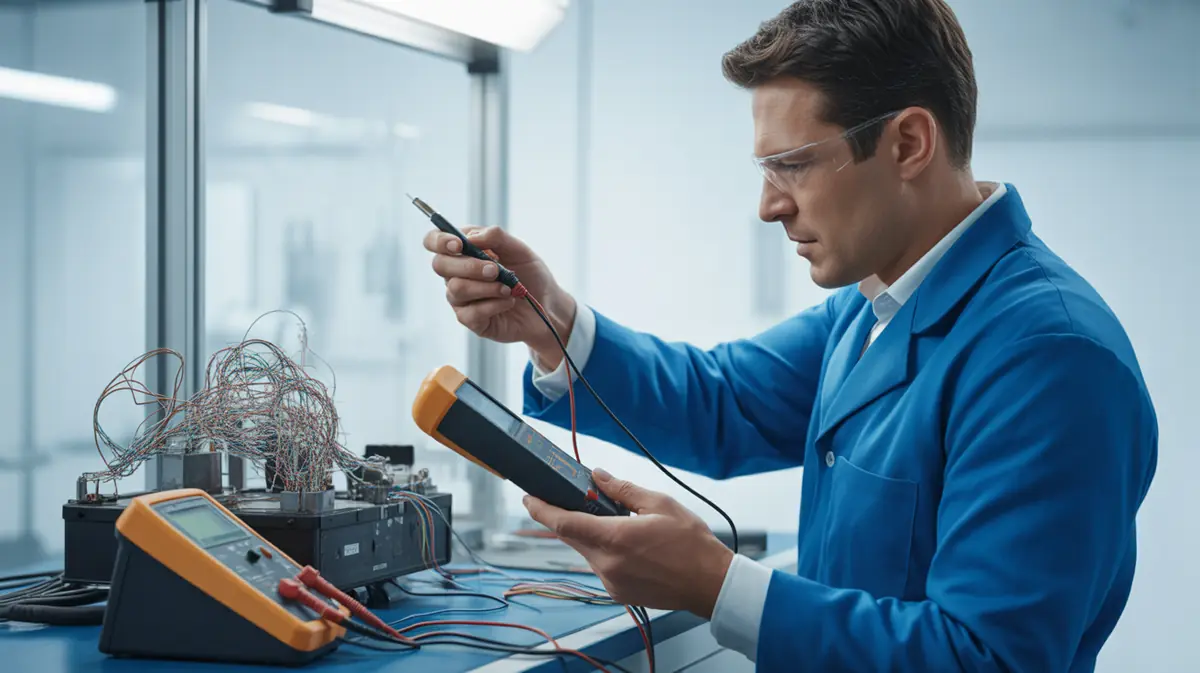
Wire harnesses serve as the central nervous system for virtually every piece of sophisticated equipment. They route power, signals, and data between electronic control units, sensors, actuators, and user interfaces. In an automotive platform, a single harness can contain over 1,500 individual circuits[1] and weigh more than 60 kilograms. In industrial automation, harnesses connect programmable logic controllers to motor drives, safety interlocks, and feedback devices. The cost of failure extends far beyond the harness itself: unplanned downtime in a semiconductor fab[2] can reach $100,000 per hour, while a field recall in the agricultural equipment sector erodes brand equity built over generations. Safety risks are equally sobering—a short circuit caused by insulation chafing can lead to electrical fires or unintended machine movement. This problem-solution framework is built for the stakeholders who bear the ultimate responsibility: the engineers specifying connector systems and the supply chain professionals tasked with sourcing them without compromise.
Common Wire Harness Failure Modes: A Diagnostic Overview
Before prescribing solutions, teams must speak the same diagnostic language. Four failure categories dominate field returns and warranty claims:
- Fretting corrosion: Occurs when tin-plated terminals experience micro-motion under vibration, wearing through the plating and allowing oxidation that increases contact resistance. This is especially prevalent in engine compartments and heavy machinery.
- Terminal push-out: Caused by inadequate retention lances or housing damage during assembly, leading to an open circuit as the terminal backs out of the connector body.
- Insulation chafing: Abrasion from adjacent wires, sharp edges, or constant flexing erodes insulation, eventually exposing conductors that can short to ground or to each other.
- Short circuits: Often the final consequence of water ingress, contamination, or metallic debris bridging pins within a connector.
These problems do not respect brand names. Even premium connectors from Molex, JST, TE Connectivity, and Amphenol can succumb when design rules are violated or assembly procedures deviate from certification standards. The root cause is seldom the component itself; it is the misapplication—selecting an unsealed connector for a wet environment, using a crimp tool without proper calibration, or routing a harness without strain relief. Recognizing these patterns is the first step toward designing them out.
How Connector Selection Impacts Harness Longevity
Connector choice is where reliability begins, and the wrong decision can silently introduce intermittent problems that plague a machine for years. Industry test data comparing sealed and unsealed systems in salt-spray and thermal shock conditions show that sealed connectors can reduce failure rates by over 70%[3] in harsh environments. But protection comes with trade-offs in pitch, current capacity, and vibration resistance that must be balanced against performance requirements.
Consider three popular families. The Molex Micro-Fit series[4] offers a high current density in a compact 3.00 mm pitch, making it a favorite for power distribution in computing and telecom, yet its friction-lock design may need secondary locking in high-vibration settings. JST EH connectors, with a 2.50 mm pitch and low insertion force, excel in signal applications inside office equipment but are not intended for exposed automotive use without supplemental sealing. TE Connectivity’s MATE-N-LOK series provides a robust 6.35 mm pitch solution with positive locking and optional sealing, routinely specified in HVAC and appliance applications. Meanwhile, Amphenol Minitek connectors in 2.00 mm pitch offer board-to-wire solutions with dual-beam contacts that resist fretting, yet still require careful derating at elevated temperatures. Choosing the wrong family—for instance, substituting a consumer-grade unsealed connector into an agricultural sprayer harness—can result in field returns that tarnish the entire machine’s reputation. Engineers must consult derating curves, test to the application’s actual shock and vibration profile, and verify that the connector’s retention force exceeds the expected load from wire bundle mass.
Environmental Factors: Vibration, Moisture, and Temperature Extremes
Real-world environments are merciless on harnesses. Vibration loosens tin-plated terminals as micro-motion scrubs away protective oxide layers, accelerating fretting corrosion. In one study of heavy-duty truck harnesses, terminals without anti-fretting measures showed a 200% increase in contact resistance[5] after just 100 hours of random vibration testing. Moisture ingress, when combined with electrical bias, triggers electrolytic corrosion that can eat through copper strands inside a sealed connector body within months. Temperature extremes soften plastics, age elastomeric seals, and cause differential expansion that opens microscopic pathways for contaminants.
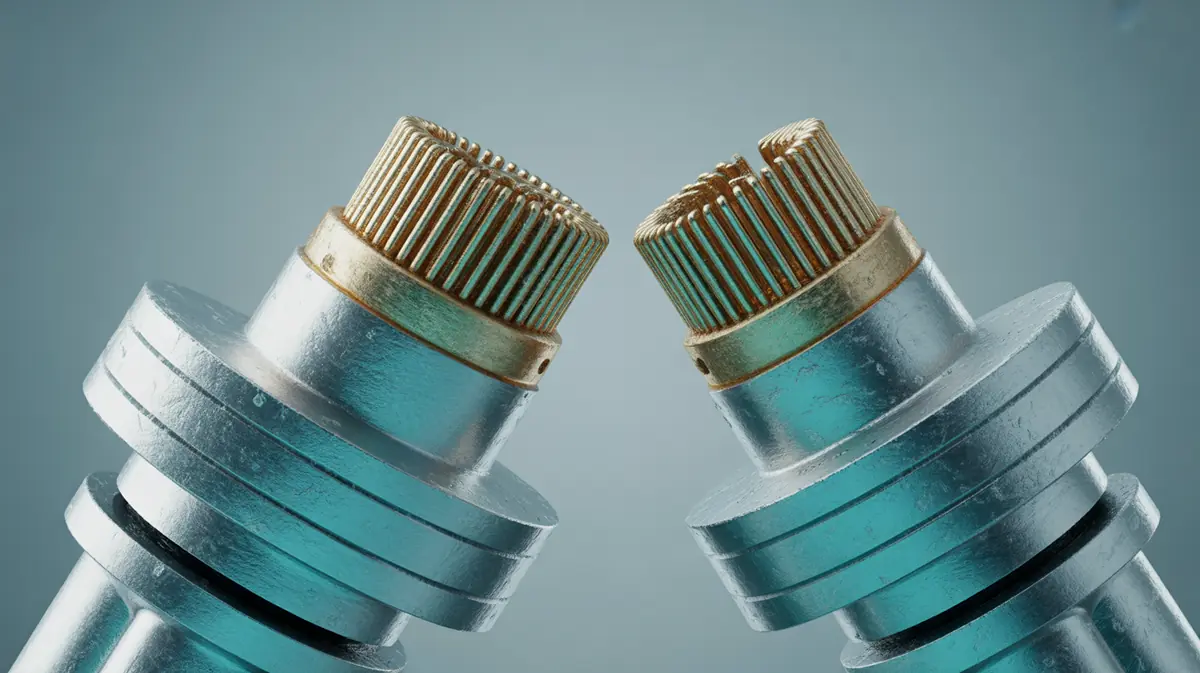
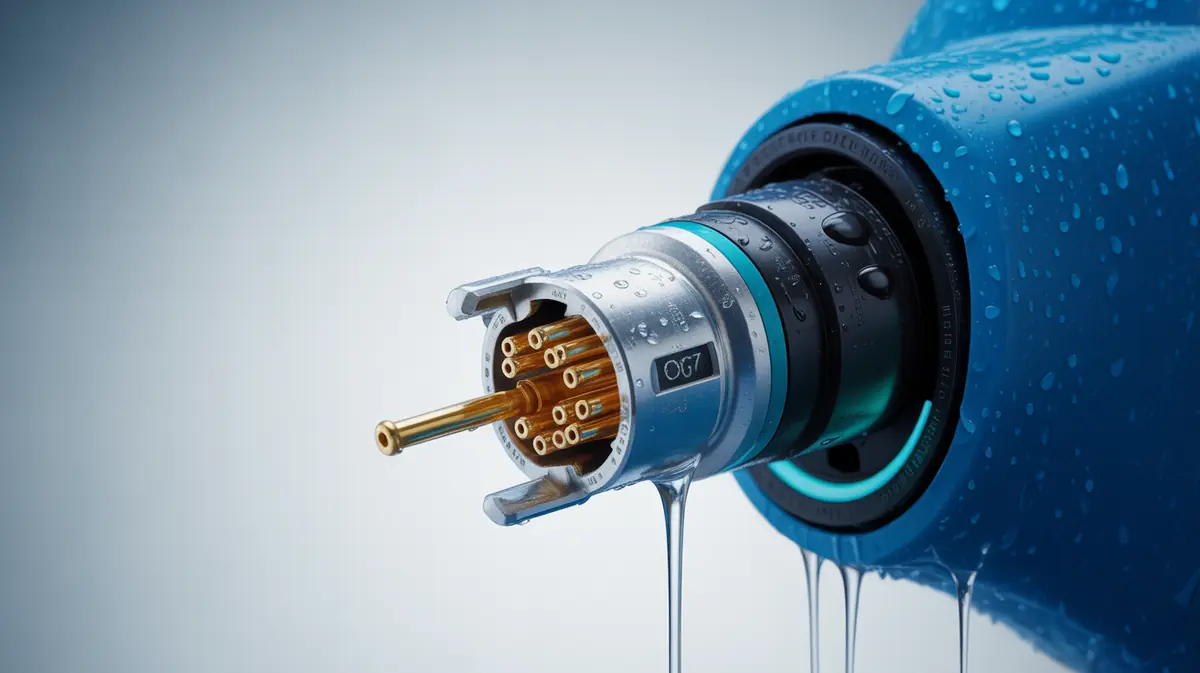
The engineering countermeasures are well defined but demand discipline. For high-vibration joints, gold-plated contacts dominate[6]—the JST JWPF series, for example, uses a 0.64 mm gold-plated terminal designed specifically for automotive wire-to-board connections that endure continuous shaking. Positive-lock housings like Molex DuraClik provide an audible click and a secondary lock that prevents accidental disengagement, even when the harness is snagged during service. Where washdowns or submersion are possible, IP67-rated connectors such as TE AMPSEAL and Amphenol AT series seal each wire cavity with individual grommets, backed by perimeter seals in the mating interface. However, environmental protection is not a component rating to be taken on faith—it must be verified at the assembly level. A perfectly sealed connector loses all integrity if the backshell is improperly assembled or if the wire’s insulation is scored by stripping tools, creating a capillary path for moisture. Testing the complete harness assembly under thermal cycling while immersed is the only way to validate the system.
Crimping Quality: The Foundation of Reliable Wire Harnesses
Field data consistently points to a single, sobering statistic: over 60% of all harness failures originate at the crimp[7]. This compressed joint between terminal and wire strand must be gas-tight, mechanically robust, and dimensionally precise. When it is not—when strands are cut, the barrel is over-crimped, or the wrong terminal is used for the wire gauge—the connection can degrade silently until resistance causes overheating or intermittent signal loss.
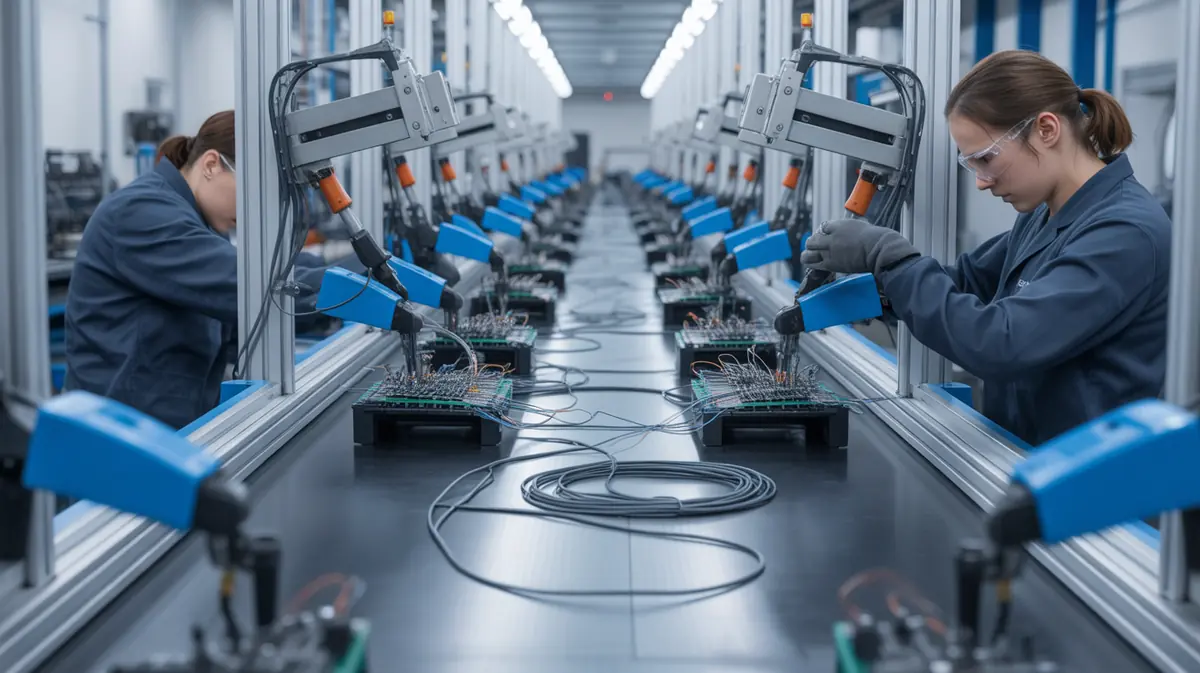
Achieving repeatable crimp quality is a hands-on discipline. First, the terminal must match both the wire gauge and the strand construction; mixing a terminal designed for solid conductors with a fine-stranded wire almost guarantees a weak crimp. Second, the crimp tool must be calibrated to the specific terminal and wire combination, producing a crimp height and width within the manufacturer’s specified tolerance band. Pull-force testing on a sample basis using a motorized tensile tester provides objective validation—Molex and JST publish pull-force requirements for each terminal series, and adherence to those thresholds is non-negotiable. Both manufacturers offer certified tooling programs that include application-specific dies and periodic calibration schedules, removing operator guesswork. For high-mix production environments, investing in crimp force monitoring systems that capture and log the peak force for every crimp can turn quality control from a sampling exercise into a 100% inspection process—and prevent an improperly crimped terminal from ever reaching a customer’s machine.
Testing and Inspection Protocols to Prevent Field Failures
Shipping a harness without thorough testing is like launching a satellite without a vibration shake-down: the risks are invisible but potentially catastrophic. A tiered inspection approach catches defects before they escape the factory floor.
- Visual inspection: Check for proper terminal seating, correct wire dress, absence of nicked insulation, and complete connector mating. Automated optical inspection systems can now detect missing seals and incomplete latch engagement[8] at production speeds.
- Contact retention force: Using a calibrated test pin, verify that each terminal can withstand the specified withdrawal force[9]—typically between 5 and 15 N for small-signal connectors. Low retention signals a damaged housing or incorrectly inserted terminal.
- Continuity and resistance testing: A simple continuity check is insufficient; measuring milliohm-level resistance across every circuit while gently flexing the harness reveals hidden crimp weaknesses or cold solder joints in overmolded connections.
- HiPot (high potential) testing: Applying a voltage well beyond the working level between adjacent circuits and to the harness outer shield confirms insulation integrity and detects moisture paths that cannot be seen.
An often-overlooked enabler of confident inspection is supply chain traceability. When components are sourced from authorized partners like EDOM, each reel of terminals, each connector housing, and each length of wire carries full batch-level documentation tying it back to the original manufacturer’s quality records. This traceability simplifies incoming QC because engineers know they are not dealing with unknown substitutions. The economics are compelling: catching a single terminal back-out before shipment[10] can save thousands of dollars in warranty repair, and more importantly, preserve customer trust.
Sourcing Strategies for High-Reliability Wire Harness Components
Even the best design on paper becomes vulnerable if counterfeit or uncertified components enter the supply chain. The open market is rife with look-alike connectors that fail dimensional checks and use substandard plating, leading to corrosion and intermittent connections that are nearly impossible to diagnose in the field. For purchasing managers, the mandate is clear: source Molex, JST, TE Connectivity, and Amphenol parts only through authorized distribution channels.
Authorized distributors serve as a firewall against counterfeits. EDOM, a global distributor with deep engineering support capabilities, offers OEMs a single point of contact for the full portfolio of these brands. Beyond genuine components, EDOM provides design-in assistance—helping engineers select the right connector variant, review derating curves, and prototype first articles—along with full batch traceability and buffer stock programs that insulate production schedules from market shortages. Vendor consolidation through a partner like EDOM not only reduces administrative overhead but also shortens lead times, simplifies logistics across multiple harness subassemblies, and ensures that the same quality standard is applied whether the harness is built in a domestic plant or an overseas assembly facility. In an era where a single counterfeit Molex terminal can ground a fleet of vehicles, the cost of verification is negligible compared to the consequences.
Future-Proofing Your Wire Harness Design
Reliability is not a one-time achievement; it is a continuous feedback loop. When robust connector selection, validated crimping processes, environmental sealing, and rigorous outgoing testing are combined, every field return becomes a learning opportunity rather than a recurring expense. Trends such as miniaturization and high-speed data transmission place new demands on harness design—smaller pitches increase the risk of whisker shorts, while differential signal pairs require precise impedance control across mated connectors. Smart harness testing, using embedded sensors or time-domain reflectometry, promises to detect degradation before it becomes a fault, moving maintenance from reactive to predictive.
Staying ahead of these challenges demands collaboration. Engage with manufacturers like TE Connectivity and Amphenol early in the design cycle to leverage their application expertise and new product roadmaps. Partner with engineering-savvy distributors like EDOM that can bridge the gap between component specifications and real-world manufacturing constraints. The path to a harness that outlasts the machine it serves is not a mystery—it is a disciplined application of known physics, proven processes, and uncompromising sourcing. For the teams that adopt this mindset, the reward is not just lower warranty costs, but a product that quietly, reliably delivers its function year after year.
Key Takeaways
- Over 60% of wire harness failures trace back to crimp quality; adopting calibrated tooling and pull-test validation from Molex and JST certified programs eliminates the dominant root cause.
- Connector selection must match the environmental reality—sealed systems like TE AMPSEAL or Amphenol AT series dramatically reduce field failures when verified at the harness assembly level.
- A tiered testing protocol—visual, retention force, continuity, and HiPot—catches defects before shipment and pays for itself many times over in avoided warranty claims.
- Purchasing through authorized distributors such as EDOM guarantees genuine Molex, JST, TE Connectivity, and Amphenol components with full traceability, neutralizing counterfeit risk.
- Future-proofing requires an engineering partnership mindset: collaborate early with connector manufacturers and knowledgeable distributors to address emerging challenges like miniaturization and high-speed data.