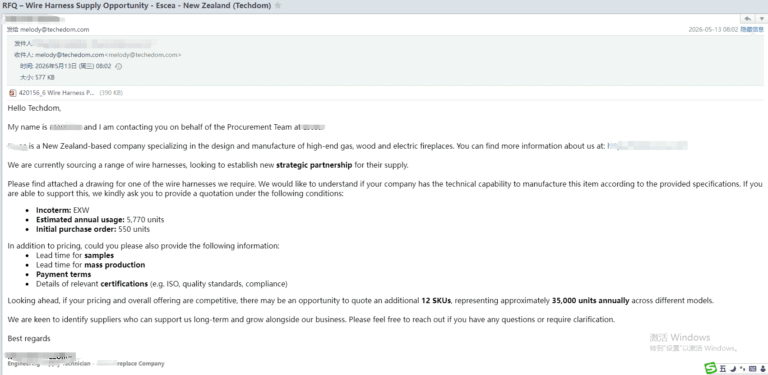
The silent failure of a single wire can cripple a million-dollar production line. For OEMs across automotive, industrial automation, and medical technology, wire harnesses are more than just bundled cables — they are the lifeline of every critical system. A misstep in specification or supplier choice doesn’t just inflate costs; it triggers warranty claims, safety audits, and reputational damage that can haunt a product for years. Getting the right harness from the outset is a strategic imperative.
The High-Stakes Role of Wire Harnesses in OEM Projects
In any modern machine — whether a robotic welding cell, a patient monitoring system, or an electric bus — the wire harness performs the same essential function as a nervous system. It transmits power, signals, and data across dozens of subsystems, often in unforgiving environments. A single point of failure in a harness can cascade into unscheduled downtime, safety hazards, or complete system shutdown. For OEMs, the stakes are enormous: a field recall triggered by a chafed wire or a corroded connector can destroy brand equity and consume millions in warranty costs[1]. This is why early-stage harness selection is not merely a design detail but a profit-protection measure. Decisions made during the initial bill-of-materials definition directly shape lifecycle costs, assembly time, and time-to-market. In an era of tightly integrated global supply chains, the right partner and component choices become a competitive differentiator.

Wire Harness Fundamentals: Anatomy and Industry Leaders
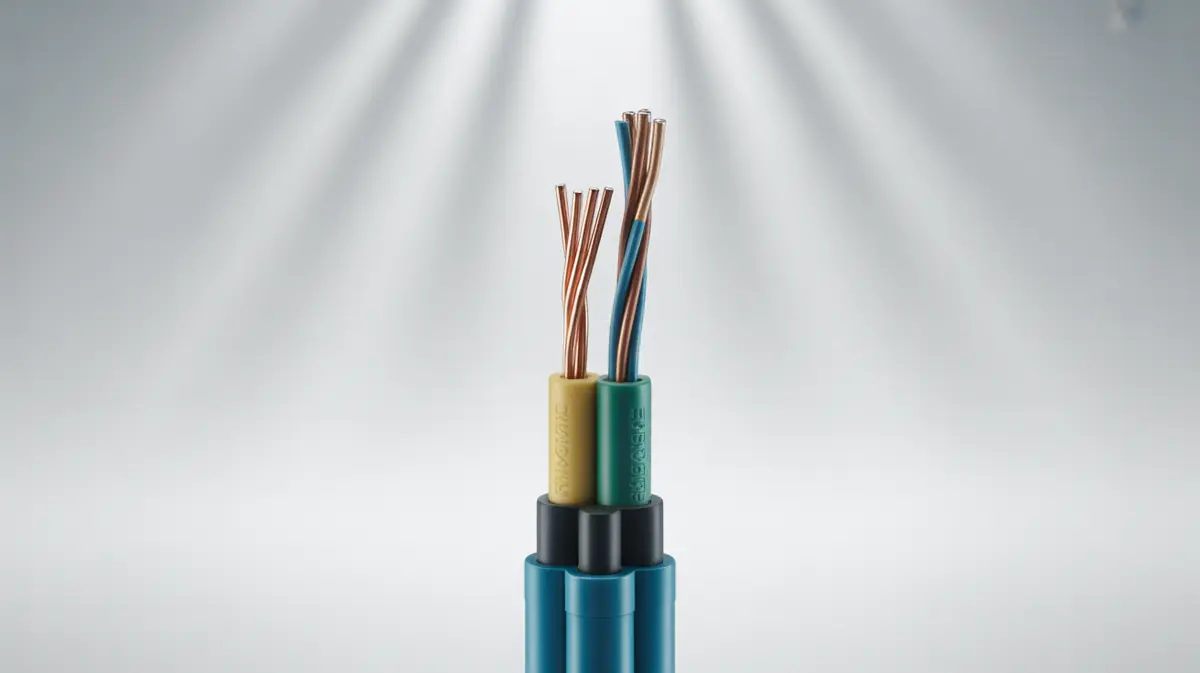
A wire harness comprises far more than copper conductors. At its core, you’ll find precision-cut wires, crimped terminals, mating connectors, protective sleeving (braided loom, conduit, or heat-shrink tubing), and often backshells or strain-relief components. While a wire harness organizes and protects multiple wires within a mechanical assembly, a cable assembly typically refers to an overmolded, sealed solution designed for external connections — the two terms are not interchangeable, and understanding this distinction helps avoid specification errors.
The performance of any harness hinges on the quality of its subcomponents. Four manufacturers dominate the connector landscape[2]: TE Connectivity, Molex, Amphenol, and JST. TE offers broad portfolios for harsh environments; Molex excels in miniaturized, high-density interconnects[3]; Amphenol brings ruggedized industrial and military-grade solutions; JST specializes in compact, high-reliability wire-to-board connectors ideal for space-constrained designs. For OEMs, however, identifying the right component is only half the battle. Making these world-class brands accessible globally — with consistent pricing, certified stock, and engineering support — falls to distribution partners like EDOM. By bridging the gap between design and supply chain, EDOM helps OEMs source genuine TE, Molex, Amphenol, or JST products without navigating fragmented regional channels.
Critical Selection Criteria: From Voltage Ratings to Vibration Resistance
Choosing the optimal wire harness demands a disciplined, parameter-driven approach. Before engaging a supplier, OEM engineers should document requirements across three domains:
- Electrical specifications: Define operating voltage, maximum current draw (with derating), acceptable voltage drop, and insulation resistance. Overlooking inrush currents or transient spikes can lead to connector overheating and premature failure.
- Environmental compliance: Specify the temperature range, ingress protection (IP rating), and resistance to UV, oils, chemicals, and humidity. A harness in an outdoor EV charging station demands different sealing than one inside a cleanroom robot.
- Mechanical demands: Quantify flex life (number of cycles the harness must endure without conductor fatigue), abrasion resistance of the outer jacket, and the expected mating cycles for connectors. In robotics, for instance, continuous motion requires high-flex cable and strain-relief designs.
Beyond physical parameters, OEMs must navigate a maze of industry standards: UL and CSA certifications for safety, IPC/WHMA-A-620 for harness manufacturing quality, and often customer-specific requirements from automotive OEMs (like LV214 or USCAR). A practical way to avoid costly oversights is to build an internal checklist that captures these criteria in a single document, which can then be shared with potential harness manufacturers and component distributors like EDOM for early feasibility feedback.
Supplier Showdown: Comparing Connector and Harness Solutions from Molex, TE, and Amphenol
Once requirements are locked, the evaluation shifts to specific product families. A side-by-side look reveals how each manufacturer’s flagship series aligns with typical OEM applications:
- Molex Mini-Fit: The Mini-Fit Jr. and Mini-Fit Plus series offer compact power connectors with polarized housings and positive locking, widely used in industrial controls, power supplies, and medical devices. Their high current density and blind-mating options reduce assembly errors.
- TE Connectivity Dynamic Series: The Dynamic 1000–5000 range provides rugged, IP20-rated wire-to-board and wire-to-panel solutions. With a focus on automation, TE’s dynamic connectors are engineered for vibration resistance and tool-less termination, cutting installation time.
- Amphenol Sine Systems: The AT Series and ruggedized circular connectors serve heavy machinery, agricultural equipment, and transportation. Their dielectric strength and broad temperature tolerance make them a go-to for off-highway and engine compartment applications.
In space-constrained designs — such as handheld diagnostic devices or dense PCB stacks — JST’s SH and GH series wire-to-board connectors stand out for their sub-1.5mm pitch and secure friction lock, offering high reliability without bulk. Meanwhile, pricing and lead-time dynamics vary. Through a centralized distributor like EDOM, OEMs can compare real-time inventory across these brands, reducing buffer stock and mitigating the risk of long lead times on custom parts. Data from recent programs shows that the connector choice alone can swing total harness cost by 12–18%[4] and affect mean time between failure (MTBF) by thousands of hours, underscoring the need for a supplier-agnostic evaluation.
Case Study: How a Custom Wire Harness Solved an OEM’s Signal Integrity Problem
An industrial robot OEM was plagued by sporadic communication faults during factory deployments. On-site diagnostics traced the issue to electromagnetic interference (EMI) corrupting encoder feedback signals. Off-the-shelf harnesses failed to combine the necessary double-shielding with the tight bend radius required by the articulated arm’s continuous motion. Each field failure cost the OEM hours of downtime and threatened a key customer relationship.
The OEM partnered with EDOM to engineer a custom solution. EDOM’s specialists mapped the signal paths, identified the optimal TE Connectivity high-speed shielded connectors (from TE’s MULTI-BEAM and D-Sub product lines), and selected a ruggedized, high-flex cable with optimized braid coverage. A prototype harness underwent accelerated lifecycle testing — simulating over 10 million flex cycles[5] — to validate performance. The result: a 40% reduction in field failures[6] within the first six months, a measurable increase in system uptime, and consolidated bill-of-materials management. By working through a single distribution partner that provided both component selection and supply-chain coordination, the OEM avoided the complexity of managing multiple source relationships.
Procurement Pitfalls to Avoid: Tips for Purchasing Managers
Even the most elegant harness design can be sabotaged by procurement missteps. Purchasing managers should guard against these common traps:
- Over-specification: Demanding connectors rated for 20 A when the circuit draws 8 A inflates cost with no performance gain. Define minimum-viable specs based on real operating conditions, not worst-case extremes.
- Ignoring total lifecycle cost: A harness with lower unit price may require longer assembly time, specialized tooling, or more frequent replacement. Factor in installation labor, maintenance access, and mean time to repair.
- Single-sourcing risk: While standardizing on one brand simplifies inventory, it creates fragility. Qualify a secondary source — for example, Molex equivalents for certain TE Connectivity positions — to ensure supply continuity. Distributors like EDOM can advise on form-fit-function alternatives without triggering costly requalification.
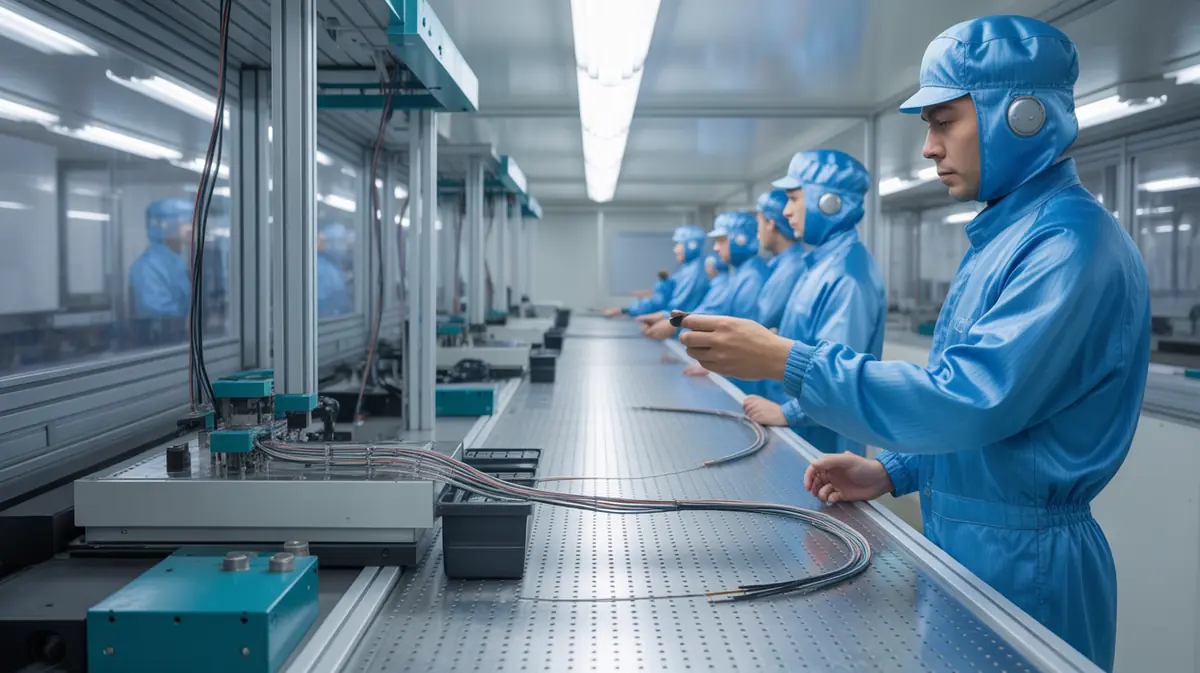
- Skipping pre-production validation: Waiving prototype runs or Production Part Approval Process (PPAP) steps in pursuit of speed often backfires. A batch of mis-crimped terminals caught during a small pre-production build can save millions in field rework. EDOM’s engineering support teams frequently assist OEMs with sample validation and documentation, closing the loop between design intent and manufacturing reality.
Future-Proofing Your Wire Harness Design: Trends and Innovations
The wire harness landscape is evolving rapidly. Miniaturization and weight reduction are paramount as e-mobility, drones, and portable medical gear demand lighter, denser interconnects. Simultaneously, the rise of high-speed data protocols — USB4, 100BASE-T1 automotive Ethernet, and even PCIe over cable — is reshaping harness design, requiring precision impedance control and advanced shielding. Modular, hot-swappable architectures are gaining ground, enabling faster maintenance and field upgrades without re-terminalizing connectors.
Manufacturers are responding. Molex has introduced its “MX150” sealed connector system to support miniaturized, high-vibration automotive applications, while Amphenol pushes the envelope with high-bandwidth, board-to-cable solutions for next-gen industrial automation. As these technologies mature, early adopters gain a competitive advantage — provided they have access to design-in expertise. EDOM has positioned itself as an early-adopter channel partner, stocking cutting-edge components and offering engineering consultations that help OEMs integrate future-ready connectors without redesign paralysis. Leveraging such partnerships turns supply-chain management from a reactive function into a strategic innovation driver.

Key Takeaways
- A wire harness is a product’s central nervous system; early-stage selection directly impacts reliability, lifecycle costs, and brand reputation.
- Define clear electrical, environmental, and mechanical requirements before evaluating suppliers — an internal checklist prevents costly oversights.
- Compare connector platforms from Molex, TE Connectivity, and Amphenol based on application fit, not just unit price; JST fills critical niches in compact designs.
- Custom harness solutions, guided by experienced partners like EDOM, can solve intractable signal integrity or durability problems while streamlining procurement.
- Purchase managers must avoid over-specification, single-source risk, and skipping validation; engaging a distributor with engineering depth turns selection into a competitive advantage.
In a global market where every hour of downtime erodes profit margins, the right wire harness isn’t a commodity — it’s an asset. OEMs that treat harness selection as a strategic, partner-driven process consistently outperform those that treat it as an afterthought. Download your free wire harness selection checklist and schedule a consultation with EDOM’s engineering team today to start building reliability into your next project from the first conductor.