
Overview and Application Notes
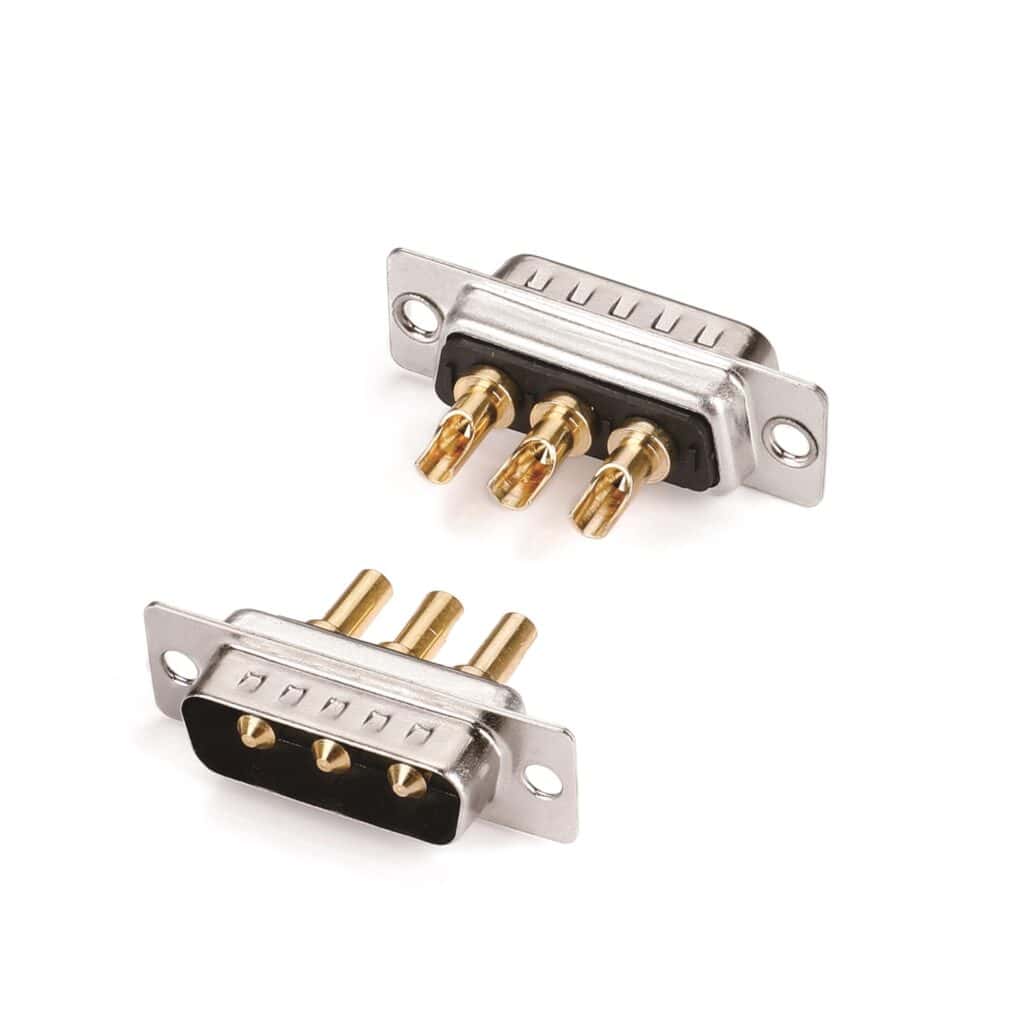
D-sub connectors, short for “D-subminiature connectors,” are a type of electrical connector characterized by their distinctive D-shaped metal shield. They were once very common in computing and telecommunications equipment. Here are some key points about D-sub connectors:
- Design: The D-shaped metal shell of the connector ensures correct orientation when connecting and provides mechanical support and protection against electromagnetic interference. The connectors typically have two or more parallel rows of pins or sockets.
- Variants: There are several sizes of D-sub connectors, including the common DB-25 and DE-9 (often mistakenly called DB-9). The number indicates the number of pins or sockets. For example, a DB-25 has 25 pins.
- Usage: D-sub connectors have been used for many purposes, including computer video output, serial ports, parallel ports, and game controller ports. They were particularly common on older computers and peripherals.
- Applications: Beyond computing, D-sub connectors are used in telecommunications, test and measurement equipment, and in some industrial and military applications due to their robustness and reliability.
- Decline and Legacy: While the use of D-sub connectors has declined with the advent of newer, smaller connectors like USB, HDMI, and others, they are still used in some applications where a robust and reliable connection is necessary.
For a company like EDOM Electronics, D-sub connectors might represent a component of interest for certain industrial, computing, or telecommunications applications, especially where legacy systems are in use.