Overview and Application Notes
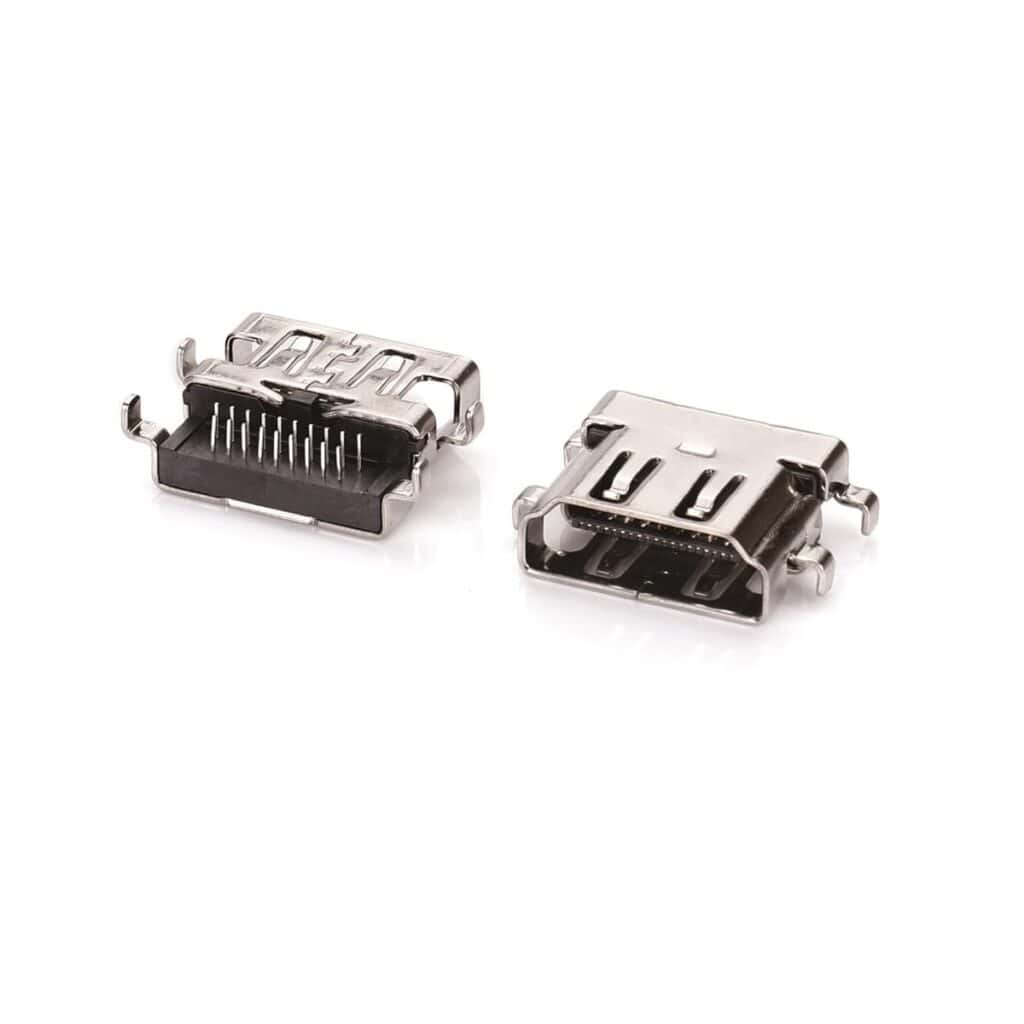
HDMI connectors are a type of digital interface used to transmit audio and video data over a single cable. HDMI stands for High-Definition Multimedia Interface. Here are some key aspects of HDMI connectors:
- High-Quality Transmission: HDMI connectors are designed to handle high-definition video and audio, making them ideal for home theater systems, computers, and many modern TVs and monitors.
- Single-Cable Solution: They allow the transmission of both audio and video signals through one cable, simplifying the setup and reducing cable clutter.
- Versions: There are several versions of HDMI, each supporting different capabilities like increased resolution, higher frame rates, or enhanced audio. For example, HDMI 2.1 supports higher bandwidth than HDMI 2.0.
- Types of Connectors: HDMI connectors come in various sizes, including standard (Type A), mini (Type C), and micro (Type D), each designed for different devices. For instance, standard HDMI is commonly used for TVs, while mini and micro are used for smaller devices like tablets and cameras.
- Compatibility: HDMI is widely compatible with a vast range of electronic devices, including HDTVs, Blu-ray players, game consoles, and computers.
- Features: Advanced features of HDMI include CEC (Consumer Electronics Control) for controlling multiple devices with one remote, and ARC (Audio Return Channel), which allows an HDTV to send audio data upstream to a soundbar or AV receiver.
For a company like EDOM Electronics, HDMI connectors are likely a significant component in the manufacturing of electronic devices, given their widespread use and importance in modern audio-visual technology.