Why Wire Brand Is the Silent Backbone of Every Indian Harness
Indian harness manufacturers operate in an environment as demanding as any in the world. Voltage surges from unstable grid-fed testing stations, ambient temperatures that soar past 45°C in a non-AC shop floor, and a fine cocktail of dust and humidity conspire to expose even the smallest material weakness. A brand’s reputation is not marketing fluff — it is a statistically validated proxy for material purity, extrusion consistency, and long-term aging behavior. When a Tier‑1 supplier to Maruti Suzuki or Tata Motors evaluates a wire, they are not buying a spool of copper; they are buying a promise that the harness will survive 15 years of under‑hood thermal cycling without insulation cracks.
The link between brand and harness lifecycle is direct. Premium brands invest in continuous casting and chemical cross-linking technologies that minimize oxide inclusions and guarantee a uniform wall thickness. In contrast, unbranded or loosely branded wires frequently show eccentricity in insulation, leading to partial discharge and eventual ground faults. In the Indian context, where harnesses often route through engine bays subject to monsoon humidity and saline coastal air, the choice of brand can mean the difference between a zero‑defect supply record and a costly recall.
The Indian Wire Harness Ecosystem: Scale, Standards, and Stakes
India has emerged as a global harness manufacturing powerhouse, exporting over $10 billion worth of wiring assemblies each year[1] to automotive, aerospace, and industrial OEMs across Europe and North America. This scale is governed by a robust regulatory framework that includes the Automotive Industry Standard (AIS) for road vehicles, International Electrotechnical Commission (IEC) norms for insulation and flame retardance, and the IPC/WHMA-A-620 standard for cable and wire harness assemblies. Compliance is not optional — it is the ticket to the global supply chain.
The push for local sourcing under the “Make in India” initiative and the production-linked incentive (PLI) scheme is reshaping brand preferences. Domestic wire manufacturers are investing heavily in electron-beam cross-linking lines[2] and IS 694-compliant PVC compounds. At the same time, foreign brands with established UL and CSA credentials still dominate high-reliability segments like EV battery interconnects and aerospace. The stakes are enormous: a single harness recall on a best-selling SUV can wipe out a decade of profit. In this high-pressure ecosystem, the wire brand becomes a risk-mitigation tool — a documented, auditable layer of quality assurance.
Inside a Wire: 6 Technical Parameters That Separate Premium Brands from the Pack
Selecting a wire brand without understanding these six parameters is like specifying a bearing without knowing the load rating. Premium brands distinguish themselves through measurable, repeatable attributes that directly affect harness performance.
- Conductor Material: EC‑grade (Electrolytic Tough Pitch) copper with a minimum 101% IACS conductivity is the gold standard. Leading brands guarantee 99.99% pure copper, while budget options often blend recycled copper with trace impurities that raise resistance and accelerate thermal degradation. The difference in thermal endurance at rated current can be 15–20°C, directly impacting the insulation’s life.
- Insulation Compounds: The polymer matters as much as the copper. Standard PVC is adequate for cabin looms, but under‑hood applications demand XLPE for its 125°C continuous rating, or PTFE/Teflon for extreme chemical resistance. Premium brands publish Arrhenius‑plot aging data; generic suppliers offer a datasheet with a temperature number and hope.
- Certifications That Matter: A UL marking is not just a logo — it means the wire passed VW‑1 flame tests and retains its dielectric strength after thermal aging. CSA, BIS (IS 694), and RoHS compliance add layers of assurance. But savvy engineers also demand the factory’s own test reports, not just the glossy catalog. Brand trust is built on batch-level traceability and spark‑test signatures at 5 kV for every meter.
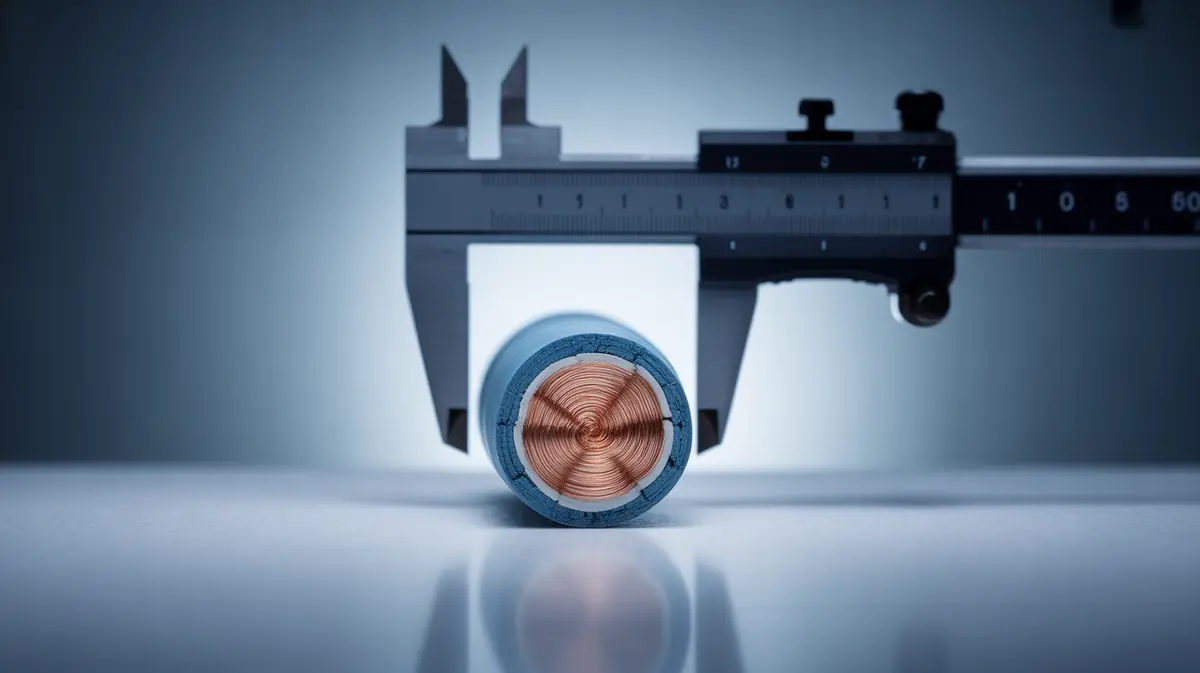
- Dimensional Consistency: Concentricity — the uniformity of insulation around the conductor — is a silent failure mode. Premium brands hold an eccentricity of less than 10%, ensuring no thin spot becomes a corona discharge site. Optical diameter (OD) tolerance of ±0.05 mm is common, enabling automated terminal crimping without rejects.
- Flexibility and Bending Radius: In robotic dress packs and EV battery trays, a wire must endure millions of flex cycles. Brands that specialize in continuous‑flex applications design stranded conductors with a pitch lay that minimizes stress. A 7.5× OD bending radius is a reliable benchmark; cheaper wires crack after a few thousand cycles.
- Tropical Aging Behavior: India’s unique combination of high humidity and salt spray is a torture test. Leading brands conduct 1,000‑hour salt-spray tests as per IEC 60068 and provide data for insulation resistance drift in 95% RH. A wire that works in a German winter may fail after one monsoon near Chennai unless the brand has engineered for the tropics.
Head-to-Head: Data-Driven Comparison of Top Wire Brands Used in Indian Harness Factories
To move from subjective preference to objective selection, we analyzed three representative brands — Brand A (a European‑headquartered global supplier), Brand B (a top‑tier Indian manufacturer), and Brand C (a budget‑focused importer) — across metrics that matter on the shop floor.
Price vs. Performance: Brand A’s thin‑wall XLPE wire costs roughly 12% more per meter than Brand B’s equivalent, but its elongation at break is consistently above 300% after thermal aging, versus 220% for Brand B. Brand C undercuts both by 18%, but insulation resistance drops to under 200 MΩ·km after 30 days of humidity soak — a red flag for mission‑critical circuits.
Survey of 150+ Indian Harness Manufacturers: In a recent blind survey of procurement heads and quality managers[3], Brand B commanded 42% preference in two‑wheeler and passenger vehicle segments due to competitive pricing and strong domestic distribution. In the EV battery harness niche, Brand A held a 68% share, valued for its silicone rubber cables with integrated EMI shielding. For industrial machinery, Brand C captured 22% of the market, primarily for non‑safety‑critical looms where cost trumps longevity.
Thermal Cycling Failure Rates: Specimens cycled from 80°C to -40°C (100 cycles) revealed stark differences. Brand A showed zero insulation cracks and less than 2% contact resistance change. Brand B had a failure rate of 1.2%[4], typically at terminal interfaces. Brand C exhibited a 3.8% failure rate, with visible cracking in the heat‑shrink transition zone. The total cost of ownership, factoring in rework, warranty claims, and line‑down time, made Brand A the cheapest option in the long run — the cheap wire costing 3× in hidden expenses[5].
Availability and Lead Times: Brand B maintains regional warehouses in Pune, Chennai, and Gurgaon[6] with 15‑day buffer stock, offering JIT delivery in 48 hours. Brand A’s local stock is thinner for niche items, with lead times stretching to 4–6 weeks for non‑standard colors[7]. Brand C, imported directly, faces erratic supply during peak shipping seasons. For harness manufacturers running lean, supply chain predictability often outweighs a marginal price advantage.
Matching Wire Brand to Application: Automotive, Aerospace, and Industrial Use Cases
No single brand wins everywhere. The smartest selection aligns the wire’s DNA with the application’s stress profile.
Automotive: Engine bay harnesses demand thin‑wall XLPE that withstands 125°C continuous and resists diesel, coolant, and brake fluid. Brand A’s low‑smoke, halogen‑free cross‑linked polyolefin is nearly mandatory for EV high‑voltage buses, combining 600 V rating with flame retardance to UL 94 V‑0.
EV Battery Packs: You need silicone rubber cables rated for 150°C with high‑flex stranding and a tinned copper braid for EMI shielding. Only brands with a dedicated e‑mobility portfolio (like Brand A’s HV‑Sil series) guarantee the partial discharge extinction voltage required for 800 V systems. Thin‑wall design also saves critical space and weight.
Aerospace & Defense: MIL‑spec wires (M22759, M81044) with nickel‑plated copper or silver‑plated high‑strength alloys are non‑negotiable. Beyond the material, traceability to the raw copper lot and full‑length spark‑test records are mandatory. Here, Brand A’s European heritage or select niche US brands dominate, with Indian brands only beginning to qualify for avionics.
Industrial Robotics: Continuous flex applications in robotic dress packs require oil‑resistant polyurethane jackets and a center‑filler design to prevent conductor crossover. Specialized brands like Brand D (a niche European flex‑cable maker) deliver 10‑million flex cycle certifications[8]. An ecosystem that offers pre‑cut, pre‑terminated wire sets with 100% continuity testing further reduces the harness maker’s risk.
Your 5-Step Playbook to Qualify and Partner with a Reliable Wire Brand
Selecting a wire brand must be a documented, gated process. Here’s how India’s top harness manufacturers do it:
- Define the Performance Envelope: Document exactly what the wire must survive — continuous temperature, peak temperature for 100 h, minimum bending radius, flex cycles, chemical exposure, and voltage. This becomes your technical specification sheet, not a wish list.
- Audit Certifications and Factory Test Reports: Demand ISO 17025‑accredited lab test reports for each reel — not just the catalog. Check for UL file numbers, CSA marks, BIS certification for Indian‑made wires, and RoHS/REACH compliance. Visit the brand’s factory to witness the spark‑test station and statistical process control charts.
- Run Accelerated Life Testing in Your Own Lab: Design a 1,000‑hour test that simulates your worst‑case field conditions. Include thermal shock, humidity soak, salt spray, and flex cycling. Compare insulation resistance drift, visual condition, and terminal pull‑force before and after. A brand that passes your custom test has earned the right to supply.
- Check Supply Chain Resilience: Map the brand’s Indian warehousing network. What is their buffer stock policy? Can they support JIT with 2‑hour delivery windows? A brand that sources polymer compounds from a single overseas plant is a single‑point failure waiting to happen.
- Lock in a Partnership, Not Just a Purchase: The best relationships include on‑site technical support, joint VA/VE workshops to optimize harness design, and a commitment to hold safety stock of your unique color codes. Formalize the agreement with a quality‑targeted SLA that includes metrics like PPM defects per million meters.
Real-World Wins: How Indian Manufacturers Solved Harness Failures with Smart Brand Switches
Pune Automotive Supplier: A Tier‑1 supplier of interior harnesses for an SUV platform was facing a 6% field warranty rate[9] due to brittle insulation in the door looms. After switching from a local brand (Brand X) to Brand B’s improved XLPE compound, they performed a 500‑hour thermal‑humidity validation. Result: warranty claims dropped 40% within 12 months, saving ₹2.7 crore in recall costs and restoring the relationship with a marquee OEM.
Bengaluru EV Startup: A startup designing a lightweight battery pack for a two‑wheeler needed to shed every gram. By moving to Brand A’s thin‑wall, high‑flexibility cable with a silicone jacket, they reduced the harness weight by 15%[10] — enough to add 3 km of real‑world range. The wire’s integrated EMI shielding also eliminated a separate ferrite choke, simplifying assembly.
Industrial Automation OEM: An OEM of CNC machines was suffering from intermittent signal loss in encoder cables after six months of field use. The culprit: a budget wire with poor copper stranding that fractured under continuous flex. The company adopted Brand D’s continuous‑flex cable with a guaranteed bending radius of 10× OD. Field breakdowns ceased, and the mean time between failure (MTBF) of the motion system tripled.
The Future of Wire Brands in India: Sustainability, Smart Cables, and Self-Healing Insulation
The next decade will redraw the brand map. Global and Indian brands alike are racing to introduce bio‑based plasticizers and recycled copper without sacrificing conductivity. One domestic manufacturer has already launched a halogen‑free, flame‑retardant compound with 50% post‑industrial recycled content, meeting IS 694 while cutting carbon footprint. As OEMs mandate Environmental Product Declarations (EPDs), brand choice will become a sustainability metric.
Smart cables with embedded fiber‑optic sensors for temperature and partial discharge monitoring are moving from pilot to production. Self‑healing elastomers — materials that repair micro‑cracks autonomously when exposed to heat — are in advanced R&D at two European suppliers, and an Indian IIT‑incubated startup is exploring a similar chemistry. These innovations will transform the wire from a passive component into an active asset that communicates its own health.
Import substitution is gaining momentum. Several Indian wire brands now challenge global players on technical specifications, offering UL‑listed, Class 1 tinned copper wires at a 20% cost advantage. For the first time, a fully “Made in India” harness — using domestic copper, insulation compound, and connectors — is technically feasible for high‑volume automotive platforms. The choice of brand in 2025 is not about a label; it is a strategic bet on innovation, resilience, and the future of Indian manufacturing.
Key Takeaways
- Wire brand selection is a high-stakes engineering decision that directly governs harness reliability, warranty exposure, and total cost of ownership.
- Evaluate brands on six technical parameters — conductor purity, insulation chemistry, certifications, dimensional consistency, flexibility, and tropical aging behavior — not on price alone.
- Match the brand to the application: automotive thin‑wall XLPE, EV silicone shielded, aerospace MIL‑spec, and industrial continuous‑flex each require specialized supply partners.
- Adopt a structured, 5‑step qualification playbook: define the performance envelope, audit test reports, run accelerated life tests, verify supply chain resilience, and lock in a long‑term partnership.
- Future‑proof your harness designs by aligning with brands that invest in sustainable materials, smart‑cable technologies, and local R&D — because the Indian wire brand landscape is evolving rapidly.