Picture a massive automotive assembly line: robotic arms welding frames, conveyors moving chassis, vision systems inspecting welds, and thousands of sensors feeding data to central controllers. A single signal failure in this intricate dance can bring production to a grinding halt, costing upwards of $20,000 per minute[1]. The component that ties all these intelligent systems together — often hidden beneath cable trays and inside control panels — is the factory wiring harness. It is the central nervous system of modern manufacturing, and its reliability directly determines the productivity of your plant. Yet this critical element is frequently an afterthought in sourcing decisions, leading to costly downtime, fragmented supply chains, and missed opportunities for optimization.
The Unsung Hero of Every Smart Factory
As Industry 4.0 transforms factories into interconnected, data-driven ecosystems, wiring harnesses have evolved from simple point-to-point cable runs into highly engineered assemblies. They now integrate power distribution, high-speed data buses, Ethernet, and delicate sensor signals within a single bundle. A single robotic cell might contain over 50 connectors and hundreds of individually terminated wires, each with specific requirements for shielding, bend radius, and chemical resistance. The explosion of IoT devices — from vibration sensors to edge computing nodes — has only amplified this complexity. Production managers who once considered harnesses a commodity now realize that a single design flaw or manufacturing defect can manifest as intermittent faults that paralyze entire lines for hours of troubleshooting. The unsung hero has become a strategic component, and understanding its fundamentals is the first step toward building a resilient, future-ready operation.
Decoding the Factory Wiring Harness: Components and Design
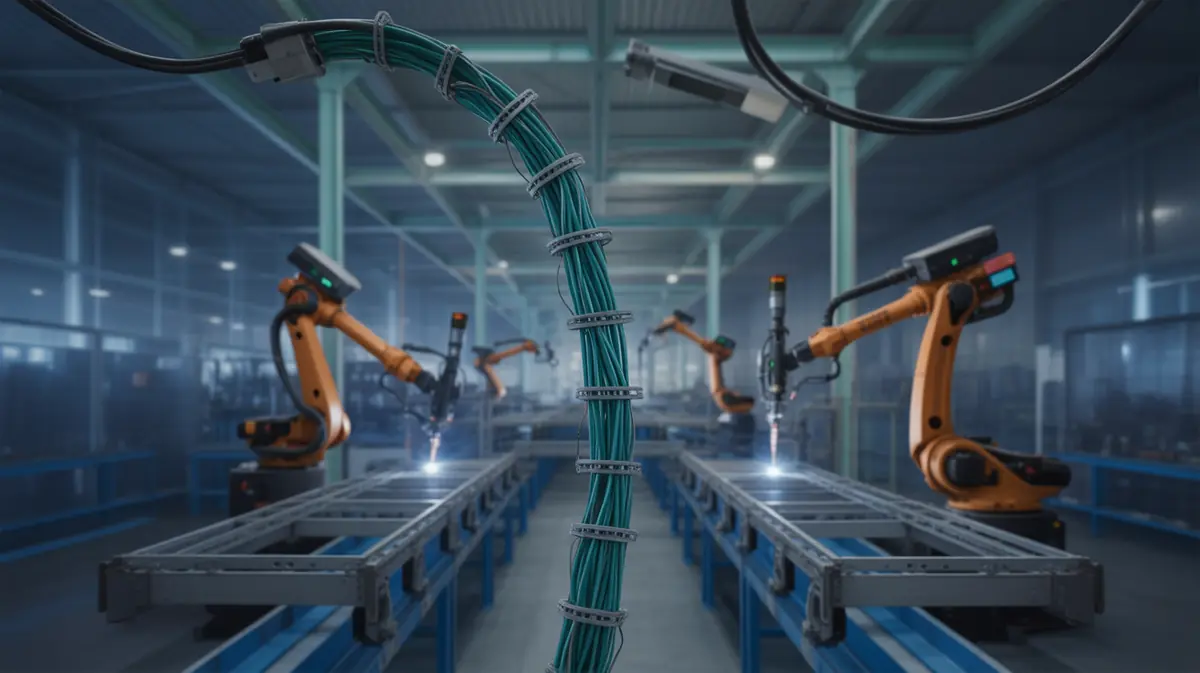
A factory wiring harness is far more than a bundle of wires. It is a custom-designed, pre-assembled system of conductors, terminals, connectors, and protective elements, engineered to route power and signals safely through harsh industrial environments. The typical anatomy includes:
- Conductors: Stranded copper or aluminum wires, often plated for corrosion resistance, sized precisely for current loads and voltage drop.
- Terminals: Crimped or soldered contacts that connect wires to connectors or devices. Poor crimp quality is a leading cause of field failures[2].
- Connectors: Multi-pin housings that ensure secure, polarized mating and often feature environmental sealing gaskets.
- Sheathing and Sleeving: Braided loom, split conduit, heat-shrink tubing, or spiral wrap that protects against abrasion, chemicals, and UV exposure. Special materials like PTFE or silicone are used for extreme temperatures.
- Strain Relief and Routing Components: Grommets, cable ties, and brackets that manage mechanical stress and maintain proper bend radii to prevent conductor fatigue.
It is important to distinguish a wiring harness from a simple cable assembly. A cable assembly is typically a standardized cable with connectors on each end, like an Ethernet patch cord. A wiring harness is engineered for a specific machine or panel, often branching out in multiple directions, incorporating various connector types, splices, and protective layers. The design process must account for the full lifecycle: thermal cycling, vibration, exposure to cutting fluids or caustic washdowns, electromagnetic interference (EMI), and even robotic motion that flexes cables millions of times. Modern harness designers use 3D CAD software to route bundles in virtual mock-ups of the factory floor, minimizing signal crosstalk and ensuring serviceability.
From Prototype to Production: How Wiring Harnesses Are Manufactured
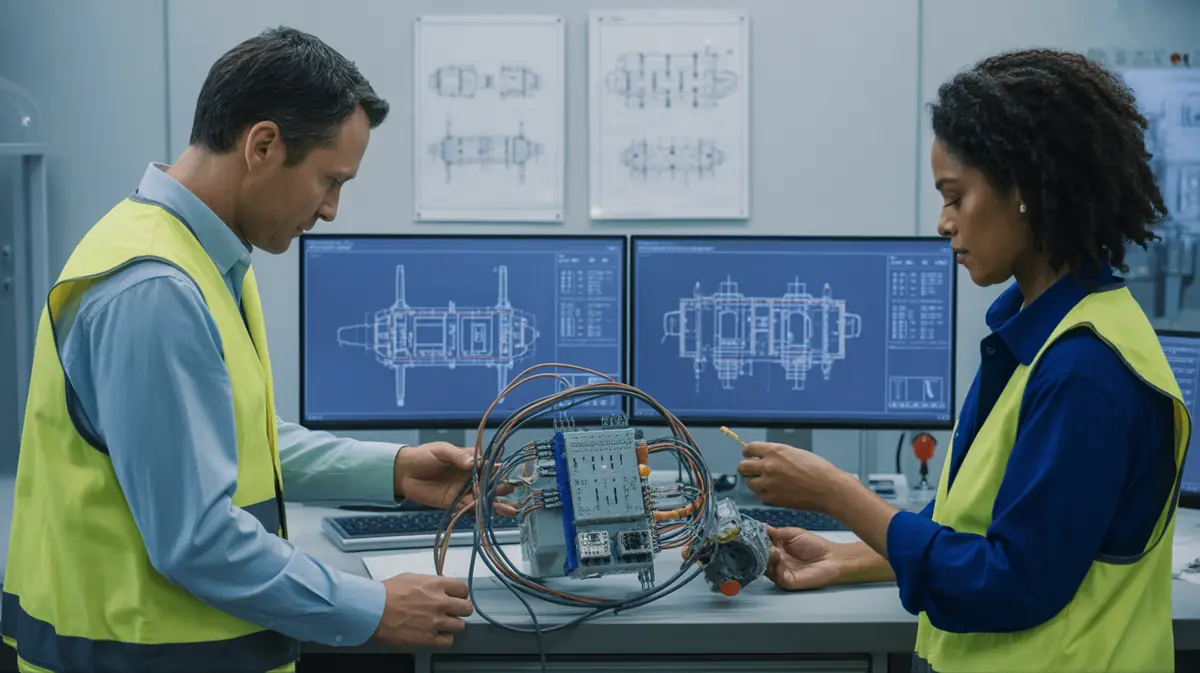
The production of a factory wiring harness is a blend of precision automation and skilled manual assembly. The process typically follows these stages:
- Cutting and Stripping: Automatic wire processing machines measure, cut, and strip insulation from both ends of each conductor to exact lengths, often using rotary or laser stripping for delicate high-temperature insulation.
- Crimping: Terminals are attached using servo-driven crimpers that monitor force and crimp height in real time. A substandard crimp can cause increased resistance and eventual thermal failure[3], so statistical process control (SPC) is critical.
- Splicing and Soldering: When wires must branch or join, ultrasonic welding or resistance soldering is used — both techniques that produce reliable, low-resistance joints without the wicking problems of hand soldering.
- Assembly and Braiding: Wires are routed on form boards or assembly jigs that replicate the final installation layout. Operators or collaborative robots weave conductors into the protective sleeving, applying labels and location markers at specified intervals.
- Connector Molding and Potting: For harsh environments, overmolding processes encapsulate connector backshells, or epoxy potting fills connector housings to prevent ingress of liquids and contaminants.
While high-volume automotive or appliance harnesses may be fully automated, the custom, low-to-medium volume nature of factory harnesses means a combination of automated wire processing and manual assembly. The best manufacturers employ a highly skilled workforce guided by detailed work instructions and digital torque tools. Quality control is rigorous: Every harness undergoes 100% continuity testing[4] to verify correct pin-out, often followed by hipot (high-potential) testing to check insulation integrity. Visual inspectors examine for proper connector seating, label placement, and sleeving coverage using magnifiers or automated optical inspection (AOI) stations. These steps ensure that the harness will perform flawlessly from the moment it is installed.
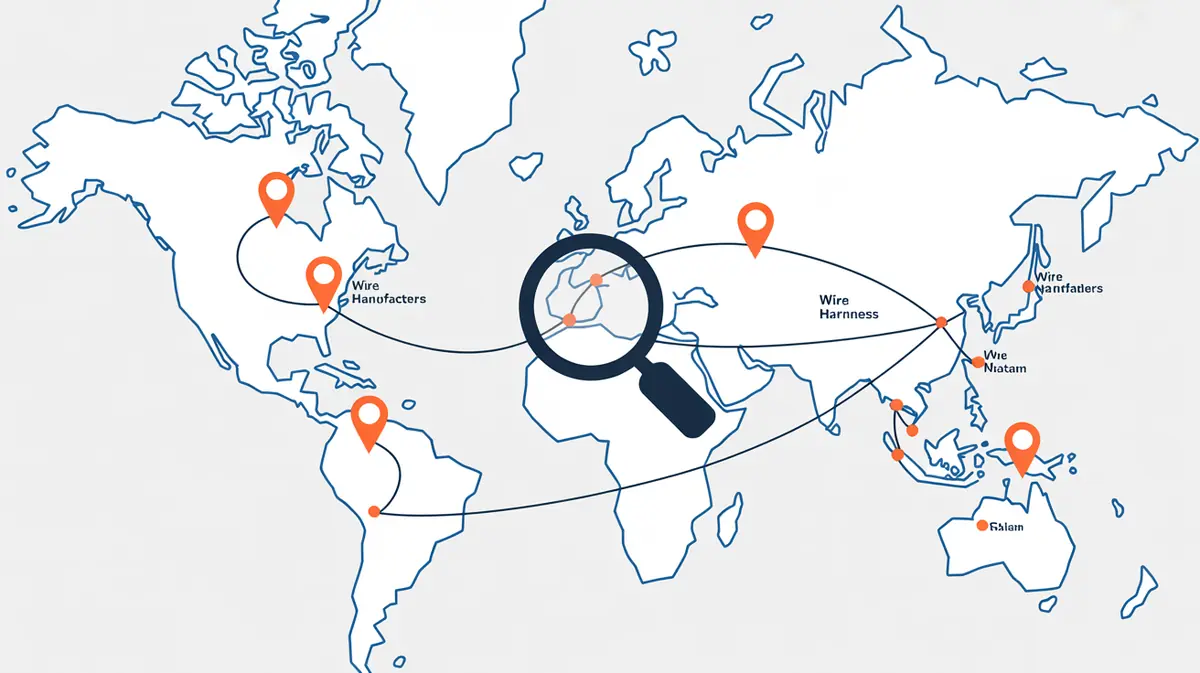
The Geography of Quality: Why ‘Wire Harness Manufacturers Near Me’ Is More Than a Search Term
For procurement managers, the instinct to source from the lowest-cost region often clashes with the reality of mission-critical lead times and quality risks. A head-to-head comparison of local versus offshore harness manufacturing reveals the hidden costs of distance:
- Lead Times: A local manufacturer can typically deliver custom harnesses in 1–2 weeks from final drawing approval, compared to 8–12 weeks for an overseas supplier[5] when factoring in ocean freight and customs clearance. In an unplanned downtime scenario, that differential can translate to millions in lost production[6].
- Freight and Logistics: Airfreighting heavy, bulky harnesses from overseas is prohibitively expensive and still adds days. Regional trucking keeps transportation costs low and predictable, while also reducing the carbon footprint[7] — a growing concern for ESG-driven manufacturers.
- Quality and Communication: Face-to-face design reviews eliminate misinterpretations that plague email exchanges across time zones. A local partner can walk your factory floor, understand physical constraints, and suggest value-engineering improvements. When issues arise, onsite support arrives within hours, not weeks.
- IP Protection: Proprietary machine designs and connectivity schemes are better safeguarded when the manufacturer operates under your country’s legal framework and with whom you can have enforceable NDAs and regular audits.
The true total cost of ownership (TCO) analysis often shows that the higher unit price of a locally produced harness is offset many times over by the avoidance of one line stoppage, reduced expediting fees, and lower inventory carrying costs. A 2023 study by a major industrial automation institute found that 73% of plant managers who switched to regional harness suppliers reported fewer defects[8] and faster time-to-recovery after electrical failures. The old adage “you get what you pay for” is exponentially more relevant when every minute counts.
A Step-by-Step Guide to Vetting Local Wire Harness Manufacturers
Finding a capable partner among the many “wire harness manufacturers near me” requires a systematic evaluation. Use this checklist to separate genuine experts from mere assemblers:
- Verify Certifications: The industry benchmark is IPC/WHMA-A-620, the standard for cable and wire harness fabrication and installation. Ensure the manufacturer is certified to the latest revision (currently D). Additionally, look for ISO 9001:2015 for quality management and, if your harness carries high currents or voltages, UL listings for recognized components (e.g., UL 758 for appliance wiring material).
- Assess Design Support Capabilities: Ask whether the manufacturer can convert your schematic or napkin sketch into a manufacturable design. Do they have in-house 3D CAD modeling and the ability to create virtual mock-ups? Request examples of previous complex harnesses they’ve produced for similar industrial applications.
- Inquire About Prototyping Speed: A responsive supplier should be able to produce 1–5 prototype harnesses within 3–5 business days[9]. This rapid turnaround is invaluable during new equipment commissioning or retrofit projects.
- Examine Materials Traceability: Do they maintain lot traceability for wire, connectors, and terminals? This is critical for root cause analysis in case of field failures and for meeting regulatory requirements in industries like medical or aerospace.
- Clarify MOQs and Scalability: Many local shops specialize in low-to-medium volume (10–500 units per order) but may struggle with sudden spikes. Discuss their capacity and whether they can scale with your production ramps or support ongoing blanket orders.
- Conduct a Facility Audit: A personal visit reveals more than any brochure. Observe cleanliness (especially ESD protection), the condition and calibration labels on crimping tools, and the organization of the form board area. Talk to the technicians — their experience and attention to detail will directly impact your harness quality. Review their documentation: work instructions, first-article inspection reports, and gage R&R studies for critical crimp monitoring.
By the end of this vetting process, you should have a clear picture of whether a manufacturer can deliver not just a product, but a reliable, engineered solution that reduces your total operational risk.
Integrating Custom Wiring Harnesses: Engineering Collaboration and Support
The true value of a local wiring harness manufacturer becomes most evident during the engineering phase. Instead of sending a finished design to an anonymous factory, you can engage in a co-engineering partnership that yields better outcomes. Early involvement allows the supplier to identify potential issues — such as a connector that will be impossible to plug in once installed, or a wire gauge that is marginal at sustained peak loads. They can review the 3D CAD model of your machine, route the harness in the virtual environment, and generate an exact bill of materials (BOM) before the first prototype is built.
With rapid prototyping, your engineering team can hold a physical harness in their hands within a week, test-fit it on the equipment, and make immediate adjustments. This iterative loop shortens the design cycle dramatically compared to waiting for samples from overseas. After delivery, a nearby partner often provides installation supervision, on-site crimping services for field modifications, and root cause analysis using advanced techniques like X-ray inspection of crimps or time-domain reflectometry (TDR) to locate intermittent opens. Such support turns the manufacturer into an extension of your own engineering department, drastically improving overall equipment effectiveness (OEE).
Securing Your Supply Chain: Building Long-Term Partnerships with Nearby Manufacturers
Recent global events have exposed the brittleness of extended, single-source supply chains. For factory wiring harnesses, local partnerships offer a proven path to resilience. Sourcing from a regional supplier insulates your operations from geopolitical turmoil, fluctuating tariffs, and port congestions. Many local harness manufacturers offer consigned inventory programs, where they hold finished harnesses on their shelf and ship them just-in-time (JIT) to your plant, reducing your raw material footprint and working capital requirements.
Forward-thinking shops are already adopting Industry 4.0 practices themselves. Augmented reality (AR) systems guide operators through complex assembly steps, reducing errors and training time. Machine learning algorithms analyze crimp force signatures to predict tool wear before defects occur. Some harness builders are integrating RFID tags into the finished product for instant part identification and lifecycle tracking. By aligning with such technologically progressive partners, you future-proof your supply chain and can leverage their innovation to improve your own internal standards. In the end, the search for “wire harness manufacturers near me” is not about convenience; it’s a strategic decision to embed reliability, collaboration, and agility into the nervous system of your factory.
Key Takeaways
- Factory wiring harnesses are mission-critical, custom-engineered assemblies that integrate power and data across modern machinery; a single failure can cost thousands per minute.
- Understanding harness anatomy, from crimp quality to environmental protection, is essential for specifying reliable components in harsh industrial settings.
- Regional manufacturers typically deliver custom harnesses in 1–2 weeks, offering substantial advantages in lead time, communication, and total cost of ownership compared to offshore sources.
- Vet potential partners by verifying IPC/WHMA-A-620 certification, ISO 9001, UL listings, design support capabilities, prototyping speed, and traceability, followed by an on-site facility audit.
- A collaborative, local supplier relationship extends beyond the transaction to include co-engineering, rapid prototyping, and post-delivery support that maximizes your production uptime and long-term resilience.