Every product that relies on electrical power or signals depends on a wire harness that connects, protects, and routes conductors between components. Think of it as the central nervous system. When a single crimp fails, a wire chafes, or a connector unseats prematurely, the consequences multiply fast—field failures, expensive recalls, and a damaged brand reputation that can take years to rebuild. For OEM buyers and engineering teams, choosing a custom wire harness supplier is not just another sourcing decision; it’s a risk-management imperative and a strategic opportunity. This guide lays out a systematic evaluation framework to help you identify a partner that can deliver consistent quality, genuine components, and long-term supply stability.
Why Your Custom Wire Harness Supplier Matters More Than You Think
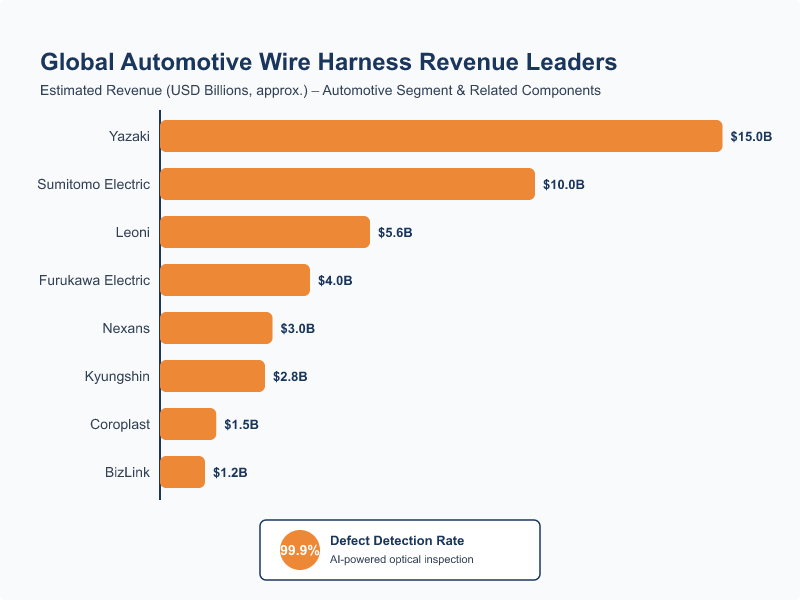
Procurement teams often treat wire harnesses as a commodity, focusing solely on unit price. That perspective misses the full picture. A harness that doesn’t meet IPC standards, uses counterfeit connectors, or arrives late can halt an entire assembly line. The supplier’s process controls, engineering depth, and supply chain integrity directly influence your product’s reliability and your company’s ability to meet market demand. When you factor in the rising complexity of modern electronics—tighter bend radii, high-speed signal requirements, and extreme environmental sealing—the supplier’s role becomes even more critical. A reliable partner doesn’t just build to print; they anticipate problems, suggest improvements, and become an extension of your engineering team. Over the next sections, we’ll break down exactly what to look for, from evaluating technical capabilities to confirming component authenticity and long-term financial health.
Defining Your Custom Wire Harness Requirements
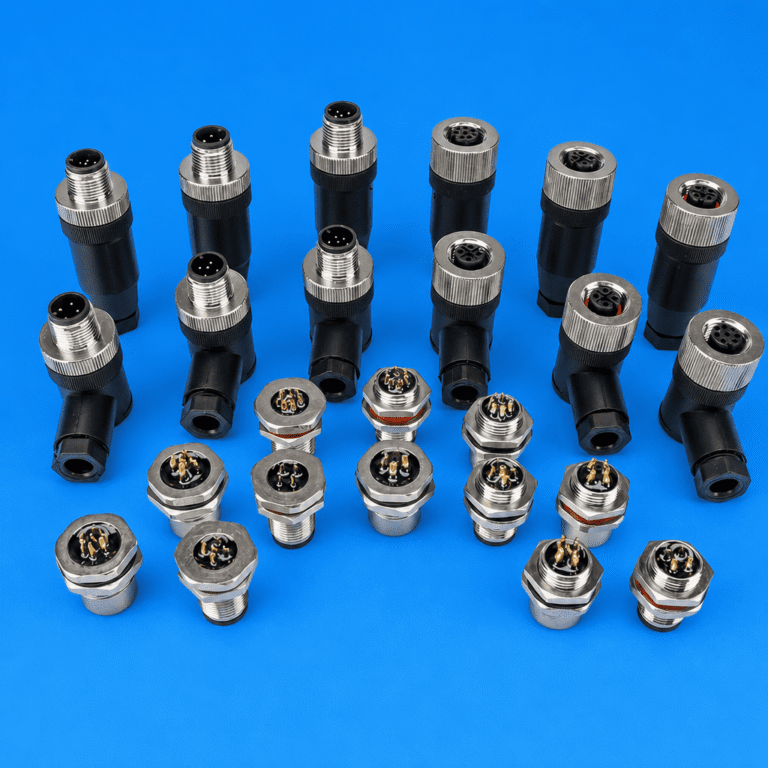
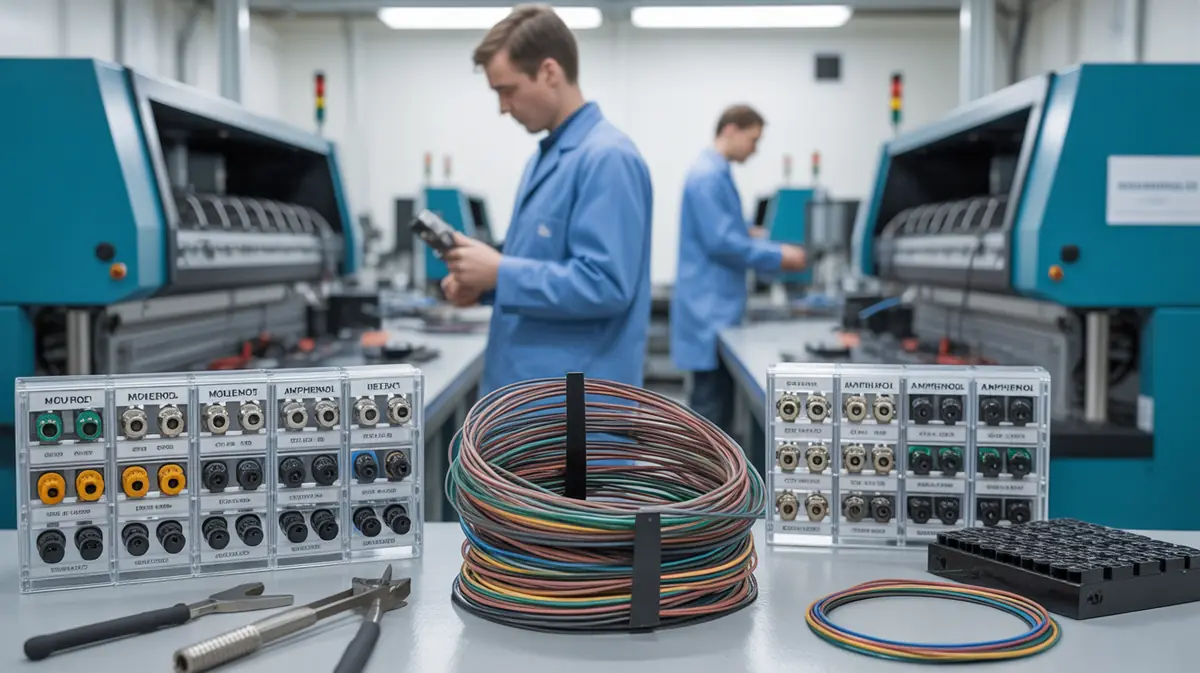
Before you can evaluate any supplier, you need absolute clarity on what you’re asking them to build. Start with the connectors. Will you standardize on Molex Micro-Fit for power lines, JST PH series for signal wiring, or TE Connectivity’s DEUTSCH connectors for harsh environments? Each brand brings specific mating interfaces, current ratings, and environmental sealing characteristics. Amphenol circular connectors, for instance, are often specified when you need robust bayonet coupling and IP67 protection. The choice isn’t arbitrary; it must align with the connectors already present on your PCB, motor, or sensor modules. Document every connector part number, pin-out, and wire gauge requirement.
Beyond connector selection, define the operational envelope: continuous operating temperature range, flex cycles if the harness moves, exposure to moisture, chemicals, or UV, and any EMI shielding requirements. Are you designing for automotive under-hood conditions that demand SAE J1128 wire? Or medical equipment that requires biocompatible jacketing and ISO 13485 traceability? Create a detailed specification sheet that includes all applicable industry standards—whether it’s IPC/WHMA-A-620 for general assembly quality, UL 758 for appliance wiring material, or MIL-DTL-16878 for defense applications. Share this document early with potential suppliers; how they respond to the detail says a lot about their engineering rigor. A supplier that asks clarifying questions about connector sourcing or suggests validated alternatives based on lead-time constraints is already adding value.
The Quality Assurance Checklist: Certifications and Standards
Walk into any serious wire harness manufacturer and the first question they’ll expect is about their IPC WHMA A 620 certification. This standard, jointly developed by IPC and the Wiring Harness Manufacturer’s Association, is the global benchmark for cable and wire harness assemblies, covering everything from crimping and soldering criteria to strain relief and coiling requirements. Don’t just ask for the certificate—find out how many certified operators they have, when their last auditor training took place, and whether they perform internal audits to the latest revision. A certificate alone isn’t enough; the team must live the standard daily.
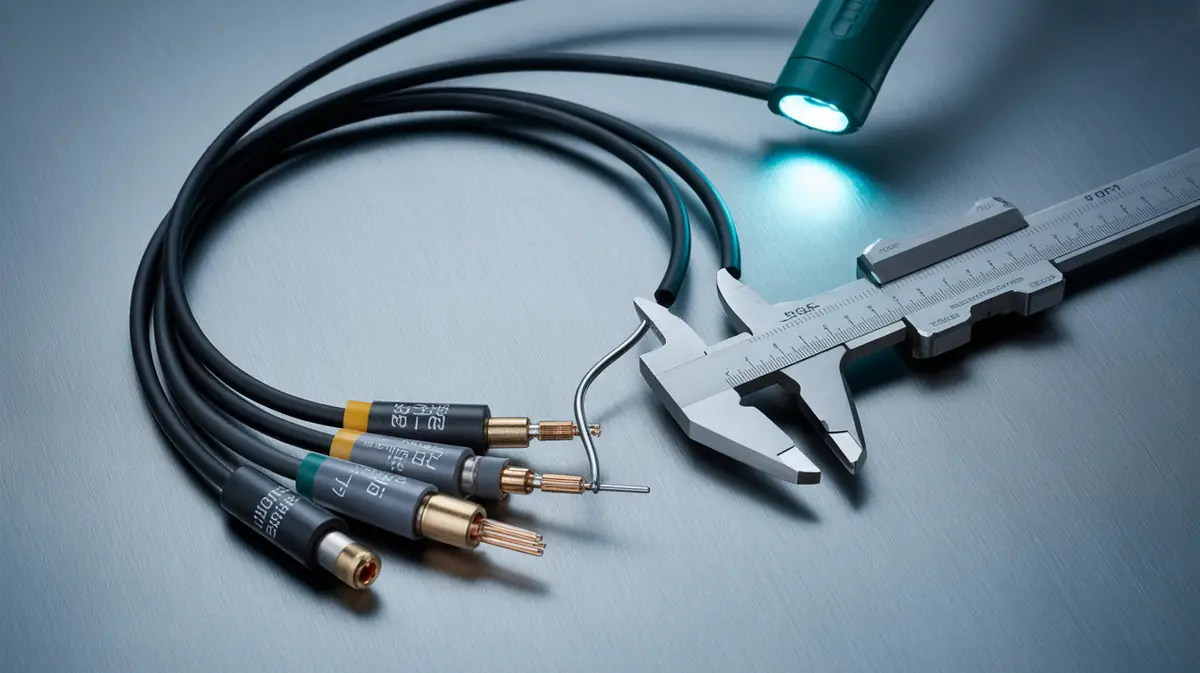
Go further. Suppliers serving automotive OEMs should hold IATF 16949, which includes defect prevention and continuous improvement disciplines. Aerospace and defense programs often require AS9100, adding risk management and configuration control layers. Even if your product doesn’t mandate these certifications, their presence signals a mature quality management system that will benefit every project. Dig into in-house testing capabilities: do they have automated continuity testers, programmable hipot testers, pull-force analyzers, and the ability to do micro-section analysis on crimps? Ask for access to their defect rate tracking, corrective action reports, and whether they apply statistical process control (SPC) to critical processes like terminal crimp height. A transparent supplier will share these metrics willingly.
Beyond Manufacturing: The Value of Engineering Support
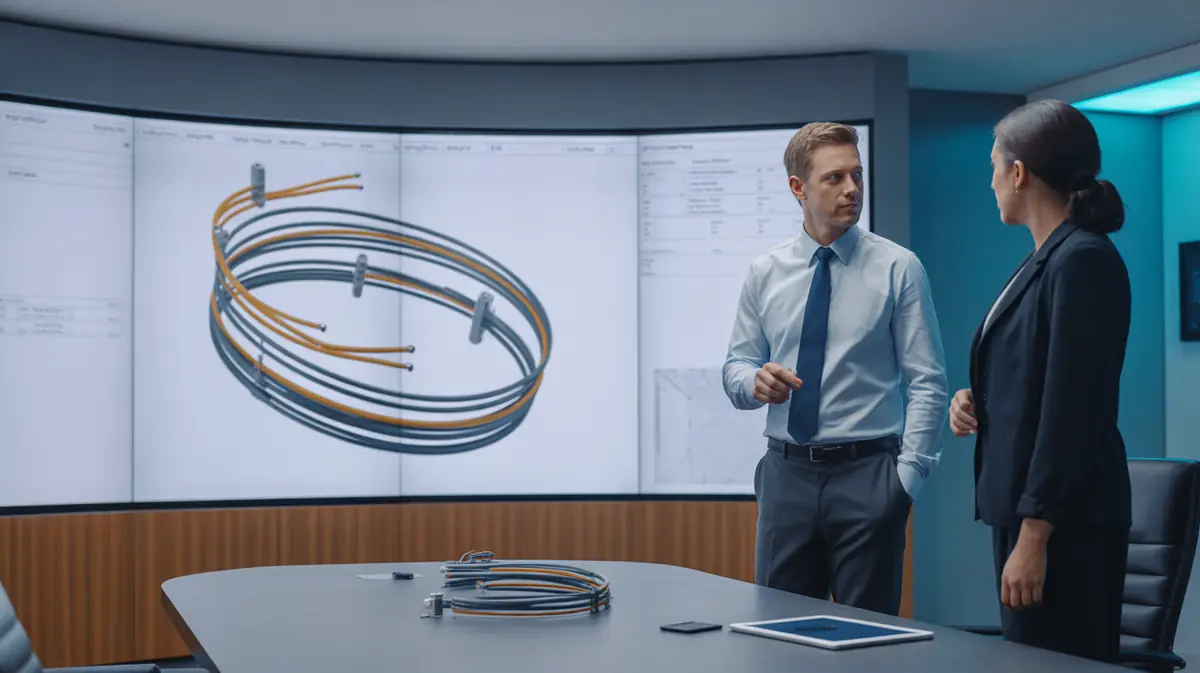
The lowest per-unit price often comes from a build-to-print shop that simply executes your drawing. But when you find a supplier with genuine engineering support, the total cost of ownership drops—sometimes dramatically. Look for capabilities in 3D modeling that let them simulate harness routing in a virtual assembly, flagging potential interference or tight bend radii before you cut metal. Suppliers proficient in signal integrity analysis can advise on differential pair length matching, shielding termination, and jacketing materials to preserve high-speed data performance.
Consider a real-world scenario: An industrial equipment manufacturer specified a Molex Mini-Fit Jr. connector in a location where operators had to squeeze a latch release with a tool, leading to field damage and warranty claims. A supplier with strong DFM acumen proposed a Molex Mega-Fit connector with a larger, glove-friendly latch and keying options that eliminated mis-mating. The redesign cut assembly time by nearly 30%[1] and slashed service calls. This level of proactive problem-solving only emerges when you select a partner that sees your success as its own. Before signing a contract, ask how many engineers will be assigned to your account, what their average response time is for a design change request, and whether they’ll participate in design reviews at your facility or via video conference.
MOQ, Lead Times, and Production Flexibility: A Comparative Perspective
Custom wire harness suppliers vary wildly in their minimum order quantities, lead times, and appetite for change orders. Aligning your product lifecycle stage with the right type of manufacturer avoids excess inventory during prototyping or painful shortages during ramp-up. The table below provides typical ranges based on supplier profiles.
Small domestic specialists: MOQ often as low as 50 units; lead time 2–4 weeks[2]; high flexibility for design tweaks. Ideal for prototyping, pilot builds, and low-mix/high-complexity work.
Mid-size regional manufacturers: MOQ 250–500 units; lead time 4–8 weeks[3]; moderate change flexibility. Good for medium-volume production runs with occasional engineering revisions.
High-volume offshore producers: MOQ 1,000–5,000 units; lead time 8–12 weeks plus shipping[4]; limited change flexibility once tooling is committed. Best for stable designs and cost-optimized mass production.
Beyond these static numbers, ask how the supplier handles volume spikes. Do they maintain buffer stocks of your specified connectors and wire types? Can they scale to a second production line within a week’s notice? Some suppliers will offer consignment or kanban agreements, holding finished harnesses close to your plant for just-in-time delivery. Others might charge a premium for expedited runs. Negotiate these terms up front, aligning MOQ and delivery commitments with your production forecast. A supplier that insists on a rigid 5,000-unit MOQ when you project only 200 units in the first six months is setting you up for obsolescence risk and cash-flow strain.
Connector authenticity is a make-or-break factor that too many buyers overlook until a lot trace reveals counterfeit parts have crept into the supply chain. A reliable harness supplier sources through authorized, franchised channels only—not the gray market. Press them to name their distributor partners. Strong suppliers will openly cite relationships with EDOM Technology, TTI, Inc., or other authorized distributors for major brands like JST, TE Connectivity, and Amphenol. These partnerships aren’t just about getting a box of connectors; they ensure lot traceability back to the manufacturer, certificates of conformance for every reel, and access to genuine parts during industry-wide shortages.
Ask to see a documented counterfeiting prevention policy. How does the supplier verify incoming connector shipments? Do they perform visual inspection under microscope, compare date codes, and use XRF analyzers to confirm contact plating composition? A supplier that can show you a traceability report linking a single JST XH connector back to its original factory shipment is a supplier that takes component integrity seriously. This diligence also translates into allocation stability. When TE Connectivity puts a popular sealed connector series on 52-week lead time[5], a harness supplier with deep authorized distributor relationships can often secure a portion of the allocation, keeping your production running while competitors wait.

From Sample to Satisfaction: Prototyping and First Article Inspection
Never skip the sample stage, even if you’re in a hurry. A competent supplier will produce a first article harness and deliver it alongside a comprehensive First Article Inspection (FAI) report aligned with IPC WHMA A 620 requirements. This report should include dimensional measurements, continuity test results, pull-force values on at least a sample of crimps, and photographs of the completed assembly with labels and packaging as it will arrive in production. The quality of the FAI pack tells you more about the supplier’s attention to detail than any sales presentation.
Request samples early and evaluate them against a structured scorecard. Create a checklist covering: overall dimensions and branch lengths, pin-to-pin continuity (100% testing with a printout), insulation crimp inspection, connector housing latching and keying, label durability and placement, and packaging that prevents connector damage during transit. Pay attention to how long it takes to get the sample and whether the supplier charges for it. A partner that invests in a quick-turn prototype without a hefty fee is signaling they value your long-term business. Conversely, a supplier that drags its feet or delivers a sample with visible flash on overmolds or missing labels is telegraphing future production woes.
Building a Long-Term Partnership: Assessing Supply Stability
Long-term reliability goes beyond a single batch audit. Ask for historical on-time delivery (OTD) data—a rate above 95% should be table stakes. Dig deeper: is that OTD measured to your requested date or the acknowledged promise date? The two can differ dramatically if the supplier pads lead times. Request a Dun & Bradstreet report or equivalent financial health check to gauge their staying power. A supplier that’s been in business for 20 years but is under severe debt pressure might not be around to support your product’s 10-year lifecycle.
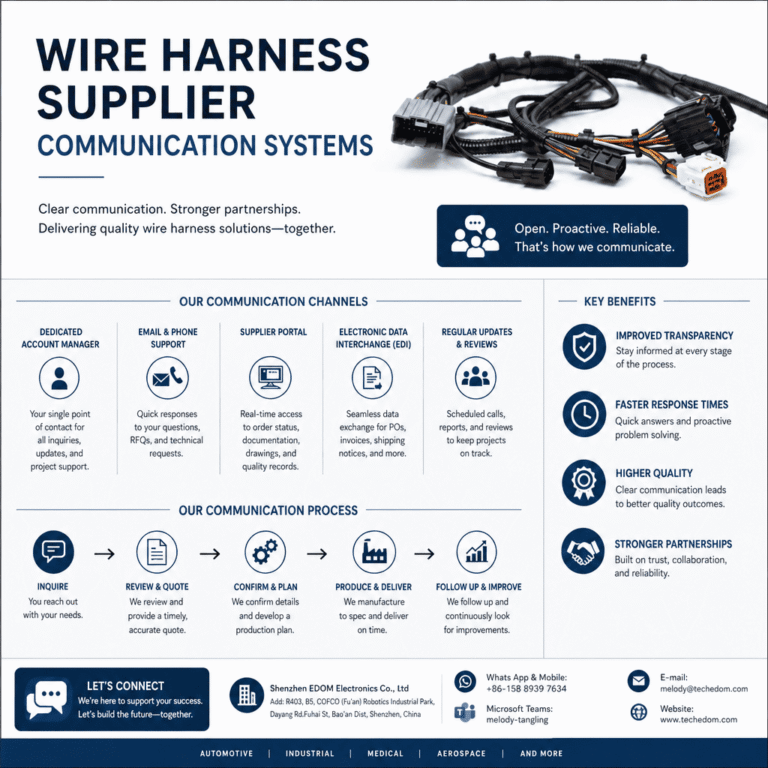
Evaluate communication structure. A dedicated account manager who understands your product line and is accessible via your preferred channel—whether phone, email, or a customer portal—can turn a crisis into a manageable correction. Test their responsiveness during the evaluation: change a connector part number on a quote and see how quickly they adjust and confirm availability. When you place a pilot order, watch for proactive updates on material status without your having to chase. The right supplier acts as an extension of your team, sharing weekly production reports, flagging EOL component notices from TE Connectivity or Molex months in advance, and proposing last-time-buy strategies. Consider a phased ramp—starting with a small contract for pilot builds, then scaling to a full production agreement only after you’ve confirmed their performance under real-world conditions. This approach de-risks the relationship while building mutual trust.
Key Takeaways
- Start with a rock-solid specification: define every connector brand (Molex, JST, TE Connectivity, Amphenol) and performance requirement before engaging suppliers.
- Demand IPC WHMA A 620 compliance and verify testing capabilities—crimping integrity and in-process inspection are non-negotiable.
- Prioritize engineering support over lowest unit price; DFM insights can slash assembly time and field failures.
- Scrutinize connector sourcing: insist on authorized distribution (e.g., EDOM, TTI) and lot traceability to eliminate counterfeit risk.
- Validate with samples and a structured FAI scorecard, then build a long-term agreement only after proving delivery stability and financial health.