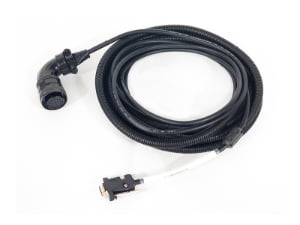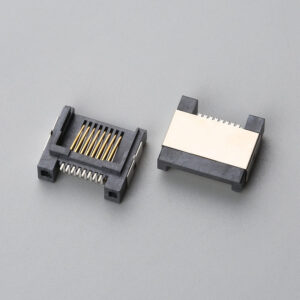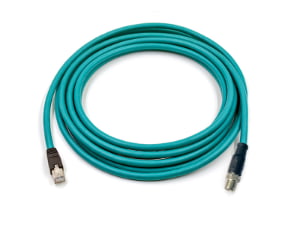
How to Choose a USB-C Cable Manufacturer?
Choosing the wrong USB-C cable manufacturer can mean returned shipments, failed compliance tests, and damaged customer relationships. I've seen buyers lose thousands because they picked a factory based only on price, ignoring critical capability gaps.
The right USB-C cable manufacturer matches your specific application needs—data speed, power delivery, durability requirements—with proven production capabilities, quality systems, and compliance documentation. No single factory fits every scenario, so your selection depends on understanding what your product actually requires and verifying the factory can consistently deliver it.

Finding the right partner isn't about choosing "the best factory." It's about matching your requirements to the right production system. Let me walk you through how I approach this decision.
What Production Capabilities Should Your Manufacturer Actually Have?
Most buyers start with a spec sheet and ask for quotes. That's backwards. I start by questioning what the cable will actually do in real-world use.
Your manufacturer's production capabilities must align with your application scenario. A factory making charging cables for consumer electronics needs different equipment, material sourcing, and testing protocols than one producing data transfer cables for medical devices or industrial equipment.
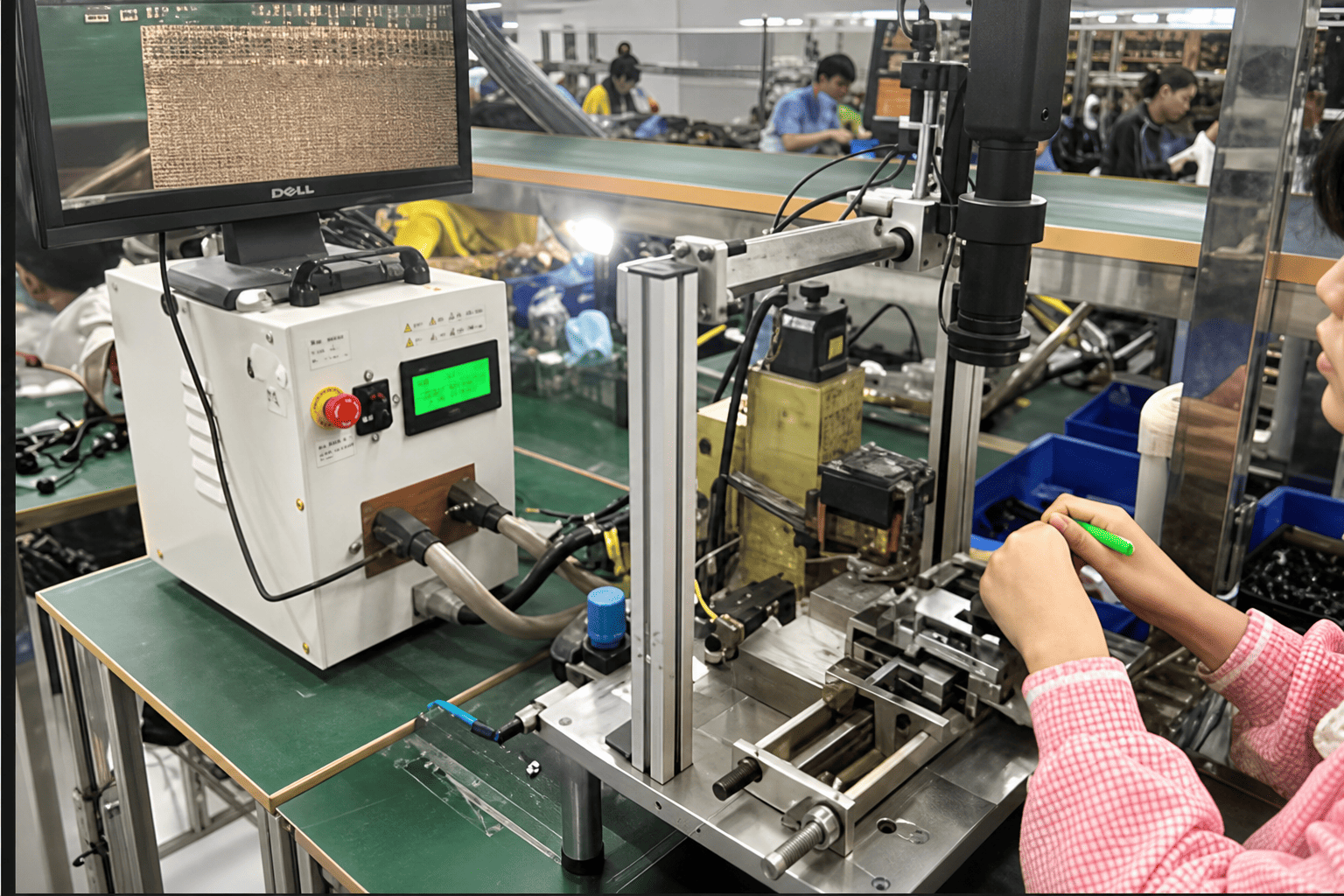
The manufacturing requirements shift dramatically based on use case. Here's what I've learned through evaluating dozens of factories:
Automation Level Determines Consistency
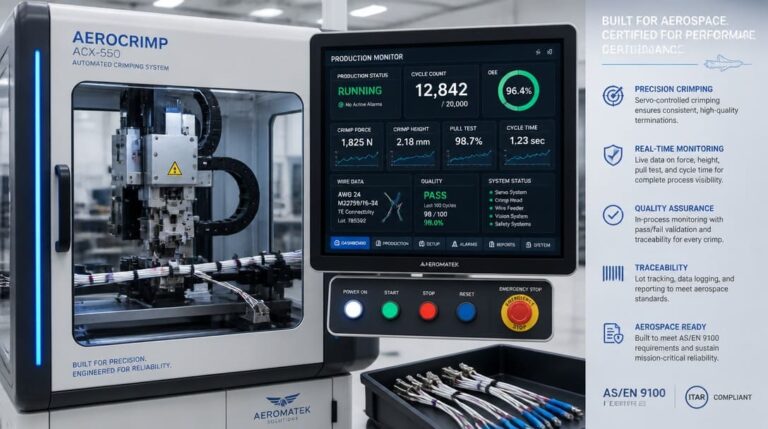
Manual assembly introduces variation. When I walk a factory floor, I count how many touch points involve human hands versus automated stations. High-mix, low-volume runs often use manual assembly—acceptable for prototypes or specialized applications. But if you're ordering 10,000+ units monthly, manual soldering or connector crimping creates quality inconsistencies.
I once worked with a customer who needed USB-C cables for rugged tablets used in warehouses. The first manufacturer quoted 20% lower than competitors. Their assembly line relied heavily on manual soldering. After the first production run, the failure rate hit 8% during our incoming inspection1. We switched to a factory with automated soldering stations—price went up 15%, but failure rate dropped below 0.5%.
Material Sourcing Reveals True Cost
Price quotes mean nothing without understanding material specifications. Two factories can quote "USB 3.1 cable" with a 30% price difference. The gap usually sits in cable gauge (24AWG vs 28AWG affects power delivery2), connector plating (gold vs tin affects corrosion resistance), and shielding quality (braided vs foil affects EMI performance).
When I review quotes, I request detailed material specifications:
| Component | Key Variable | Impact on Performance |
|---|---|---|
| Cable conductor | Gauge (AWG) | Current carrying capacity, voltage drop |
| Connector pins | Plating material/thickness | Contact resistance, durability cycles |
| Cable shielding | Type (braided/foil) | EMI/RFI protection level3 |
| Overmolding | Material grade | Strain relief, environmental resistance |
| PCB inside connector | Layer count, copper weight | Signal integrity at high data rates |
The factory willing to break down these specs before quoting usually understands what they're building. The one who gives a price immediately without asking questions doesn't.
Testing Equipment Shows Quality Commitment
Ask what in-house testing the factory performs. Not what tests they can do if you pay extra—what they do on every production run as standard practice. Competent manufacturers run continuity tests, insulation resistance checks, and high-voltage tests on 100% of cables. Advanced facilities add signal integrity testing for data cables or power delivery protocol verification for charging cables.
I visited a factory that proudly showed me their testing lab with expensive equipment. Then I asked to see their standard testing procedure for a typical order. They only used basic continuity testing unless the customer specifically paid for additional tests. The equipment was there for show, not routine quality control.
How Do You Verify Compliance and Certification Capability?
Compliance isn't optional for USB-C cables entering regulated markets. But not all compliance claims are equal.
Your manufacturer must provide verifiable third-party test reports matching your target market requirements—USB-IF certification for data/power delivery functionality4, safety certifications (UL, CE, FCC5) for regional compliance, and RoHS for material restrictions6. Factory self-declarations or "we can get certified" promises are red flags.

I learned this the hard way when helping a customer source cables for sale in Germany. The factory provided a CE certificate. Looked legitimate. But when the shipment reached customs, German authorities rejected it—the certificate covered different product specifications. We had to pay storage fees while getting proper testing done.
Understand What Certifications Actually Mean
USB-IF certification matters if your cable claims USB Power Delivery or high-speed data transfer. The certification process tests protocol compliance, not just electrical parameters. A factory can build a cable that works without USB-IF certification, but it won't legally carry USB logos or make PD/data speed claims in many markets.
Safety certifications (UL, TUV, CE) test different things:
- Electrical safety (insulation, flammability, temperature limits)
- EMC/EMI (electromagnetic compatibility, radio frequency interference)
- Mechanical durability (bend testing, strain relief, connector retention)
When I request certification documents, I verify:
- Certificate holder name matches the factory (not a trading company or different entity)
- Product model on certificate matches what you're ordering
- Issue date is recent (certificates expire; standards update)
- Testing lab is accredited (not a factory's "partner" lab with questionable credentials)
Request Design Validation Documentation
Competent manufacturers maintain design validation files. These documents show how they arrived at the current design through testing and iteration. When I evaluate a factory's capability, I ask to see:
- Material specification sheets with test data
- Signal integrity test results7 (for data cables)
- Power delivery protocol test logs (for charging cables)
- Durability test reports (bend cycles, connector insertion/removal tests8)
- Environmental test results (temperature cycling, humidity exposure)
If the factory can't produce these documents, they haven't validated their design. You're buying an unproven product.
What Quality Control Systems Actually Prevent Defects?
Quality control isn't about inspection at the end of production. That just catches defects after they're built. Effective QC prevents defects through process control.
A reliable manufacturer implements process controls at each production stage—incoming material inspection, in-process verification points, 100% functional testing, and final cosmetic inspection—with documented procedures and trackable records. Ask to see their quality manual and actual production records, not just certificates on the wall.
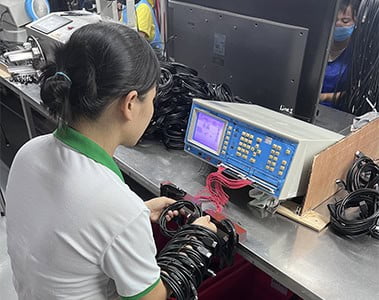
Most factories can show you ISO 9001 certificates9. That proves they have documented procedures. It doesn't prove they follow them. Here's what I actually verify:
Incoming Material Control Determines Output Quality
Defective components create defective products. Simple. I ask factories: "Show me your incoming material inspection records from last month." I'm looking for:
- Do they actually inspect incoming materials, or just accept supplier certificates?
- What percentage of incoming lots do they sample?
- What's their rejection rate? (Zero rejections suggests they're not really inspecting)
- How do they handle non-conforming materials? (Quarantine system, supplier corrective action requests)
One factory I worked with had impressive production equipment but kept delivering cables with intermittent connection issues. When I investigated, they didn't verify connector pin dimensions on incoming parts. They trusted the supplier. The supplier had dimensional drift in their stamping process. Simple incoming inspection would have caught it.
In-Process Controls Catch Problems Early
Walk the production floor and watch where operators stop to check work. Effective factories build verification steps into the production flow:
| Production Stage | Verification Point | What It Catches |
|---|---|---|
| Wire cutting | Length measurement | Dimensional errors before assembly |
| Connector crimping | Pull test on crimp | Weak crimps before overmolding |
| Soldering | Visual + continuity | Cold joints, bridges before enclosure |
| Overmolding | Dimensional check | Mold flash, incomplete filling |
| Final assembly | Functional test | Any cumulative defects |
Ask what happens when an in-process check fails. Do they scrap the unit? Rework it? Send it to final inspection anyway? The answer reveals whether their process controls actually function as controls.
Drawing Control Prevents Specification Drift
This is critical and often overlooked: drawing revision control. Any engineering change—material substitution, dimension adjustment, process modification—must show up in updated drawings with revision tracking.
I require factories to maintain a controlled drawing system where:
- Current revision is clearly marked
- Change history is documented
- Old revisions are archived (not destroyed—you need traceability)
- Production floor uses current revision only
- Any deviation requires formal engineering change notice
I learned this from a painful experience. A customer needed a cable with specific strain relief dimensions for their enclosure design. The factory made a "small improvement" to the overmold shape without telling us. The new shape didn't fit the customer's housing. We discovered it when their production line stopped. The factory said "but it's better now." Better doesn't matter if it doesn't fit the customer's design.
Now I audit drawing control systems during factory evaluations. If they can't show me revision tracking and change control procedures, I don't trust their ability to maintain specification consistency.
Test Data Traceability Shows Real Quality Commitment
Every cable should have traceable test data. Not batch-level sampling data—individual unit test records. Modern factories use barcode or RFID tracking so each cable links to:
- Production date and line
- Operator or machine IDs
- Material lot numbers
- Test results (continuity, insulation resistance, high voltage, functional tests)
- Inspection results
This traceability isn't just for quality control. If a field failure occurs, you can trace back to identify whether it's a systemic issue (entire batch affected) or isolated incident (single unit). Without traceability, you're guessing.
How Do You Match Factory Capabilities to Your Volume Requirements?
A factory optimized for 500-unit prototype runs can't efficiently produce 50,000-unit monthly orders. And vice versa. Mismatched volume expectations create problems.
Your manufacturer's production capacity, lead time flexibility, and MOQ requirements should align with your order volume patterns and growth trajectory. A factory running at 95% capacity can't absorb your volume spikes; one too large for your current orders won't prioritize your small runs.
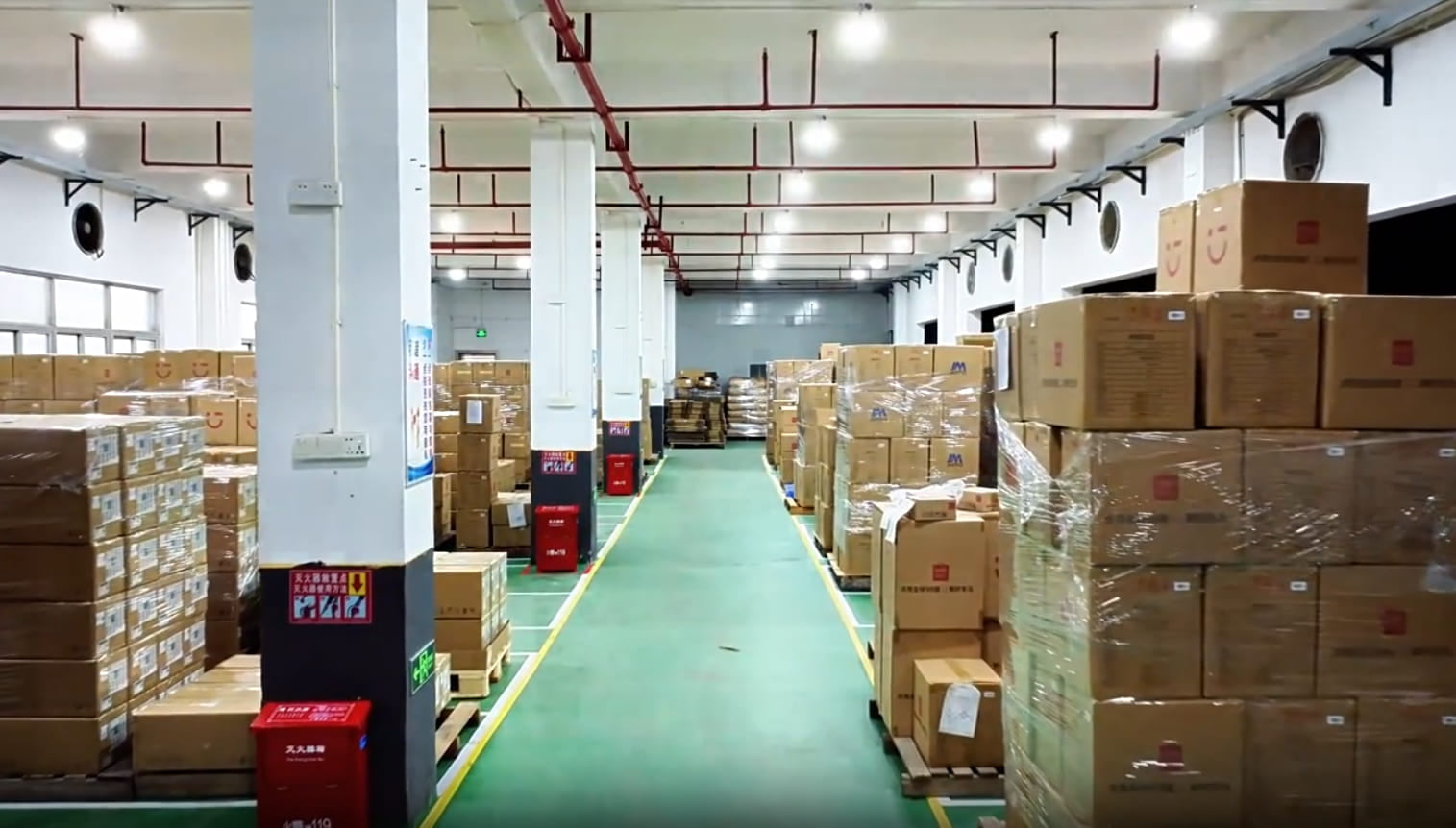
Volume matching affects more than just whether they can physically produce your order. It shapes everything from pricing to priority to quality consistency.
Production Capacity Versus Your Orders
I ask factories: "What's your current capacity utilization?" If they're running at 90%+ capacity, they can't handle your growth or order fluctuations. If they're running at 40% capacity, question why. Either they're new (risky), recently lost major customers (why?), or oversized for the market (financial stability concerns).
The sweet spot I look for: 60-75% capacity utilization10. Enough volume to prove capability and financial health, enough headroom to handle your growth and order variations.
Also verify: Is their capacity single-shift or multi-shift? A factory running two shifts at 75% capacity can scale up. A factory running three shifts at 75% capacity is nearly maxed out—they'd need equipment investment to grow.
Lead Time Flexibility Reveals Priority Level
Request their standard lead time for your expected order volume. Then ask: "What if I need to double this order on short notice?" and "What if I need to delay shipment by two weeks?"
Their answers show where you sit in their priority structure:
- Flexible on both acceleration and delays: You're a valued customer with accommodation
- Rigid on acceleration, flexible on delays: You're small volume; they'll warehouse your goods but won't rush
- Flexible on acceleration, rigid on delays: You're important; they'll prioritize you but have tight cash flow (concerning)
- Rigid on both: You're taking standard production slots; no special treatment
Be realistic about your volume. If you're ordering 1,000 units monthly from a factory producing 500,000 units monthly, you're 0.2% of their revenue. You won't get priority treatment or process customization. That might be fine—or it might mean you need a smaller factory where you're 10% of their business.
MOQ and Order Increments Affect Inventory Risk
Minimum order quantities and order increments determine your inventory risk. A factory requiring 5,000-unit MOQ with 5,000-unit increments forces you to carry more inventory than one accepting 1,000-unit MOQ with 500-unit increments.
Do the math on your inventory carrying costs:
| Factory Terms | Your Monthly Sales | Inventory Turns | Inventory Cost Impact |
|---|---|---|---|
| 5,000 MOQ / 5,000 increment | 1,500 units/month | 3.6 turns/year | 3.3 months cash tied up |
| 2,000 MOQ / 500 increment | 1,500 units/month | 9 turns/year | 1.3 months cash tied up |
| 1,000 MOQ / 500 increment | 1,500 units/month | 18 turns/year | 0.7 months cash tied up |
Lower MOQs cost more per unit. But higher MOQs cost more in working capital and obsolescence risk11. Calculate your total cost, not just piece price.
Conclusion
Choosing a USB-C cable manufacturer requires matching your specific application requirements, compliance needs, and volume patterns to verified factory capabilities in production, quality systems, and capacity flexibility—not just comparing prices.
"Pick and Place vs. Manual Assembly: A Cost Benefit Analysis for ...", https://www.allpcb.com/allelectrohub/pick-and-place-vs-manual-assembly-a-cost-benefit-analysis-for-pcb-manufacturing. Research on electronics manufacturing indicates that manual assembly processes generally exhibit higher defect rates compared to automated assembly, with human error contributing significantly to quality variation in repetitive tasks such as soldering and crimping. Evidence role: statistic; source type: research. Supports: that manual assembly processes in electronics manufacturing typically produce higher defect rates than automated processes. Scope note: General manufacturing research may not provide USB-C cable-specific failure rate comparisons ↩
"Electrical Wire Gauges - HyperPhysics", http://hyperphysics.phy-astr.gsu.edu/hbase/Tables/wirega.html. The American Wire Gauge (AWG) standard defines wire diameter specifications, with lower AWG numbers indicating larger diameter conductors that exhibit lower electrical resistance and higher current carrying capacity, directly affecting power transmission efficiency in cable applications. Evidence role: mechanism; source type: education. Supports: that wire gauge determines current carrying capacity and resistance in electrical conductors. ↩
"[PDF] Measurement of shielding effectiveness of different cable ... - GovInfo", https://www.govinfo.gov/content/pkg/GOVPUB-C13-c89ff483e6cd6381d7cf6f7fbd7a3f66/pdf/GOVPUB-C13-c89ff483e6cd6381d7cf6f7fbd7a3f66.pdf. Cable shielding methods, including braided and foil configurations, provide varying levels of electromagnetic interference (EMI) and radio frequency interference (RFI) protection by creating conductive barriers that attenuate electromagnetic fields, with effectiveness measured in decibels of attenuation across frequency ranges. Evidence role: mechanism; source type: education. Supports: that cable shielding design affects electromagnetic interference protection performance. Scope note: General shielding principles may not specify comparative performance between braided and foil types without specific test conditions ↩
"USB Implementers Forum - Wikipedia", https://en.wikipedia.org/wiki/USB_Implementers_Forum. The USB Implementers Forum (USB-IF) administers certification programs that test USB devices for compliance with USB specifications, including Power Delivery protocols and data transfer standards, with certification required for use of official USB logos and compliance claims. Evidence role: definition; source type: institution. Supports: that USB-IF certification verifies compliance with USB Power Delivery and data transfer protocol specifications. ↩
"Electromagnetic Compatibility Division | Federal Communications ...", https://www.fcc.gov/engineering-technology/electromagnetic-compatibility-division. UL (Underwriters Laboratories) provides safety certification in North America, CE marking indicates conformity with European Union safety and environmental requirements, and FCC (Federal Communications Commission) certification verifies compliance with electromagnetic interference standards in the United States, each representing distinct regulatory frameworks for market access. Evidence role: definition; source type: government. Supports: that UL, CE, and FCC represent different regulatory compliance frameworks for product safety and electromagnetic compatibility. ↩
"RoHS - Wikipedia", https://en.wikipedia.org/wiki/RoHS. The Restriction of Hazardous Substances (RoHS) Directive, originated by the European Union and adopted in various forms globally, restricts the use of specific hazardous materials including lead, mercury, cadmium, and certain brominated flame retardants in electrical and electronic equipment to reduce environmental and health risks. Evidence role: definition; source type: government. Supports: that RoHS regulations restrict the use of specific hazardous materials in electrical and electronic equipment. ↩
"Signal integrity - Wikipedia", https://en.wikipedia.org/wiki/Signal_integrity. Signal integrity testing measures the quality and reliability of electrical signals in high-speed digital systems, evaluating parameters such as rise time, jitter, crosstalk, and impedance matching to ensure that data transmission meets specifications and maintains low error rates, particularly critical for cables operating at USB 3.x speeds and above. Evidence role: mechanism; source type: education. Supports: that signal integrity testing evaluates the quality of electrical signals in high-speed data transmission. ↩
"USB hardware - Wikipedia", https://en.wikipedia.org/wiki/USB_hardware. USB connector specifications, as defined by the USB Implementers Forum, include mechanical durability requirements measured through insertion and removal cycle testing, with USB Type-C connectors typically specified to withstand a minimum of 10,000 mating cycles under standard test conditions. Evidence role: general_support; source type: institution. Supports: that connector durability specifications include minimum insertion/removal cycle requirements. Scope note: Specific cycle count requirements may vary by connector type and manufacturer specifications ↩
"ISO 9001:2015 - Quality management systems — Requirements", https://www.iso.org/standard/62085.html. ISO 9001, published by the International Organization for Standardization, specifies requirements for quality management systems, including documented procedures, process controls, and continuous improvement mechanisms, with certification indicating third-party verification of compliance with these requirements. Evidence role: definition; source type: institution. Supports: that ISO 9001 certification verifies the implementation of documented quality management system procedures. ↩
"Industrial Production and Capacity Utilization - Federal Reserve Board", https://www.federalreserve.gov/releases/g17/capnotes.htm. Operations management literature indicates that moderate capacity utilization rates, typically in the range of 60-80%, allow manufacturers to balance production efficiency with flexibility to accommodate demand fluctuations, while very high utilization rates reduce responsiveness and very low rates indicate inefficient resource allocation. Evidence role: expert_consensus; source type: education. Supports: that moderate capacity utilization rates balance operational efficiency with flexibility for demand variation. Scope note: The specific 60-75% range represents a general principle rather than a universal standard, as optimal utilization varies by industry and production type ↩
"Inventory Carrying Costs: Analysis, Calculation, and Reduction", https://intuendi.com/resource-center/inventory-carrying-costs/. Inventory management theory establishes that higher inventory levels increase working capital requirements by tying up cash in unsold goods, while also increasing exposure to obsolescence risk through longer holding periods, particularly relevant for technology products subject to rapid specification changes or demand shifts. Evidence role: mechanism; source type: education. Supports: that larger inventory quantities increase working capital requirements and exposure to obsolescence. ↩