You're searching for the "top 10" because you need to build a supplier shortlist. You want names you can trust, factories that won't ignore your RFQ, and suppliers who'll actually take your order. I handle these questions every week from European and American distributors.
The "top 10" label doesn't tell you which factory will respond to your 500-piece order, ship in three weeks, or match your budget. Large manufacturers reject small batches. Mid-sized suppliers lack brand recognition. The real question is which factory type fits your order volume, lead time, and customization needs—not which name ranks highest on a marketing list.
I see this pattern constantly. Clients send the same drawing to TE Connectivity, three Chinese factories, and a local assembler. They get five wildly different responses. Two factories don't reply. One quotes 12-week lead time. Another requires 10,000 MOQ. The last one matches their timeline but they've never heard the company name. Then they ask me: "Which factory should I trust?"
What Do Distributors Actually Mean by "Top Manufacturers"?
You're not looking for a trophy list. You're trying to reduce risk. You want factories that reply within 24 hours, provide clear quotations, and deliver on time. The phrase "top manufacturer" is shorthand for "supplier I won't get fired for choosing."
When distributors search "top wire harness manufacturers," they're asking three questions: Which factories have worked with companies like mine? Which suppliers won't ghost my RFQ? Which names help me justify my sourcing decision to my manager or client?
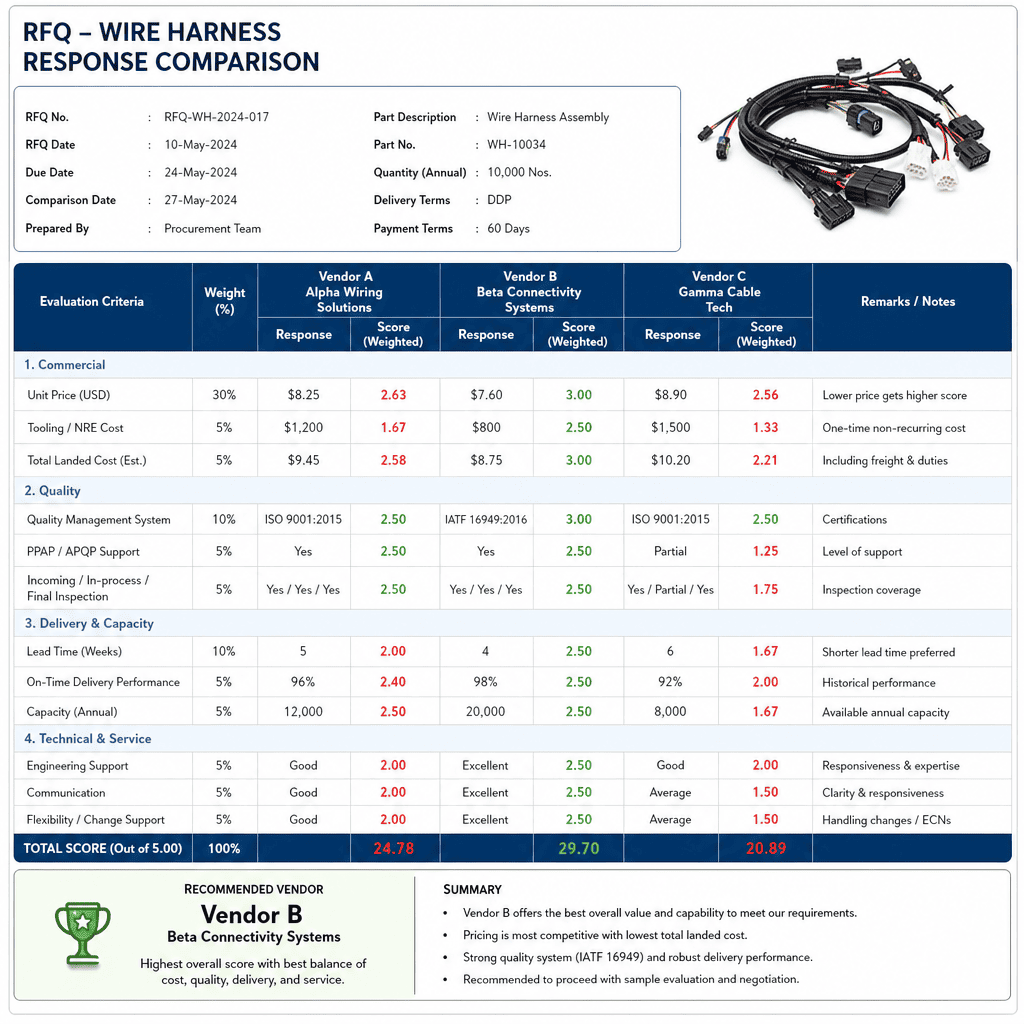
I've noticed clients care more about response time than factory size. A client sent us an RFQ last month at 3 PM California time. They needed a quote by the next morning for a meeting. We sent it in four hours. They later told me they also contacted Amphenol—no response for three days. The client chose us not because we're "better," but because we matched their urgency.
The trust problem isn't about capability. Large manufacturers like Molex and TE Connectivity have excellent quality systems. But their sales process targets high-volume contracts. If your order is 500 pieces, their system routes you to distribution partners or standard catalog products. You lose customization flexibility and direct factory communication. Mid-sized suppliers offer that flexibility but face the opposite problem: you don't recognize their name, so you question their reliability.
This creates the real dilemma. You want the responsiveness of a mid-sized factory with the credibility of a Tier 1 brand. That combination doesn't exist. So you need a framework to evaluate factories based on what actually matters for your order—not based on brand name alone.
Here's what I see when clients compare quotes:
| Client Priority | Large Manufacturer Response | Mid-Sized Factory Response | What Clients Actually Choose |
|---|---|---|---|
| 500-piece order | "Our MOQ is 5,000" or route to distributor | "We can handle 500 pieces" | Mid-sized factory (if trust exists) |
| 3-week lead time | "Standard lead time is 10-12 weeks" | "We can meet 3 weeks for rush orders" | Mid-sized factory (with premium pricing) |
| Custom connector modification | "Submit engineering change request (6-week review)" | "Send your drawing, we'll quote in 24 hours" | Mid-sized factory (if quality verified) |
| UL/CSA certification requirement | Certified across all product lines | Certified for specific product categories | Large manufacturer (if certification is critical path) |
Which Factory Types Handle Different Order Profiles?
You need to match your order profile to the factory's operational model. Large manufacturers optimize for volume. Mid-sized factories optimize for flexibility. Small assemblers optimize for speed. Each model serves different needs.
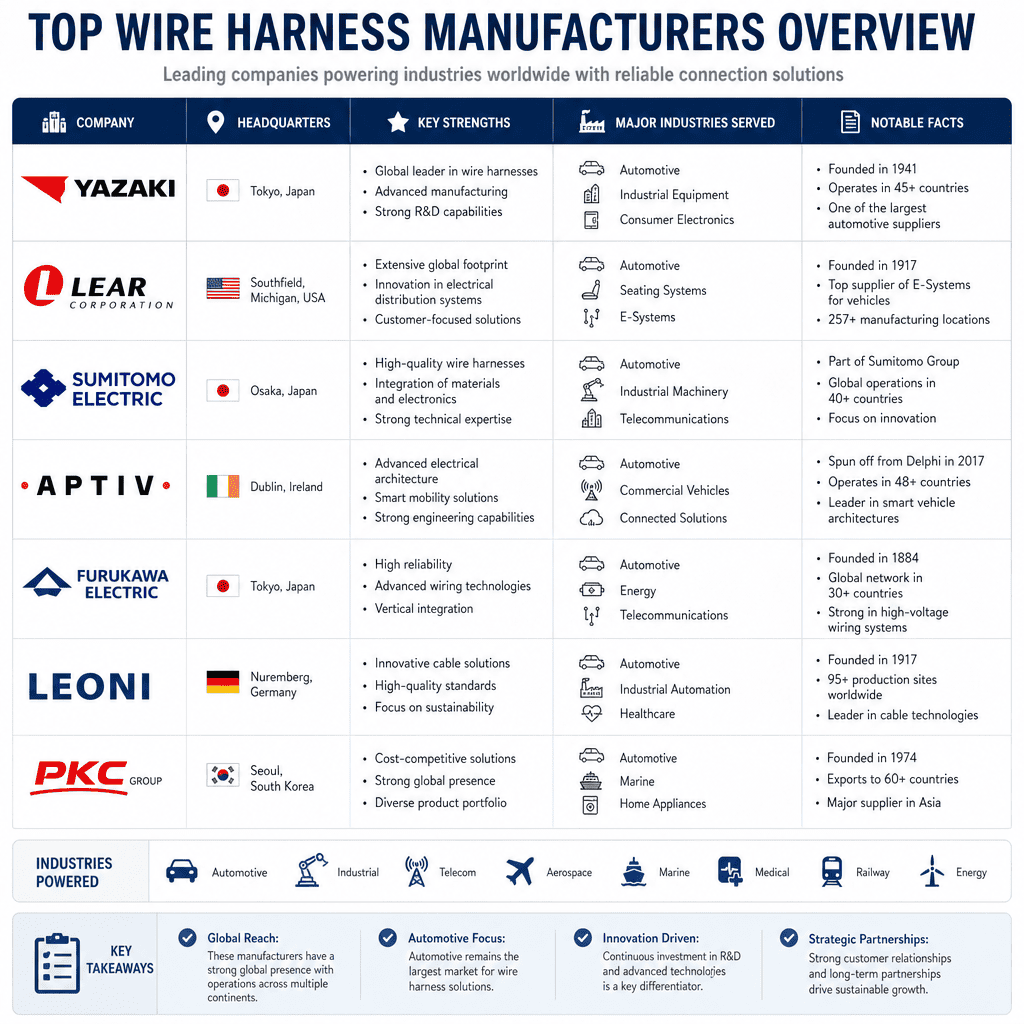
Large manufacturers like TE Connectivity, Molex, Amphenol, and Yazaki excel at high-volume production with consistent quality. They require longer lead times and higher MOQs. Mid-sized manufacturers like JST, Hirose, and Chinese suppliers handle custom projects with lower MOQs. Small regional assemblers provide rapid prototyping but limited scalability.
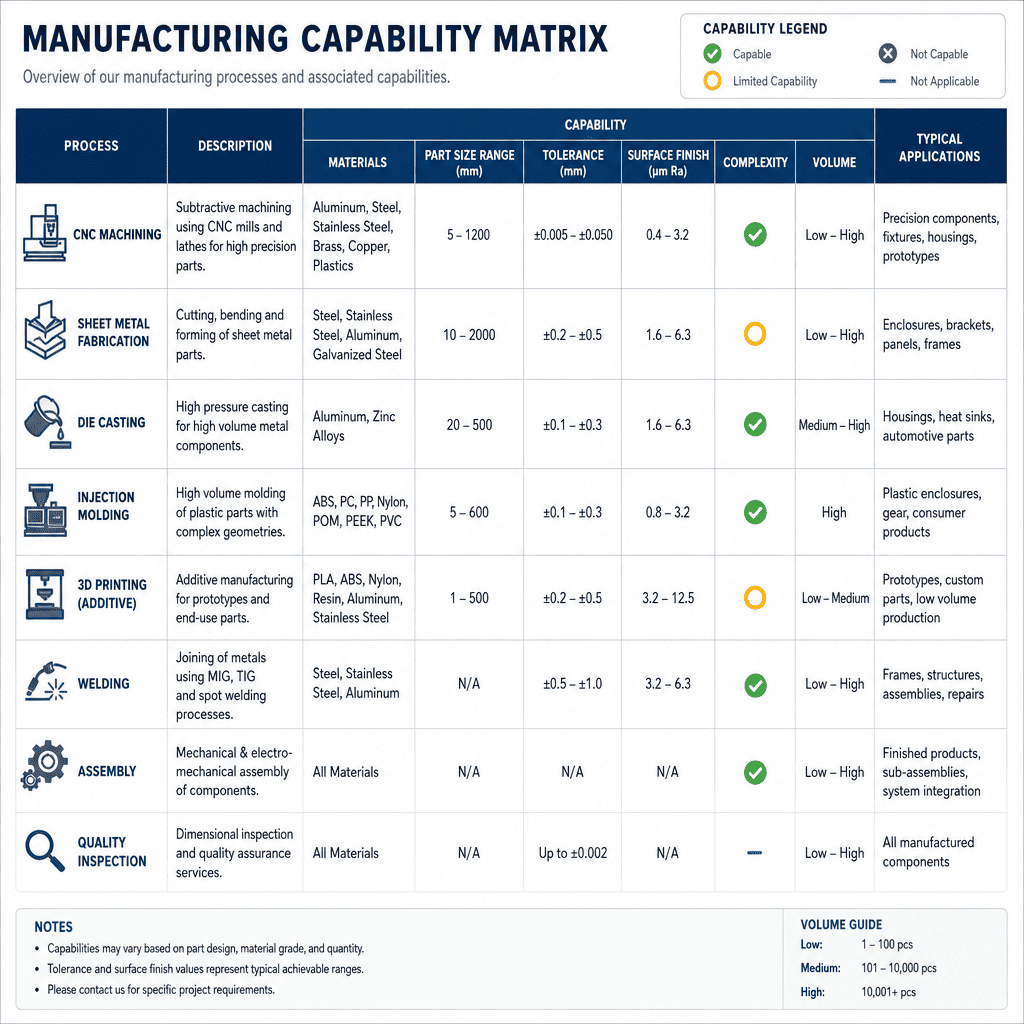
I'll walk through the actual manufacturers clients ask about and what their operational models reveal about fit. I'm including Shenzhen Edom Electronics in this list because clients compare us against these names when building shortlists. I'm not claiming we're "better"—I'm explaining when each factory type makes sense for your order.
Tier 1 Global Manufacturers
TE Connectivity operates in 140 countries with annual revenue exceeding $14 billion. They serve automotive, aerospace, and industrial sectors. Their strength is global supply chain integration and comprehensive certification coverage. Their sales process targets contracts above $500,000 annually. If your order is 1,000 pieces quarterly, their system routes you to authorized distributors. You lose direct factory communication and customization flexibility.
Molex focuses on high-density interconnect solutions for data centers and automotive applications. They maintain strict quality systems and global manufacturing footprints. Their MOQ typically starts at 5,000 pieces for custom assemblies. Lead time for new projects ranges from 12 to 16 weeks. They're the right choice if you need global consistency across multiple manufacturing sites and your volume justifies their minimum thresholds.
Amphenol specializes in harsh environment connectors and complex assemblies for military and aerospace applications. Their pricing reflects stringent testing requirements and certification costs. If your application requires MIL-spec compliance or extreme temperature performance, Amphenol's engineering support justifies the premium. For standard commercial applications, their pricing and lead times exceed what most distributors can absorb.
Yazaki dominates automotive wire harness manufacturing with facilities near major automotive plants. They're vertically integrated from wire drawing to final assembly. Their business model serves automotive OEMs with multi-year contracts and just-in-time delivery. Unless you're sourcing for automotive production lines, Yazaki's system isn't designed for your order type.
Tier 2 Specialized Manufacturers
JST produces compact connectors and wire harnesses for consumer electronics and LED lighting. Their standard product catalog serves high-volume applications. For custom assemblies, their MOQ starts at 3,000 pieces with 8-10 week lead times. They're strong in Asian markets with responsive technical support in Japan and China. If your design uses JST standard connectors, their quality and availability are excellent. For fully custom assemblies, you'll face similar volume requirements as Tier 1 suppliers.
Hirose focuses on high-reliability connectors for medical devices and test equipment. Their wire harness offerings support their connector products. Their strength is precision manufacturing and clean room capabilities. Their pricing reflects medical-grade quality systems. If your application requires FDA compliance or medical device certification, Hirose's documentation and traceability justify the cost. For industrial or commercial applications, you're paying for capabilities you don't need.
Chinese Mid-Sized Manufacturers
Foxconn Industrial Internet (the wire harness division of Foxconn Technology Group) serves consumer electronics giants with massive volume capacity. They're structured for orders exceeding 100,000 pieces monthly. Their sales process mirrors Tier 1 manufacturers—if your volume doesn't meet their threshold, you won't reach their production planning team. They're not accessible for typical distributor order sizes.
Luxshare Precision supplies Apple, Dell, and other consumer electronics brands. Their growth trajectory matches China's electronics manufacturing expansion. Like Foxconn, their business model targets mega contracts. Their minimum order values typically exceed $100,000. They're vertically integrated with in-house connector molding and cable extrusion. Unless you represent a major OEM, their sales team won't engage with your inquiry.
Shenzhen Edom Electronics (our factory) handles orders from 100 to 50,000 pieces. We focus on European and American distributors and OEMs who need custom assemblies without Tier 1 lead times. Our typical order size is 500-5,000 pieces with 2-4 week lead times for standard builds. We maintain UL, CE, and RoHS certifications. Our engineering team responds to RFQs within 4-24 hours with detailed quotations.
Here's where we fit versus other suppliers:
| Decision Factor | Tier 1 Manufacturers | Shenzhen Edom Electronics | What This Means for Your Order |
|---|---|---|---|
| Minimum Order Quantity | 5,000-10,000 pieces | 100-500 pieces (depending on complexity) | We take orders other factories reject |
| Lead Time for Custom Assembly | 10-16 weeks | 2-4 weeks (standard builds), 4-6 weeks (complex) | We manufacture in China with flexible scheduling |
| RFQ Response Time | 3-7 days (or route to distributor) | 4-24 hours with detailed breakdown | We handle inquiries directly, not through regional offices |
| Engineering Change Process | Formal ECR system (4-8 weeks) | Direct communication with production engineer | You talk to the person building your product |
| Price Positioning | Premium (brand value + global infrastructure) | 30-50% lower for equivalent specifications | We don't carry multinational overhead costs |
| Certification Coverage | Comprehensive across all regions | UL, CE, RoHS, ISO 9001 (application-specific) | We certify what your market requires |
I handle RFQs from distributors who've been turned away by Tier 1 factories. Last quarter a German distributor needed 800 medical device wire harnesses with 3-week delivery. They contacted TE and Molex first—both required 5,000 MOQ. They found us through a previous client referral. We delivered on schedule. They now send us three RFQs monthly.
The common concern I hear is: "Why is your price 40% lower than TE for the same specifications?" The question reveals the actual worry: "Is your quality 40% worse?" The answer involves cost structure, not quality shortcuts. We don't maintain offices in 50 countries. We don't pay for global brand advertising. We don't support million-dollar trade show booths. Our factory operates in Shenzhen with direct access to connector suppliers, wire manufacturers, and tool makers. We pass those savings to clients.
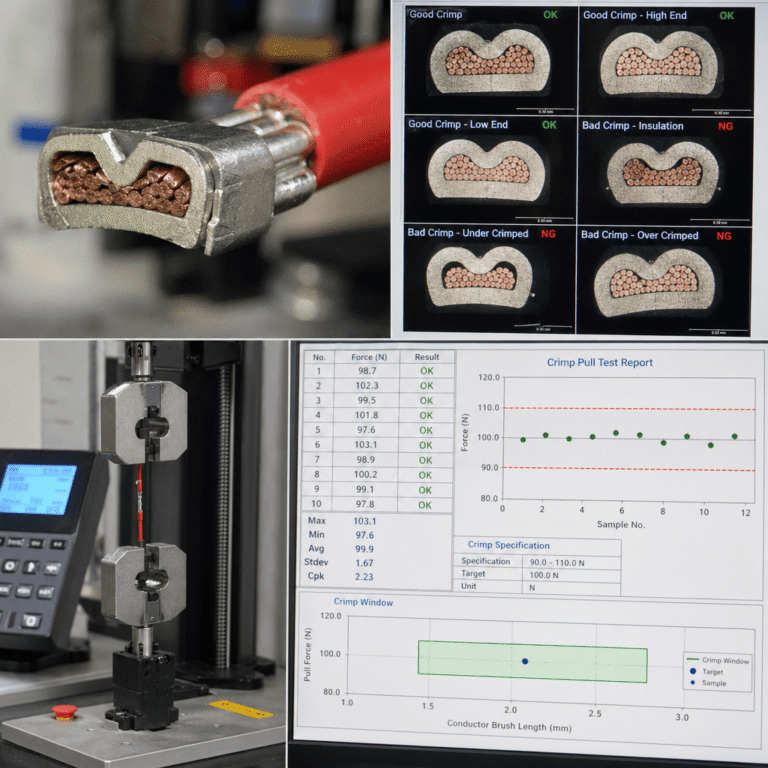
Quality concerns are legitimate. You should ask about our quality systems, not accept lower prices blindly. We use the same wire suppliers as JST (Dongguan Alpha Wire). We source connectors from the same Taiwanese manufacturers that supply Molex's China facilities. Our testing equipment (pull testers, hi-pot testers, crimp analyzers) meets UL standards. The difference isn't material quality—it's scale and brand recognition.
Regional Manufacturers Worth Knowing
Delphi Technologies (now part of BorgWarner) serves automotive aftermarket and commercial vehicle sectors. Their wire harness production focuses on engine management and electrical distribution systems. They're strong in North America and Europe with local technical support. Their pricing falls between Chinese suppliers and Tier 1 manufacturers. If you need European-made assemblies for client perception or regulatory reasons, Delphi provides that option. For Asia-manufactured assemblies, their pricing doesn't compete with direct Chinese sourcing.
How Do MOQ and Lead Time Actually Affect Your Sourcing Decision?
You're comparing quotes based on unit price. That's the wrong starting point. Your real cost includes minimum order value, inventory carrying cost, and lead time risk. A lower unit price with 10,000 MOQ costs more than a higher unit price with 500 MOQ if you only need 2,000 pieces annually.
Minimum order quantity determines your cash flow commitment and inventory risk. Lead time determines your ability to respond to customer demand changes. Together, these factors often outweigh unit price differences of 10-20% when calculating total cost.
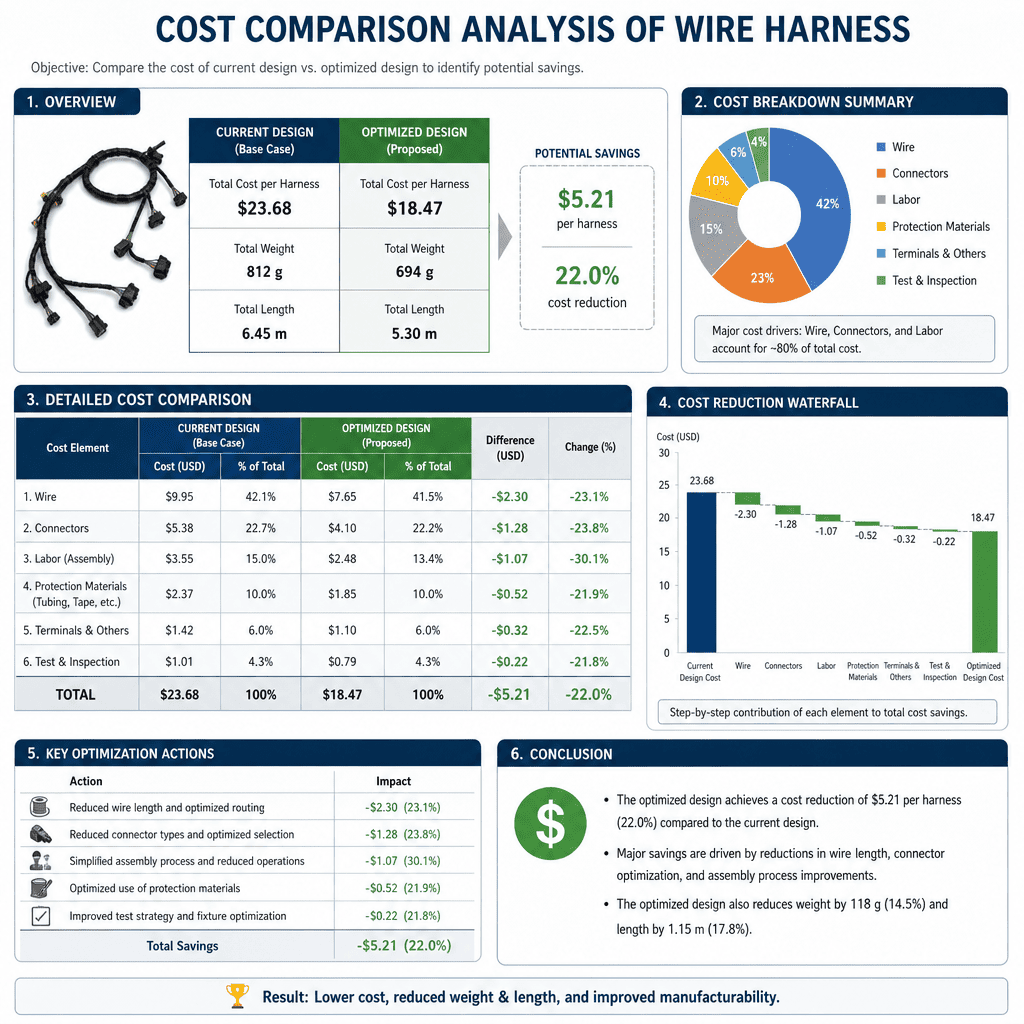
I'll show you the actual math. A client needed wire harnesses for industrial control panels. They forecasted 3,000 pieces annually with quarterly orders of 750 pieces. They got three quotes:
Quote A (Tier 1 manufacturer): $8.50/piece, 5,000 MOQ, 12-week lead time. Total first order: $42,500. They'd carry 2,000 pieces of excess inventory for 8 months. At 15% annual inventory carrying cost, that excess inventory cost $4,250 in working capital. True cost per piece for the first year: $9.92.
Quote B (our factory): $6.20/piece, 500 MOQ, 3-week lead time. Total first order: $3,100. They could order quarterly matching actual demand. No excess inventory carrying cost. True cost per piece: $6.20.
Quote C (local assembler): $7.80/piece, 250 MOQ, 1-week lead time. Total first order: $1,950. Fastest response time. True cost per piece: $7.80.
The client chose us. The Tier 1 quote was actually cheapest on unit price if they ordered 10,000 pieces—but they didn't need 10,000 pieces. The local assembler provided faster response but couldn't scale to their total annual volume. We matched their order pattern without forcing inventory risk.
Lead time creates hidden costs too. A 12-week lead time means you forecast demand three months ahead. Your forecast accuracy decreases with longer horizons. If you order 5,000 pieces and demand drops, you carry dead inventory. If demand spikes, you can't respond for 12 weeks. You lose sales or pay expedite fees.
This creates the real trade-off. Longer lead times require higher inventory buffers. Higher inventory buffers increase carrying costs and obsolescence risk. Some clients accept these costs for Tier 1 quality assurance. Others prioritize flexibility and responsiveness.
Here's what different lead times mean operationally:
| Lead Time | What This Requires From You | When This Makes Sense |
|---|---|---|
| 1-2 weeks | Just-in-time ordering possible, minimal safety stock | Stable demand, local supplier, standard products |
| 3-4 weeks | Monthly ordering cadence, 1-month safety stock | Moderate demand variability, overseas supplier, semi-custom products |
| 6-8 weeks | Quarterly ordering, 2-month safety stock | Predictable demand, cost-sensitive application, standard specifications |
| 10-16 weeks | Annual contracts, 3-4 month safety stock | High-volume production, automotive/aerospace applications, full custom tooling |
What Do Certifications Actually Tell You About Factory Capability?
You're checking certification lists because you need to justify your supplier choice to your manager or customer. Certifications signal minimum capability thresholds. They don't predict whether a factory will answer your email or deliver on time.
ISO 9001 tells you a factory has documented quality procedures. UL listing tells you products passed specific safety tests. IATF 16949 tells you automotive OEMs have audited the facility. These certifications are necessary but not sufficient for evaluating whether a factory fits your order requirements.
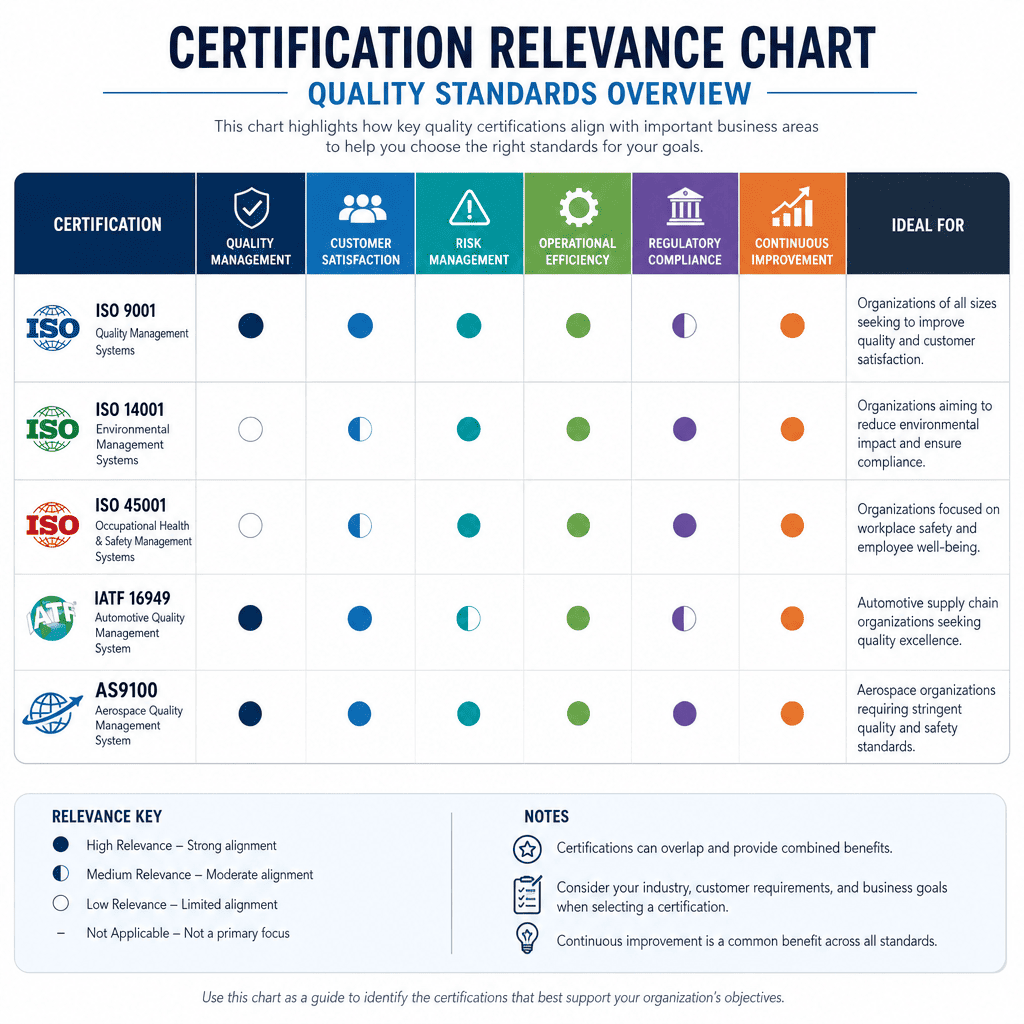
I see clients overweight certifications in sourcing decisions. A distributor asked if we had IPC-A-620 certification for cable assemblies. I asked what their application was. They were supplying wire harnesses for LED lighting fixtures—not space applications. IPC-A-620 Class 3 requirements (designed for aerospace) exceed what their application needed. They were checking certification boxes without understanding relevance.
Certifications cost money to obtain and maintain. Factories pass those costs to customers. If you don't need a specific certification for your market or application, you're paying for documentation you won't use. This is why our certification strategy focuses on what European and American markets actually require: UL for North American electrical safety, CE for European market access, RoHS for environmental compliance, ISO 9001 for quality management systems.
We don't maintain IATF 16949 (automotive) because we don't target automotive OEMs. We don't maintain IPC-A-620 Class 3 because our clients don't need space-grade workmanship. We invest in certifications that match our customer base. This keeps our pricing competitive while maintaining necessary compliance.
Here's what certifications actually verify:
ISO 9001 means the factory documents procedures, tracks nonconformances, and conducts internal audits. It doesn't guarantee your specific product will meet your specifications. It means the factory has systems to detect and correct problems. Every serious manufacturer should have ISO 9001. If they don't, ask why.
UL Listing means specific products passed UL safety tests. The listing applies to the tested product configuration only. If you modify the design, you may need re-testing. UL certification is different from UL listing—certification covers the factory's ability to produce listed products consistently. For wire harnesses going to North American markets, UL listing is usually required. Your customer may not accept products without it.
CE Marking is manufacturer self-declaration that products meet EU safety, health, and environmental requirements. It's not a certification issued by a third party. The manufacturer is responsible for compliance. For wire harnesses, this typically involves Low Voltage Directive