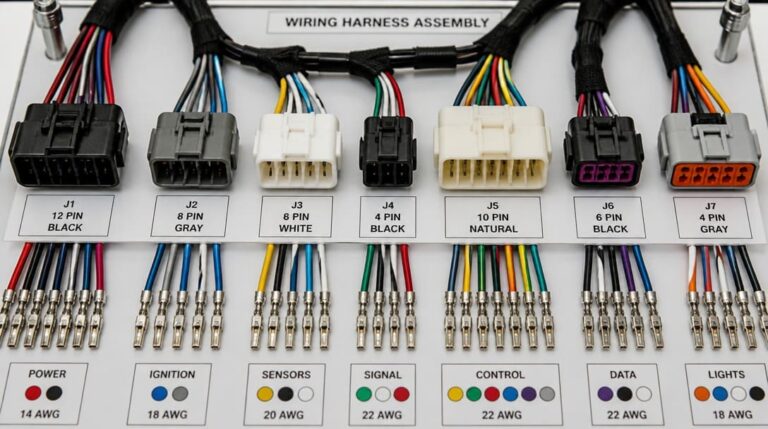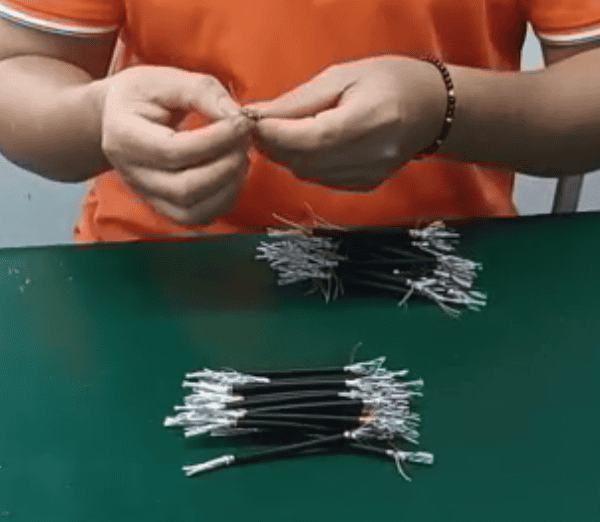
The global wire harness market demands absolute precision, but procurement teams often hit a wall when dealing with rigid, high-MOQ automotive giants. While Tier-1 manufacturers excel at massive industrial scale, small-to-mid-sized OEMs frequently require faster engineering turnarounds, agile prototyping, automated quoting platforms to speed up RFQs, and flexible production volumes. Securing a reliable manufacturing partner who aligns with your specific engineering and volume needs is critical to avoiding costly supply chain delays. To explore how factory-direct engineering and flexible supply chains can optimize your next project, discover how our custom custom wire harness manufacturer and OEM supplier can optimize your supply chain.
Why Wire Harness Quality Defines Product Reliability
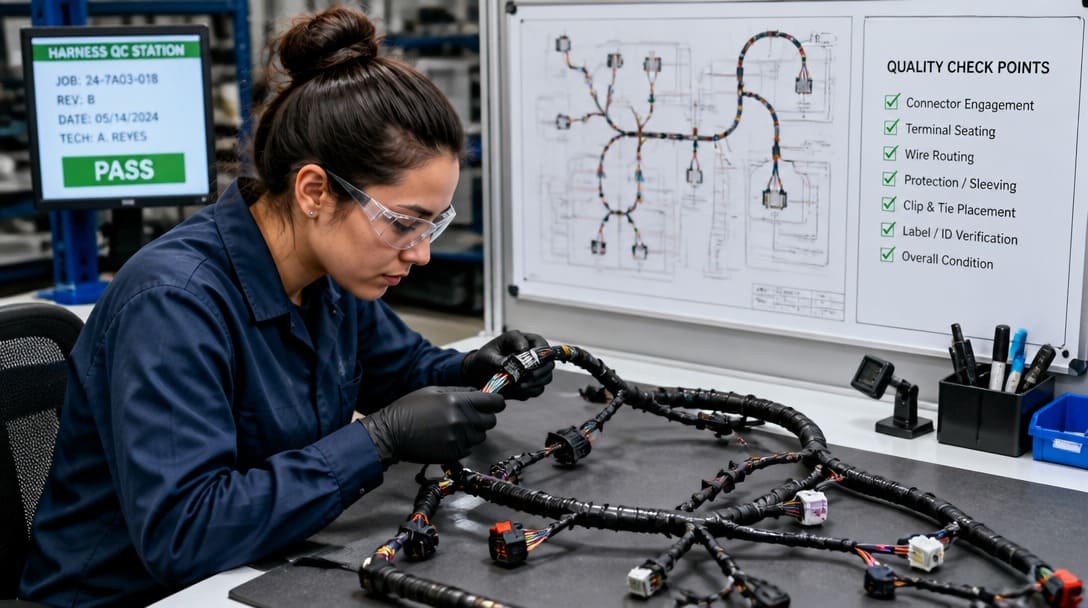
Wire harnesses are far more than bundles of cables. They are precisely engineered assemblies that must withstand extreme temperatures, vibration, moisture, and electromagnetic interference for decades. In the automotive sector, a modern vehicle contains over 1,500 individual wires spanning several kilometers, connecting everything from safety-critical ECUs to infotainment systems. Aerospace harnesses must meet FAA or EASA fireproofing and redundancy standards. Industrial applications demand resistance to oil, chemicals, and constant flexing.
The cost of compromise is devastating. The 2022 global automotive wire harness shortage, triggered by the Ukraine conflict, halted production lines worldwide and cost OEMs billions in lost output[1]. Earlier, faulty harnesses were linked to multiple vehicle fire recalls, eroding consumer trust and brand value. These events underscore a harsh reality: wire harness quality is non-negotiable.
Choosing a manufacturer with rigorous certifications, global production capacity, and a culture of continuous improvement is the only way to guarantee product integrity. In the following sections, we define the methodology used to rank the industry’s elite, then present the top 10 companies that are shaping the future of connectivity.
How We Ranked the Top 10 Wire Harness Manufacturers
No single metric captures a manufacturer’s excellence, so we employed a multi-dimensional scoring framework. The evaluation criteria included:
- Revenue and market share: Total company revenue from wire harness and electrical architecture divisions, reflecting financial stability and ability to invest in R&D.
- Global production capacity: Number of manufacturing sites, geographic diversification, and ability to serve regional hubs (Americas, EMEA, Asia-Pacific).
- Industry certifications: Adherence to IATF 16949 (automotive quality management), ISO 9001, AS9100 (aerospace), UL, and relevant military specifications.
- Customer base and reputation: Long-term OEM and Tier-1 relationships, recall history, and feedback from industry publications and trade associations.
- Innovation and specialization: R&D spending, patent portfolios, and niche expertise in high-voltage EV harnesses, data connectivity, or harsh-environment applications.
Data was sourced from 2024-2025 annual reports, investor presentations, market analyses by McKinsey and Roland Berger, as well as verified customer surveys. We balanced the natural tension between massive automotive tier-1s and specialized industrial suppliers, because scale alone does not guarantee suitability for every project. The result is a ranked list that reflects both market dominance and engineering dexterity.
The Top 10 Wire Harness Companies in 2026
Each of these manufacturers has demonstrated exceptional capability, resilience, and customer focus. While the ranking considers aggregate scores, the differentiators noted below will help you shortlist based on your precise requirements.
| Manufacturer Name | Core Specialization & Technical Strengths | Target Volume & MOQ Profile |
|---|---|---|
| Yazaki Corporation | Global automotive wiring harness leader; unmatched mass-production infrastructure and global Tier-1 distribution networks. | Ultra-high volume (>100k units/year). Extremely high entry barriers. |
| Sumitomo Electric | Advanced material sciences and high-voltage harness architectures for Next-Gen Electric Vehicles (EVs) and hybrids. | Massive scale contracts; heavily optimized for mega automotive OEMs. |
| Aptiv PLC | Deep integration with Smart Vehicle Architecture (SVA), high-speed data connectivity, and autonomous driving systems. | Tier-1 automotive and aerospace integration. Rigid MOQ requirements. |
| Leoni AG | Standard and specialized custom cabling solutions focused on European premium automotive brands and complex industrial automation systems. | Mid-to-high volume custom production runs for large industrial groups. |
| Furukawa Electric | Specialized lightweight aluminum wire alloys engineered specifically to reduce weight in modern eco-friendly green transportation systems. | Long-term infrastructure development and massive automotive supply chains. |
| Nexans | Undisputed leader in harnesses for wind turbines, solar farms, rolling stock, and shipbuilding with sustainable, fire-performance cables. | Industrial fleet, renewable energy, and heavy infrastructure corporate supply contracts. |
| Samvardhana Motherson International Ltd. (MSSL) | Heavy-duty commercial transportation specialist; dominant in electrical networks for heavy trucks, construction machinery, and aerospace (Airbus A220). | Industrial fleet and heavy-machinery corporate supply contracts with strong price-performance ratio. |
| Kyungshin | Backbone of the South Korean automotive supply chain; deeply integrated with Hyundai/Kia’s EV (E-GMP) and mild-hybrid platforms. | Stable, high-volume localized production contracts for global auto hubs. |
| Coroplast | Specializes in tape-wrapped, highly flexible and rugged harnesses that resist water, mud, and mechanical abuse for agricultural and construction equipment. | Custom production runs for heavy-duty, specialty, and industrial OEMs prioritizing durability. |
| BizLink Holding | Highly flexible interconnect components spanning server data centers, solar renewable energy arrays, and high-end industrial machinery. | Highly diversified cross-industry profiles with mid-to-high volume flexibility. |
💡 Sourcing Tip for Small-to-Mid-Sized OEMs
While these Top 10 Tier-1 giants offer massive scale, their strict high-MOQ requirements and rigid timelines can be a roadblock for agile engineering teams. If your project requires factory-direct agility, complex custom wire harness engineering, rapid RFQ turnarounds, and flexible MOQs tailored for small-to-mid volumes, consider a specialized manufacturing partner like EDOM Electronics to accelerate your launch cycle without high entry barriers.
1. Yazaki Corporation
The undisputed giant of the wire harness industry, Yazaki commands over 28% of the global automotive market[2] with revenues exceeding $15 billion. Headquartered in Japan, the privately held company operates more than 250 production sites[3] across 45 countries. Yazaki’s vertical integration—from copper recycling to connector manufacturing—delivers unparalleled cost control and supply chain agility. It is the primary harness supplier to Toyota, Honda, and Ford, and is rapidly scaling its high-voltage portfolio for electric vehicles. For procurement leaders, Yazaki offers the ultimate safety net of scale, but its massive volumes are best suited to programs exceeding 100,000 annual units.
2. Sumitomo Electric Industries
Another Japanese titan, Sumitomo Electric generates approximately $10 billion from its automotive segment[4], which includes wire harnesses, anti-vibration rubber, and related components. The company distinguishes itself through deep R&D in wiring materials—it invented the high-performance “SUS304” stainless steel wire for harsh environments. Its footprint spans Southeast Asia, China, and Mexico, making it a resilient partner for OEMs looking to regionalize supply. Sumitomo is a strategic supplier to Nissan, Subaru, and various Chinese EV startups. Its balanced portfolio between wiring harnesses and electronic components enables systems-level optimization that pure-play harness makers cannot match.
3. Aptiv PLC
Aptiv has transformed from a traditional auto parts supplier into a brain-and-nervous-system company for next-generation vehicles. Its Signal & Power Solutions segment, which includes wire harnesses and connectors, posted $11.6 billion in revenue[5] last year. Aptiv’s differentiator is its simultaneous mastery of high-speed data and high-voltage power distribution—critical for software-defined vehicles. With over 130 manufacturing sites and 18 major technical centers, Aptiv leads in zonal architecture harnesses, which reduce weight and complexity. The company’s engineering services can co-develop a vehicle’s entire electrical architecture in parallel with harness design, accelerating time-to-market.
4. Leoni AG
Germany’s Leoni is Europe’s foremost wire and cable specialist, with €3.9 billion in revenue[6] and a sharp focus on e-mobility. Its Wiring Systems division produces harnesses for BMW, Mercedes-Benz, and Volkswagen, while its Cable division supplies custom cables for robotics, medical, and data centers. Leoni recently reorganized under new leadership to streamline operations and improve profitability after supply chain shocks. Its strong expertise in silicone and high-temperature cables makes it a top choice for off-highway vehicles, wind turbines, and other demanding applications. Customers value Leoni’s co-engineering culture and its growing network of factories in Eastern Europe and North Africa.
5. Furukawa Electric
Furukawa Electric’s wire harness business, while smaller than Yazaki at roughly $4 billion in related revenue[7], punches above its weight in innovation. The Japanese company is a pioneer in aluminum wiring for weight reduction and ultra-thin-wall insulation, both essential for extending EV range. Furukawa supplies Honda, Suzuki, and heavy-equipment manufacturers like Komatsu. Its proprietary F-ALC aluminum wire promises 40% weight savings over copper without compromising conductivity[8]. With 70+ global production bases and a dedicated electromobility division, Furukawa is a strategic partner for projects where lightweighting and material science are priorities.
6. Nexans
French multinational Nexans brings a distinctly industrial and energy-centric perspective to wire harnesses. While its automotive division is substantial (€2.7 billion), Nexans is the undisputed leader in harnesses for wind turbines[9], solar farms, rolling stock, and shipbuilding. Its “Generation Connect” strategy emphasizes sustainable materials and fire-performance cables. For projects such as offshore wind park cabling or high-speed train harnesses that must comply with EU fire standards EN 45545, Nexans is the reference manufacturer. The company’s 28 industrial sites in 14 countries offer robust European and North African supply options.
7. Samvardhana Motherson International Ltd. (MSSL)
commonly known as Motherson Group。 India’s Motherson Group has aggressively consolidated the wire harness market through acquisitions, including PKC Group (Finland) and Bombardier’s harness business. Its annual wiring revenue now exceeds $3.2 billion, serving automotive, aerospace, and medical sectors. Motherson’s advantage is cost competitiveness without sacrificing quality—it operates over 170 factories, many in low-cost regions, while maintaining IATF 16949 and AS9100 certifications. It is the sole harness supplier for the Airbus A220[10] and a key partner to Daimler Trucks. For sourcing managers under intense cost pressure, Motherson offers a compelling price-performance ratio backed by worldwide deliveries.
8. Kyungshin
South Korea’s Kyungshin is the backbone of the Korean automotive supply chain, deriving the bulk of its $2.8 billion revenue from Hyundai Motor Group. It has replicated the Hyundai model of localized production globally, with factories in Alabama, Georgia, the Czech Republic, and India. Kyungshin is particularly strong in IC engine and mild-hybrid harnesses, and is quickly retooling for dedicated EV platforms like Hyundai’s E-GMP. Its deep relationship with Hyundai/Kia ensures stable, high-volume orders and provides a template for other OEMs seeking a loyal, collaborative supplier.
9. Coroplast
Germany-based Coroplast (Wiring Systems division) may be lesser-known but is crucial in heavy-duty and specialty vehicles. With revenue around $1.5 billion, it specializes in tape-wrapped, highly flexible harnesses that resist water, mud, and mechanical abuse. Agricultural machinery, construction equipment, and municipal vehicles from John Deere, CNH Industrial, and Volvo CE rely on Coroplast for longevity. The company’s proprietary taping technology eliminates the need for rigid conduits, saving space and weight. For industrial OEMs that prioritize ruggedness over miniaturization, Coroplast is a top contender.
10. BizLink
Taiwanese connector and cable assembly giant BizLink rounds out the top 10 with $1.2 billion in revenue, driven by diversification beyond automotive into IT, medical, and industrial automation. Its wire harness and cable assemblies serve clients like Dell, Siemens Healthineers, and Toyota Industries. BizLink’s strength lies in customization: it can produce low- to mid-volume, highly complex harnesses that integrate multiple connector types and data protocols (USB, Ethernet, HDMI). Its manufacturing footprint spans China, Southeast Asia, and a growing presence in the US and Mexico, making it an agile partner for fast-growing tech and medtech companies.
How to Select the Right Wire Harness Manufacturer for Your Project
A top-10 ranking provides a high-level filter, but the right partner depends on your specific technical and commercial requirements. Use the following framework to guide your evaluation:
- Volume and complexity: Yazaki and Sumitomo excel at high-volume automotive programs; BizLink or Coroplast may be better for low-to-mid volume specialized assemblies. Be honest about your annual demand—under 10,000 units may not interest a tier-1 giant.
- Certifications and compliance: Verify that the manufacturer holds active IATF 16949 (automotive), AS9100 (aerospace), ISO 13485 (medical), or relevant UL/MIL certifications. Ask for audit reports and sample first-article inspection (FAI) documents.
- Geographic footprint and lead times: Map your assembly plant locations against the supplier’s production and distribution centers. Nearshoring to Mexico or Eastern Europe can reduce logistics risks and improve just-in-time delivery.
- Supply chain resilience: Inquire about dual sourcing of raw materials (copper, connectors, insulators) and inventory buffer strategies. The 2022 crisis proved that single-supplier dependencies are fatal.
- Total cost of ownership (TCO): Look beyond the unit price. Factor in tooling amortization, warranty claims, engineering change costs, and the value of a supplier’s design-for-manufacturing suggestions that reduce assembly time.
- Innovation roadmap: For EV programs, assess the manufacturer’s experience with 800V+ architectures, aluminum wiring, and integrated power electronics. Ask about their investments in automation and AI-driven quality inspection.
Conducting on-site audits and reviewing a supplier’s corrective action history from previous recalls can reveal cultural commitments that paper certifications cannot. A shortlist of three qualified manufacturers, followed by a pilot run, is the industry best practice for high-stakes projects.
The Role of Advanced Wire Harness Manufacturing Quote Software in Vendor Selection
In the modern electronics landscape, speed and cost predictability are paramount. When evaluating the top 10 wiring harness manufacturers in world, one critical differentiator is their deployment of advanced wire harness manufacturing quote software.
Traditional manual cost estimation often leads to delayed lead times and pricing errors due to fluctuating copper surcharges and complex terminal matrixes. Today, top-tier vendors utilize automated estimating software to rapidly analyze bill-of-materials (BOM), step-files, and labor inputs. This digital integration ensures that wire harness connector manufacturers can deliver highly accurate, instant cost simulations. When selecting your next vendor, always audit their digital quoting capabilities—factory-driven software automation translates directly into faster product launch cycles and transparent engineering cost breakdowns.
Wire Harness Quote Software Guide: Top Quoting Automation Platforms
For contract manufacturers and OEMs in electronics and automotive sectors, manual RFQ (Request for Quote) processing is a major bottleneck. To streamline engineering turnarounds and cost estimations, top vendors are turning to specialized wire harness quoting software.
When evaluating quoting automation platforms in 2026, especially in the Asia-Pacific and global markets, contract manufacturers look for the following industry-leading solutions:
- Agile Quoting & ERP Extensions: Software platforms that can directly parse BOMs (Bill of Materials), calculate wire cutting/stripping labor times, and benchmark raw material costs (like copper and connectors) in real-time.
- Automotive-Specific Quoting Tools: Advanced quoting platforms tailored for automotive electronics that integrate IATF 16949 compliance metrics and automatically factor in multi-tier supply chain component pricing.
Key Factors for Selecting Quoting Platforms:
- BOM Automation: Can the software automatically match wire harness drawing data with authorized distributors’ stock and pricing?
- Labor Costing Engines: Does it feature accurate crimping, assembly, and testing (such as continuity or harness cross-section testing) labor calculators?
5 Trends Reshaping Wire Harness Manufacturing
The wire harness sector is in the midst of its most profound transformation since the shift from cloth tape to PVC insulation. These trends will influence which manufacturers thrive and which become obsolete, making them essential context for your supplier selection:
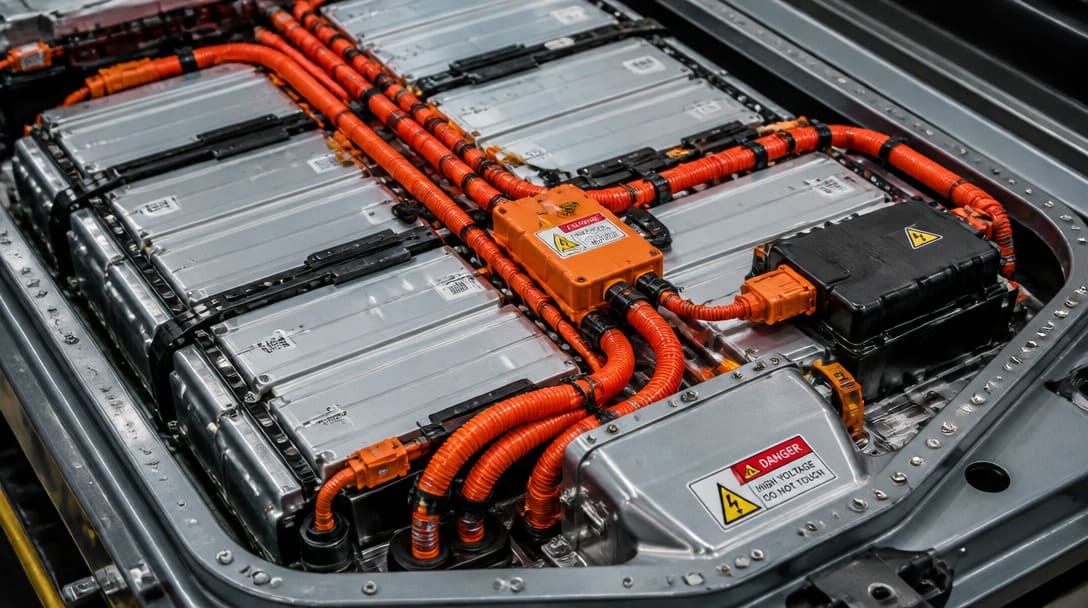
- Electrification and high-voltage systems: EV adoption is driving demand for 800V harnesses that can handle higher currents with less weight. Manufacturers are investing in silicone rubber insulation, aluminum conductors, and automated assembly of complex HV junctions. Expect consolidation around companies with proven high-voltage safety track records.
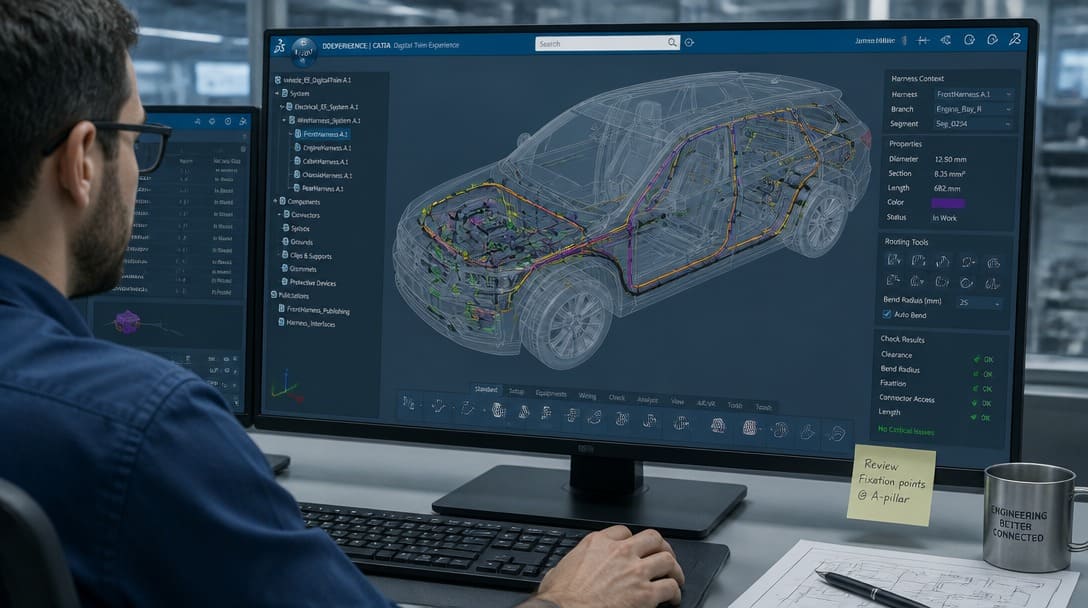
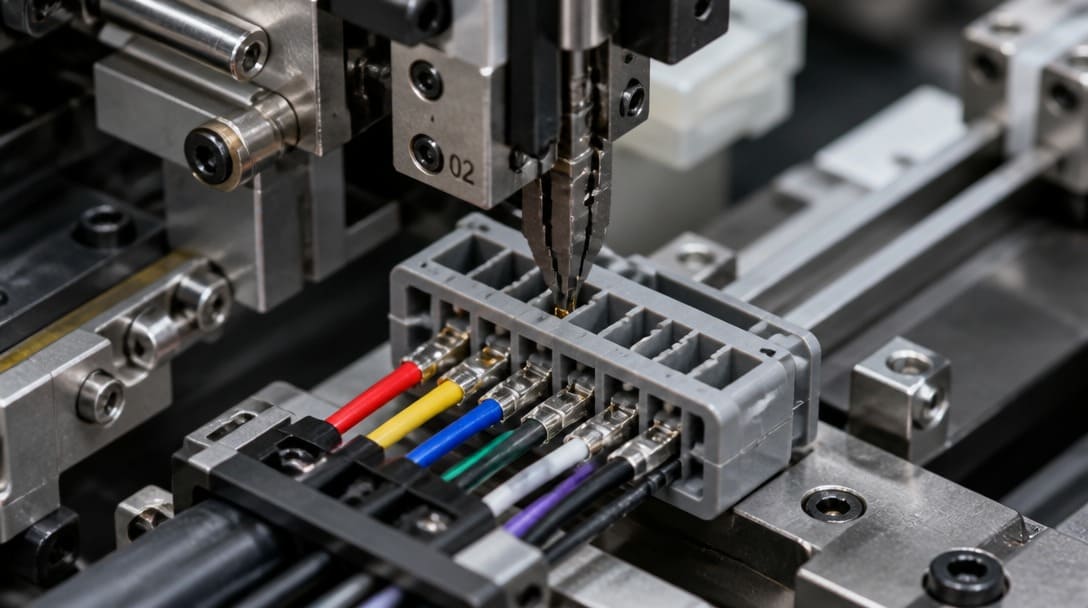
- Industry 4.0 and smart factories: Leading harness makers now deploy robotic wire cutting, automated crimping, and AI-powered optical inspection systems that achieve defect detection rates above 99.9%. Digital twins enable virtual validation of harness routing before physical prototypes are built, slashing development cycles.
- Sustainability mandates: OEMs are demanding carbon-footprint transparency, recyclable insulation materials, and take-back programs for end-of-life harnesses. Bioplastics and halogen-free cables are moving from niche to mainstream. Nexans and Leoni, in particular, are scoring high on sustainability indices.
- Nearshoring and regional supply chains: The era of hyper-globalized harness production is over. Geopolitical tensions, logistics costs, and trade tariffs are driving regionalization. Manufacturers are expanding capacity in Mexico (for North America), Morocco (for Europe), and India (for Asia and Middle East). A regional footprint now outweighs sheer global plant count.
- Data and power convergence: Autonomous driving and connected vehicles require harnesses that integrate gigabit Ethernet, coax, and low-voltage power into a single, EMC-shielded assembly. Aptiv and BizLink are at the forefront of this convergence, blurring the line between harness maker and network architect.
Partnering with a Top Wire Harness Company: Your Next Move
Selecting a wire harness partner from the global top 10 is not about choosing the biggest name—it is about aligning capability, culture, and supply chain geography with your program’s technical and commercial milestones. Yazaki, Aptiv, and Sumitomo offer unmatched scale for high-volume automotive; Leoni and Nexans provide deep expertise in European industrial and sustainable applications; while BizLink and Coroplast deliver nimble, specialized solutions for niche markets.
The intelligence and selection framework provided here should empower you to move beyond a simple RFQ comparison and into strategic partnership discussions. Begin by mapping your program requirements against the evaluation criteria, then reach out to shortlisted manufacturers for capability presentations, site visits, and sample orders. In an era where a single wiring failure can stop a factory, the right supplier is not a vendor—it is an extension of your engineering team.
Your next move: request quotes and schedule audits with the top three manufacturers that match your profile. Use the leverage of a global market to negotiate terms that secure not just components, but long-term competitive advantage.
Key Takeaways
- Wire harness quality is a critical risk factor: Recalls and supply disruptions caused by substandard harnesses can cost millions; selecting a top-tier manufacturer is a form of insurance.
- The top 10 list balances scale and specialization: From Yazaki’s automotive dominance to Coroplast’s rugged industrial focus, each company shines in distinct areas—choose based on your volume, application, and geography.
- Evaluate beyond the unit price: Total cost of ownership, certifications, supply chain resilience, and innovation roadmap determine long-term value more than the lowest bid.
- Electrification and regionalization are reshaping the landscape: Partner with manufacturers that invest in high-voltage know-how and have production bases near your assembly hubs.
- Start your due diligence now: Engage shortlisted suppliers for audits and pilot projects to validate capabilities before committing to production volumes.