In today’s high-stakes manufacturing environment, a single electrical failure can halt an entire assembly line, delay a product launch, or compromise safety-critical systems. At the heart of every reliable electrical architecture lies a component that rarely gets the spotlight but carries enormous responsibility: the wire harness. For OEM buyers and engineering leaders, understanding what a wire harness is—and more importantly, how to specify one that will perform flawlessly across its intended lifecycle—is not just technical knowledge; it’s a strategic procurement advantage.
What Is a Wire Harness? Core Definition and Purpose
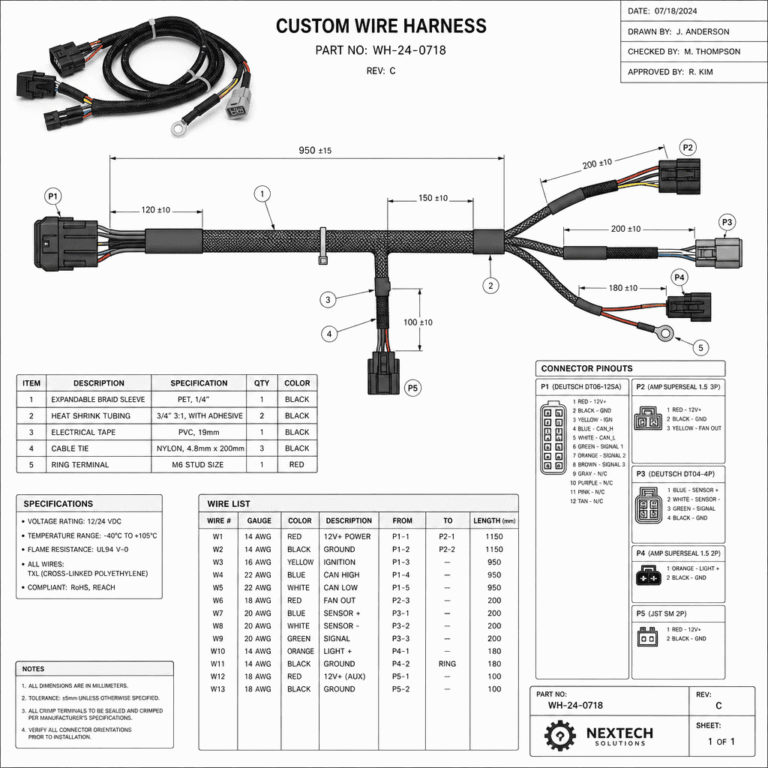
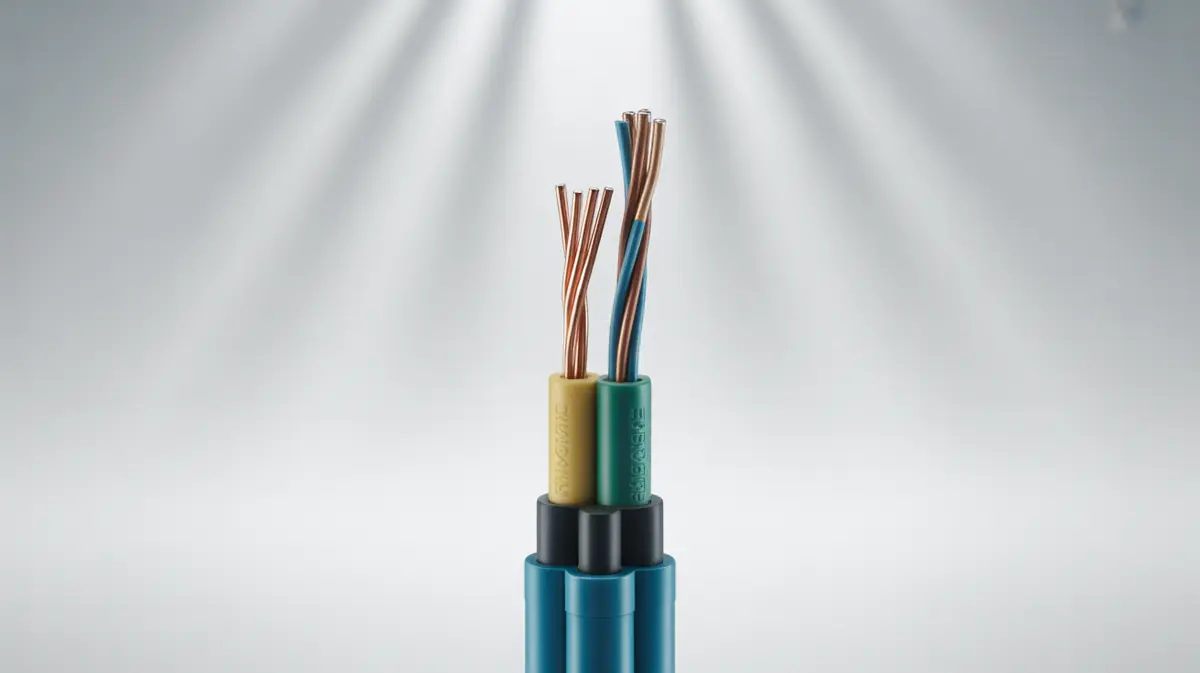
A wire harness is a pre-assembled bundle of wires, cables, connectors, terminals, and protective sleeving designed to transmit electrical power and signals throughout a system. Think of it as the central nervous system of any piece of equipment: it routes electricity precisely where it needs to go while protecting conductors from heat, moisture, vibration, and abrasion. Unlike loose, individually routed wires that create chaos inside an enclosure, a harness consolidates multiple circuits into a single, manageable assembly that can be installed in one step.
It is important to distinguish a wire harness from a cable assembly and a wire loom. A cable assembly typically features a more robust outer jacket and is designed for external or harsh-environment use—often with molded connectors on each end. A wire loom, by contrast, is simply a protective tube or wrap that encases individual wires but lacks the engineered termination points of a true harness. For OEMs, the wire harness represents the sweet spot: a customized, application-specific solution that simplifies installation, reduces assembly errors, and improves long-term reliability. When production volumes scale from hundreds to hundreds of thousands, the labor savings alone justify the upfront engineering investment[1].

Key Components and Construction of a Modern Wire Harness
Every wire harness begins with the conductor. Copper remains the dominant choice for its superior conductivity and ductility, though aluminum has gained traction in weight-sensitive applications like electric vehicle battery cables. Stranding—the number and arrangement of individual wire strands—determines flexibility and flex-life. High-strand-count conductors withstand repeated bending in robotic arms, while solid or coarse-stranded wires suffice for static installations. Insulation materials range from economical PVC to high-temperature cross-linked polyethylene (XLPE) and fluoropolymers for extreme environments.
At the termination points, connectors, terminals, and seals form the critical interface between the harness and the components it serves. A poorly crimped terminal or an improperly seated seal is the most common source of field failures[2]. That is why leading OEMs specify connectors from manufacturers with proven track records—a topic we will explore in depth later. Protective elements complete the assembly: split conduits guard against abrasion, braided sleeving offers flexibility with EMI shielding, grommets protect wires passing through bulkheads, and specialized tapes resist chemicals and temperature extremes.
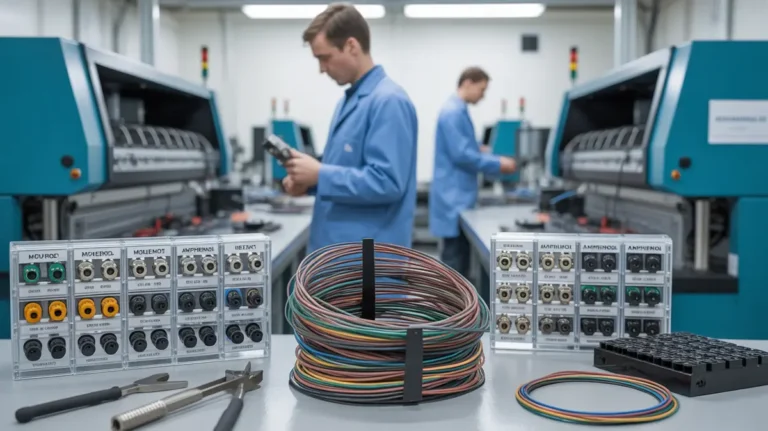
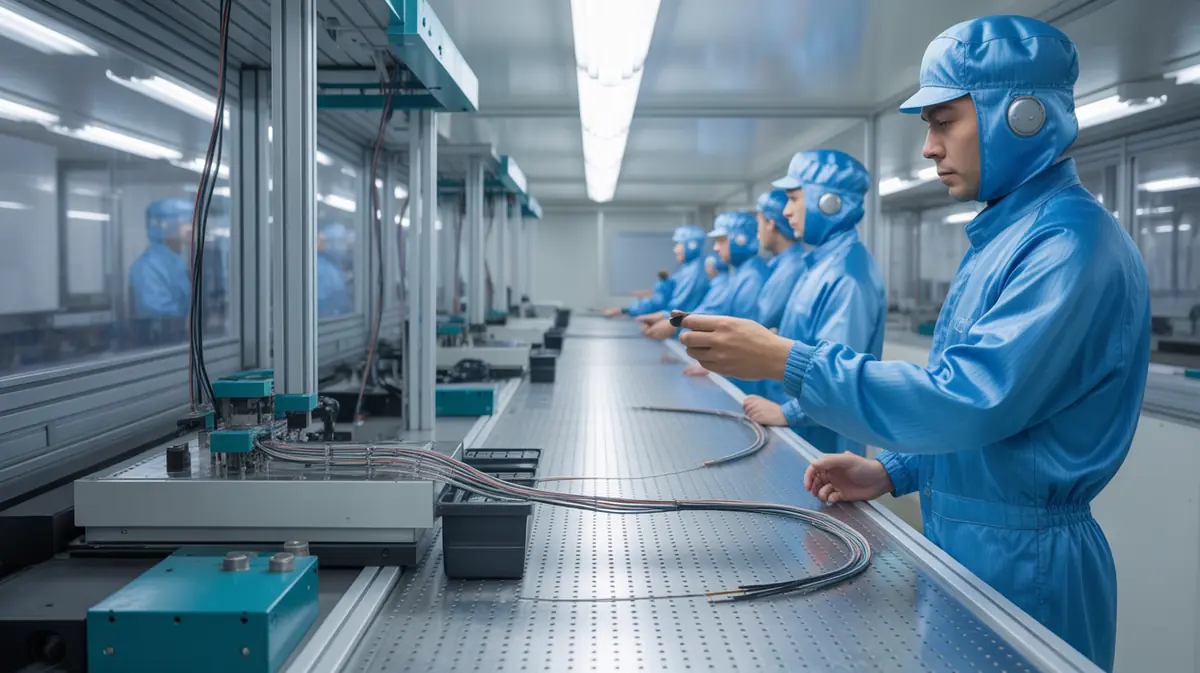
The assembly process itself follows a disciplined sequence: automated cutting and stripping machines prepare each wire to precise lengths, semi-automatic crimping presses attach terminals under controlled force, and operators or automated systems insert terminals into connector housings. Every harness then undergoes electrical testing before it leaves the factory floor.
How a Wire Harness Works: Signal Integrity and Power Distribution
Functionally, a wire harness does more than connect point A to point B. It must deliver clean power and uncorrupted signals across every circuit simultaneously. In an automotive engine bay, for instance, a single harness may carry 48-volt hybrid system power to the electric motor, high-speed CAN bus data between control modules, and low-current sensor signals—all within inches of each other. Without proper design, electromagnetic interference (EMI) from a high-current power wire can couple into an adjacent signal line, causing sensor readings to drift or communication errors to appear.
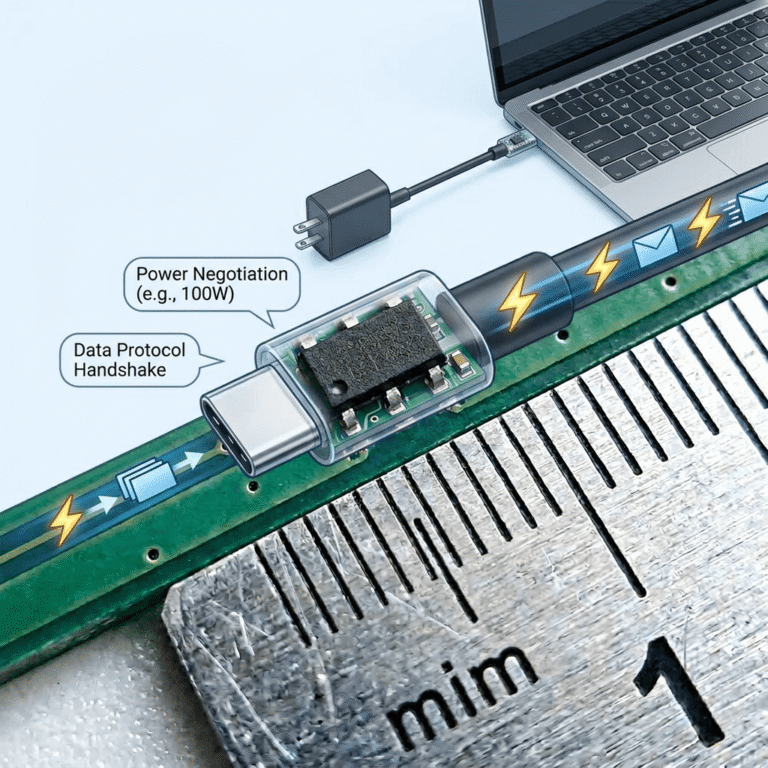
This is where shielding, twisted-pair configurations, and careful impedance control enter the picture. For high-speed data protocols like Ethernet or LVDS, the harness becomes a transmission line, and mismatched impedance creates signal reflections that degrade data integrity. On the power side, engineers must calculate voltage drop across the length of each conductor—particularly critical in 12V and 24V systems where even a few hundred millivolts of loss can affect component performance[3]. Thermal management is equally important: densely bundled wires carrying high currents can generate significant heat, requiring derating and thoughtful routing to prevent insulation degradation.
The physical layout of a harness is designed on a formboard—a full-scale drawing or physical jig that mirrors the exact geometry of the final installation. This ensures that branch lengths, connector orientations, and service loops align perfectly with the equipment they will populate.
Types of Wire Harnesses and Industry Classification Standards
Wire harnesses are not one-size-fits-all. Their design and construction vary dramatically depending on the application environment and performance requirements. The automotive industry, for example, distinguishes between under-hood harnesses that must withstand temperatures exceeding 125°C, continuous vibration, and exposure to oil and coolant, and in-cabin harnesses that prioritize flexibility, low weight, and cost-efficiency. Industrial machinery harnesses emphasize abrasion resistance and flex-life for moving cable tracks, while aerospace harnesses demand the highest standards for weight reduction, fire resistance, and traceability.
The following table provides a data-driven comparison of typical harness specifications across major application categories:
| Application | Typical Wire Gauge (AWG) | Temperature Rating | Flex-Life Requirement | Key Standards |
|---|---|---|---|---|
| Automotive (under-hood) | 18–10 AWG | -40°C to +150°C | Low (static routing) | ISO 6722, SAE J1128 |
| Automotive (in-cabin) | 22–16 AWG | -40°C to +85°C | Low to moderate | ISO 6722, IPC/WHMA-A-620 |
| Industrial robotics | 24–14 AWG | -30°C to +105°C | High (millions of cycles) | UL, IPC/WHMA-A-620 |
| Aerospace | 26–12 AWG | -65°C to +260°C | Moderate | AS9100, EN 3197 |
| Medical devices | 28–18 AWG | -20°C to +105°C | Very high | IEC 60601, IPC/WHMA-A-620 |
The IPC/WHMA-A-620 standard has become the global benchmark for wire harness acceptability across industries, defining criteria for crimping, soldering, and mechanical assembly. For OEM buyers, the decision between a fully custom harness and a modified off-the-shelf design often hinges on volume: at quantities below 500 units annually[4], adapting an existing platform may prove more cost-effective, while higher volumes typically justify full custom engineering.
The Role of Leading Connector Manufacturers: Molex, JST, TE Connectivity, Amphenol, and EDOM
The reliability of a wire harness is only as strong as its weakest connector. This is why OEMs consistently turn to a select group of connector manufacturers whose products have demonstrated performance across decades and millions of installations. Understanding the strengths of each supplier helps purchasing managers make informed decisions when reviewing harness designs.
Molex has built its reputation on high-density, modular connector systems that excel in both power and signal applications. The Mini-Fit and Micro-Fit families are workhorses in industrial equipment, medical devices, and consumer electronics, offering polarized housings and robust locking mechanisms that prevent mis-mating. For space-constrained designs, Molex’s SlimStack and PicoBlade series provide board-to-board and wire-to-board connectivity at pitches as tight as 0.35mm.
JST is nearly synonymous with cost-effective, high-volume wire-to-board connectivity. Their crimp-style connectors—particularly the SH, GH, and XH series—appear in countless consumer and automotive applications. JST’s engineering focus on reliable crimp termination technology means harness manufacturers can achieve consistent, gas-tight connections at high production speeds, directly impacting the long-term reliability of the final assembly.
TE Connectivity dominates harsh-environment applications[5]. Their DEUTSCH and AMPSEAL connector lines are designed for heavy-duty trucks, construction equipment, and agricultural machinery where exposure to mud, water, and extreme vibration is guaranteed. TE’s Superseal and MCON sealed connectors are standard in automotive engine compartments worldwide, offering IP67 and IP69K ingress protection ratings that make them impervious to high-pressure washdowns.
Amphenol brings particular depth in high-speed, fiber-optic, and military-grade interconnect solutions. Their circular connectors—such as the MIL-DTL-38999 series—are specified in aerospace and defense applications where failure is not an option. Amphenol’s high-speed board-to-board and I/O connectors support data rates exceeding 25 Gbps[6], making them critical in emerging applications like autonomous vehicle sensor arrays and 5G infrastructure.
Bridging the gap between these world-class manufacturers and the OEMs that depend on them is EDOM. As a technology distributor with deep engineering expertise, EDOM provides value far beyond component fulfillment. Their teams offer design validation support, early supplier involvement to optimize connector selection before tooling is committed, and supply chain management that ensures continuity even during periods of semiconductor shortage. For an OEM buyer evaluating a new wire harness program, partnering with a distributor like EDOM that maintains strong relationships across Molex, JST, TE Connectivity, and Amphenol can streamline the entire procurement process—from prototype to production.
Selecting the Right Wire Harness: A Purchasing Manager’s Checklist
Specifying a wire harness requires disciplined attention to both electrical and mechanical factors. The following checklist provides a structured approach that OEM buyers can apply immediately:
- Define electrical requirements exhaustively. Document every circuit’s nominal voltage, maximum current draw, signal type (analog, digital, differential), and bandwidth requirements. This determines conductor gauge, insulation type, and whether shielding is necessary.
- Map environmental conditions. Identify the full range of temperatures, humidity levels, chemical exposures, and mechanical stresses the harness will face. A harness designed for an air-conditioned control cabinet will fail rapidly inside a metal stamping press.
- Evaluate physical constraints. Specify the exact routing path, including all connection points, minimum allowable bend radii, and any weight limitations. Overly tight bends can cause conductor fatigue, while excessive weight can strain connectors.
- Assess connector life cycle requirements. Consider the number of mating cycles expected over the product’s life, the required ingress protection (IP) rating, and vibration resistance. For equipment subject to frequent maintenance, connectors rated for thousands of cycles are essential.
- Engage distribution partners early. Companies like EDOM can provide samples, cross-reference compatible alternatives, and connect OEM teams with manufacturer field application engineers. Early supplier involvement reduces redesign loops and shortens time to market.
Quality Assurance and Testing Protocols for Mission-Critical Harnesses
For harnesses destined for applications where failure can cause injury, loss of life, or catastrophic financial damage, quality assurance must go beyond simple continuity testing. Visual inspection forms the first line of defense, and modern harness manufacturers increasingly employ automated optical inspection (AOI) systems that can detect crimp defects, missing seals, and incorrect wire routing at production speeds far exceeding human capability.
Electrical testing encompasses three essential protocols. Continuity testing verifies that every wire connects the intended endpoints without shorts to adjacent circuits. High-potential (hipot) testing applies elevated voltage—typically 1,000V to 5,000V depending on the application—to confirm that insulation can withstand dielectric stress without breakdown. Insulation resistance testing measures leakage current at rated voltage, ensuring that moisture or contamination has not compromised the harness.
Environmental stress testing simulates the conditions the harness will endure throughout its service life. Thermal cycling exposes assemblies to extreme temperature swings that can reveal weaknesses in crimp connections as materials expand and contract at different rates. Salt spray testing evaluates corrosion resistance, particularly important for marine and coastal installations. Vibration testing, often conducted on shaker tables with the harness mounted in its intended orientation, identifies potential fretting of terminal contacts.
OEM buyers should mandate that their harness suppliers hold certifications appropriate to the application: IPC/WHMA-A-620 for general workmanship, IATF 16949 for automotive quality management, and AS9100 for aerospace traceability. A knowledgeable distribution partner such as EDOM can verify supplier certifications and provide documented test reports, creating an audit trail that protects OEMs from liability and ensures compliance with regulatory requirements.

Future Trends and Your Next Step in Wire Harness Procurement
The wire harness industry is not immune to the forces reshaping global manufacturing. Miniaturization continues to drive connector manufacturers toward smaller pitches and higher contact densities—Molex and JST are both pushing sub-0.3mm wire-to-board solutions that challenge traditional crimping and assembly techniques. At the same time, data rates are accelerating: automotive Ethernet at 1 Gbps and 10 Gbps demands harness designs that maintain signal integrity with precisely controlled impedance, an area where Amphenol’s high-speed expertise becomes invaluable.
Smart harnesses represent perhaps the most transformative trend. By embedding micro-sensors within the harness assembly itself, future systems will actively monitor temperature, strain, and insulation health, enabling predictive maintenance long before a failure occurs. Sustainability is also moving up the agenda, with recyclable insulation materials, lead-free solders, and manufacturing processes that reduce waste gaining prominence in RFQ requirements.
For OEM buyers ready to move forward with a new wire harness program—whether for electric vehicles, industrial automation, or medical systems—the most effective first step is a consultation with experts who understand both the component landscape and the manufacturing realities. With access to the full portfolios of Molex, JST, TE Connectivity, and Amphenol, as well as in-house engineering support for design validation, EDOM offers a streamlined path from concept through production. Download a wire harness selection kit or schedule a technical consultation today to ensure your next design meets every performance, reliability, and cost target.
Key Takeaways
- A wire harness is more than bundled wires—it is a custom-engineered assembly that consolidates power and signal distribution into a single, testable, installable unit, directly reducing assembly labor and improving system reliability.
- Connector selection is the single most critical factor in harness reliability, and understanding the distinct strengths of Molex, JST, TE Connectivity, and Amphenol enables OEMs to specify the optimal interconnect for any application environment.
- Industry standards such as IPC/WHMA-A-620 define the quality benchmarks that separate durable harnesses from those that will fail prematurely; verify that your suppliers hold the certifications relevant to your industry.
- Distributors with engineering capabilities, such as EDOM, accelerate procurement by providing design support, supply chain resilience, and access to the world’s leading connector manufacturers through a single point of contact.
- The future of wire harnesses lies in miniaturization, higher data rates, embedded intelligence, and sustainability—trends that forward-looking OEMs should incorporate into their sourcing roadmaps now.