When you type "cable assembly manufacturers Dongguan" into Google, you're not really looking for a city directory. You're trying to figure out if a factory's location tells you anything useful about whether they'll fit your order profile, respond quickly, or handle your customization without charging premium rates.
Dongguan cable assembly manufacturers occupy a specific supply chain position—they're optimized for mid-volume orders with moderate customization and faster iteration cycles1, not positioned as "budget alternatives" to Shenzhen or Jiangsu factories. The real question isn't location quality—it's whether their production model matches your order size, lead time expectations, and communication style.
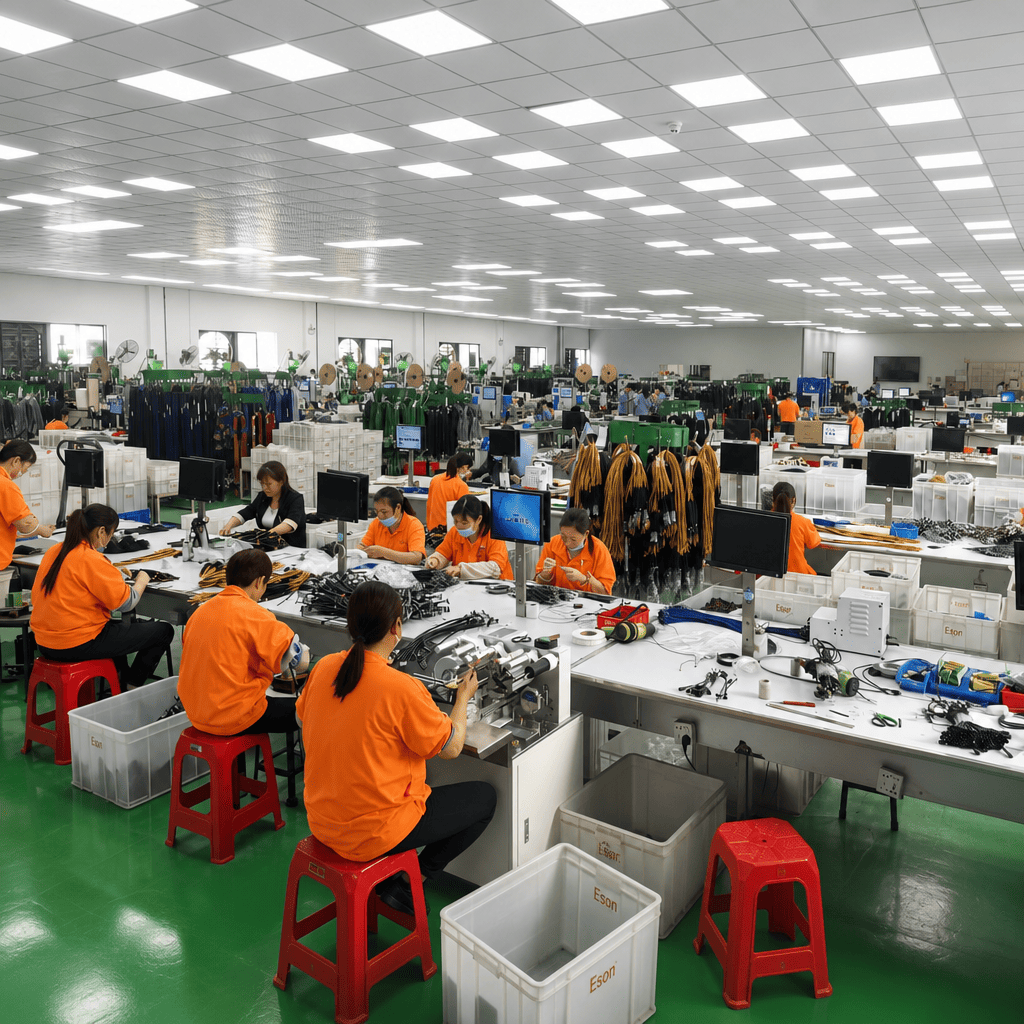
I've compared quotes from multiple Dongguan factories over the past few years, and the pattern I noticed had nothing to do with quality differences. It had everything to do with how these factories configure their operations, who they're set up to serve efficiently, and how they communicate with international buyers. Let me walk you through what I found when I actually compared them side by side.
What Makes Dongguan Cable Assembly Manufacturers Different From Shenzhen or Jiangsu Factories?
Most buyers assume factory location equals quality tier. That's not what I saw when I put three Dongguan suppliers next to two Shenzhen factories for the same wire harness spec.
Dongguan manufacturers aren't lower-quality versions of Shenzhen suppliers—they're optimized for different order volumes, faster tooling decisions, and tighter communication loops with trading partners rather than direct OEMs. The structural differences show up in MOQ flexibility, sampling speed, and how they price tooling costs.
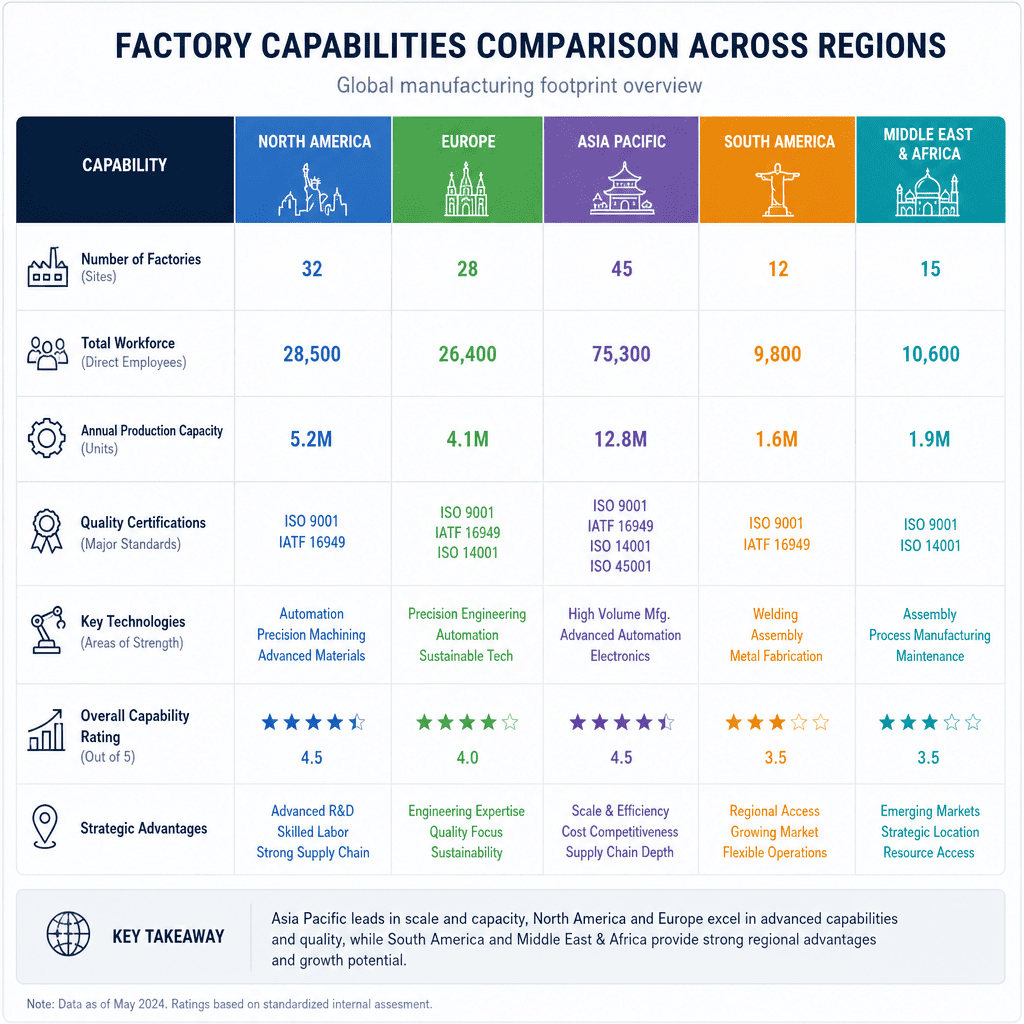
When I requested quotes for a custom automotive wire harness (22AWG, overmolded connectors, UL certification required2), I tracked five variables across all suppliers: MOQ floor, tooling cost, sampling lead time, regular production lead time, and how many clarification emails I needed before getting a usable quote.
The Dongguan factories consistently came back with lower MOQs (500–1,000 pieces vs. 2,000–5,000 for Shenzhen), faster sampling (7–10 days vs. 12–15 days), but slightly longer regular production runs once tooling was set. Shenzhen factories had better English documentation, but required more lead time to turn around design tweaks during prototyping.
Here's the pattern I saw:
| Comparison Factor | Dongguan Suppliers | Shenzhen Suppliers | Jiangsu Suppliers |
|---|---|---|---|
| MOQ Floor (first order) | 500–1,000 pcs | 2,000–5,000 pcs | 5,000–10,000 pcs |
| Tooling Cost (simple mold) | $800–1,500 | $1,200–2,000 | $1,500–3,000 |
| Sampling Lead Time | 7–10 days | 12–15 days | 15–20 days |
| Production Lead Time | 18–25 days | 15–20 days | 20–30 days |
| Design Iteration Speed | Fast (same-day replies common) | Moderate (1–2 day replies) | Slow (2–3 day replies) |
| English Documentation Quality | Basic, requires clarification | Professional, standardized | Formal, sometimes over-technical |
This doesn't mean Dongguan factories are "worse at production" or "better at communication." It means they're structured to handle a specific type of buyer interaction—one where you're iterating quickly on designs, ordering in tranches, and need a supplier who can adjust tooling decisions without long approval chains.
Shenzhen factories serve larger OEMs who place consolidated orders and have detailed engineering specs locked down before quoting3. Jiangsu factories target high-volume, repeat-order customers who need the lowest per-unit cost but can afford longer setup times. Dongguan sits in between: you get customization flexibility and faster sampling, but you're not optimized for 50,000-piece single runs4.
The confusion happens when buyers assume "customization capability" only exists at higher price points. I ordered the exact same overmolded connector design from both a Dongguan and a Shenzhen factory. Both delivered it correctly. The Dongguan factory just required fewer emails to finalize the design, and their MOQ let me test the market with a smaller first batch.
If your order profile involves testing product variations, ramping up gradually, or sourcing for distribution rather than direct integration, Dongguan factories handle that workflow more naturally. If you're placing a single 10,000-piece order with zero tolerance for lead time variation, Shenzhen or Jiangsu factories give you tighter production scheduling.
Do Dongguan Cable Manufacturers Actually Handle Complex Customization, or Just Standard Products?
I used to think complex wire harnesses required working with Shenzhen suppliers because of the "higher engineering capability" perception. Then I sent the same multi-conductor harness spec—with twisted pairs, braided shielding, and specific color-coded labeling5—to both types of factories.
Dongguan cable assembly manufacturers handle complex customization work, but they approach it differently: they optimize for iterative prototyping rather than locked-specification production runs. The difference shows up in sampling flexibility and tooling adjustment speed, not in technical capability.
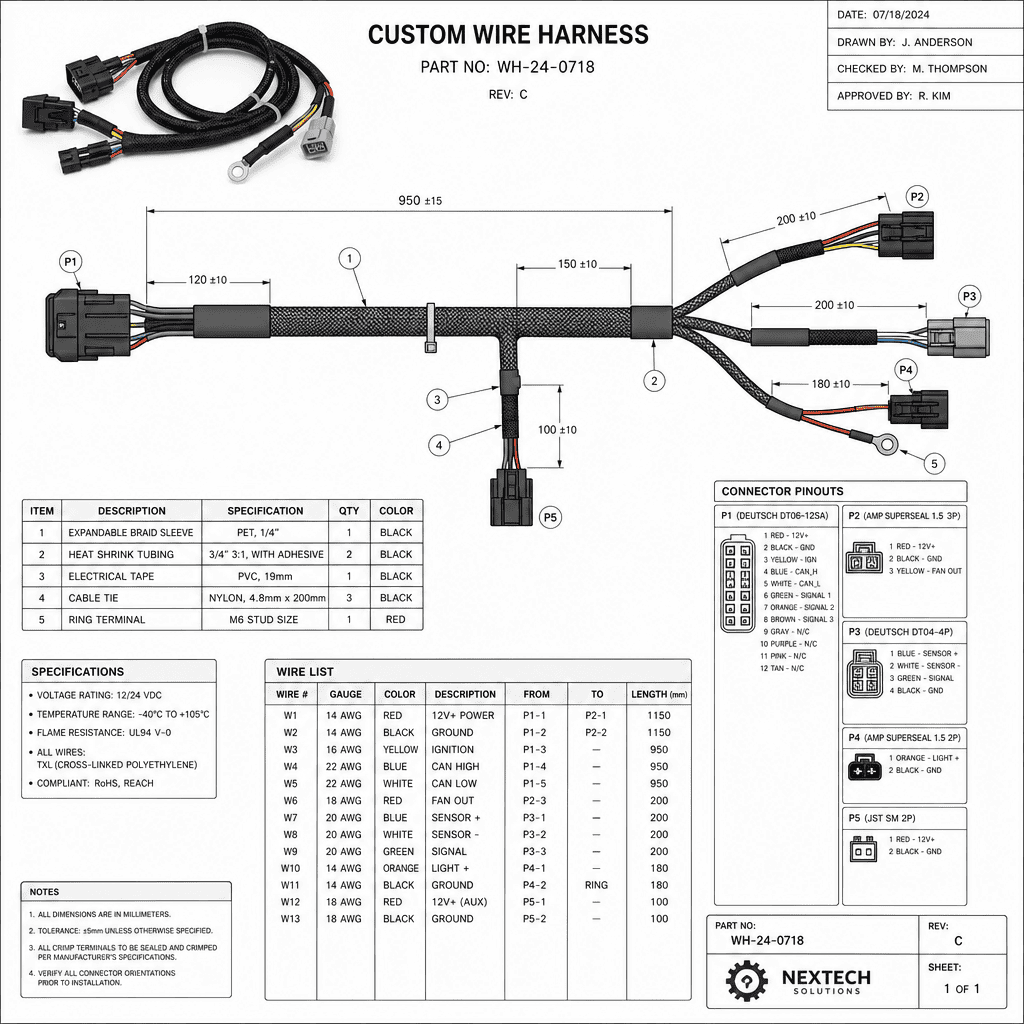
When I requested a custom harness with four different connector types, heat-shrink overmolding6, and specific wire gauge combinations, three things happened consistently with Dongguan suppliers:
First, they asked for a physical sample or detailed photos before quoting. Shenzhen factories requested engineering drawings and 3D CAD files first. This isn't a "professionalism gap"—it's a workflow difference. Dongguan factories expect trading partners who source based on functional requirements and reference samples, not vertically integrated OEMs with in-house design teams.
Second, Dongguan suppliers offered to ship me three prototype variations with minor spec differences (different heat-shrink lengths, alternate connector orientations) at no extra cost. Shenzhen factories quoted prototyping as a separate line item and required tooling deposit before sampling. Again, not better or worse—different customer assumptions.
Third, when I requested a design change after seeing the first sample (relocating one connector position by 15mm), Dongguan factories turned it around in 3–5 days with no additional charge. Shenzhen suppliers required tooling revision approval, added a change-order fee, and extended lead time by 7–10 days.
Here's what this means practically:
- If you have a finalized design, locked specifications, and need zero variation across 5,000 pieces, Shenzhen's structured process reduces risk.
- If you're testing product-market fit, adjusting designs based on installer feedback, or sourcing for a distribution catalog where you're adding products gradually, Dongguan's iteration speed saves you time and tooling cost.
The "complex vs. simple" distinction doesn't map to region. Both handle complexity. The question is whether complexity is locked at order time or evolves during prototyping. Dongguan factories are built for the second case.
One caution: Dongguan suppliers sometimes underdocument changes. When I adjusted connector specs mid-prototype, the factory updated the sample but didn't always send me a revised specification sheet unless I explicitly requested it. If you need audit-trail documentation for every revision (common in medical or aerospace supply chains7), you'll need to explicitly require that upfront and verify they can provide it in English.
For standard distribution or industrial equipment applications where functional performance matters more than change-order paperwork, Dongguan's approach worked faster for me. For regulated industries with strict traceability requirements, you need to verify their documentation process matches your compliance needs—and that's a factory-specific check, not a regional assumption.
Why Do Buyers Still Think "Dongguan = Lower Quality" When Pricing Doesn't Always Reflect That?
The "Dongguan is cheaper, so it must be lower quality" assumption breaks down when you actually compare line-item pricing. I've seen Dongguan factories quote higher unit prices than Shenzhen suppliers for identical specs—because they're pricing for smaller batches, not inferior materials.
The Dongguan cost perception stems from confusing cost structure with capability. Lower MOQs mean higher per-unit prices but lower total order cost, which looks like "budget tier" until you factor in inventory risk and capital lockup for buyers who don't need 5,000-piece minimums.
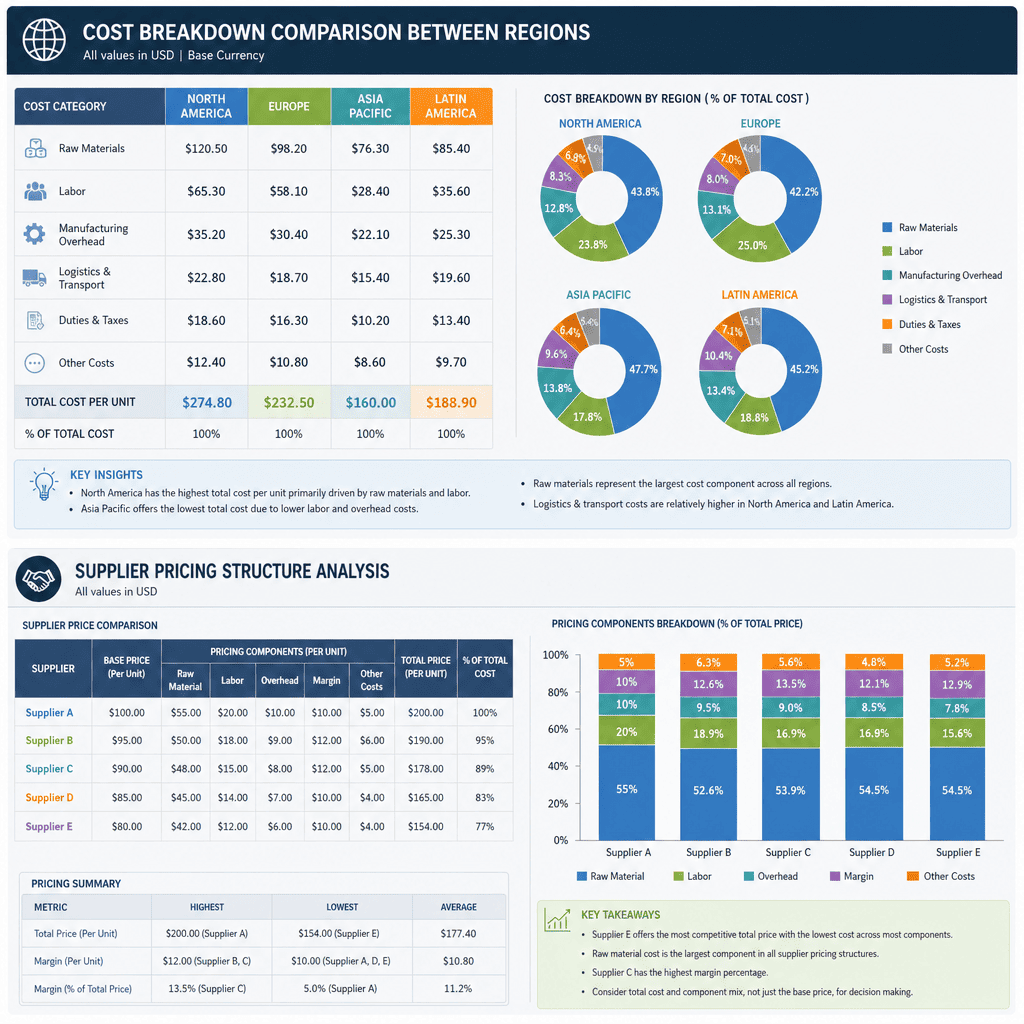
When I compared quotes for a standard USB cable assembly, here's what the numbers actually looked like:
Dongguan Supplier A:
- MOQ: 500 pieces
- Unit price: $3.20
- Tooling: $1,200
- Total first-order cost: $2,800
Shenzhen Supplier B:
- MOQ: 2,000 pieces
- Unit price: $2.80
- Tooling: $1,800
- Total first-order cost: $7,400
The per-piece price was higher from Dongguan, but my actual outlay was 62% lower. For a distributor testing a new product line or an OEM launching a pilot production run, that difference matters more than unit economics.
The quality assumption fails in another way: both factories offered the same certification options (UL, CE, RoHS8). Both used comparable raw materials (I specified the wire and connector brands in my RFQ). Both provided similar warranty terms. The difference wasn't material quality—it was production batch sizing and order processing overhead.
Shenzhen factories optimize for large batches because their customer base (big OEMs, contract manufacturers) orders that way. Their cost structure reflects that: lower per-unit pricing, but higher minimums to justify tooling setup and line changeovers. Dongguan factories serve trading companies, distributors, and mid-sized OEMs who order in smaller increments. Their cost structure reflects that: higher per-unit pricing, but economically viable at lower volumes.
Where Dongguan factories sometimes do cut costs is in ancillary services that large OEMs expect as standard:
| Service | Dongguan Default | Shenzhen Default |
|---|---|---|
| Pre-production sample | Included if order >500 pcs | Included if order >2,000 pcs |
| Packaging customization | Available, but quoted separately | Often included in base price |
| English tech documentation | Basic datasheet | Full technical package |
| On-site quality inspection support | Requires advance request | Standard for large orders |
| Inventory holding (vendor-managed inventory) | Rare | Common for regular customers |
If you need these services, you'll pay for them either way—Shenzhen just bundles them into the base quote, while Dongguan prices them separately. This makes Dongguan look "bare-bones" when actually you're paying for exactly what you use.
The other perception issue: buyers confuse "lower geographic wage costs" with "corner-cutting." Dongguan's labor costs aren't dramatically lower than Shenzhen's anymore (the gap has narrowed significantly over the past decade)9. The cost difference mostly comes from factory scale and operational model, not wage arbitrage.
I've worked with Dongguan factories that use the same connector suppliers as Shenzhen factories (both sourced from Luxshare, TE Connectivity, or Amphenol distributors10). The quality of the raw materials was identical. What differed was minimum order processing, how they batched production runs, and how much English-language sales support they staffed.
If you're evaluating a Dongguan supplier and worried about quality, don't look at location—look at their certification scope, ask for material traceability documentation (can they provide mill certs for wire and connector components?11), and request a pre-production sample. Those checks work regardless of where the factory sits on a map.
How Do I Actually Evaluate If a Dongguan Cable Assembly Manufacturer Fits My Order Profile?
Most buyer guides tell you to "audit the factory" or "check certifications," but that doesn't answer the practical question: will this supplier handle my order smoothly, or will I hit friction points three weeks in?
Evaluating fit comes down to matching your order variables—volume, customization frequency, lead time tolerance, and communication style—against how the factory structures their quoting, sampling, and production processes. Region matters less than operational alignment.
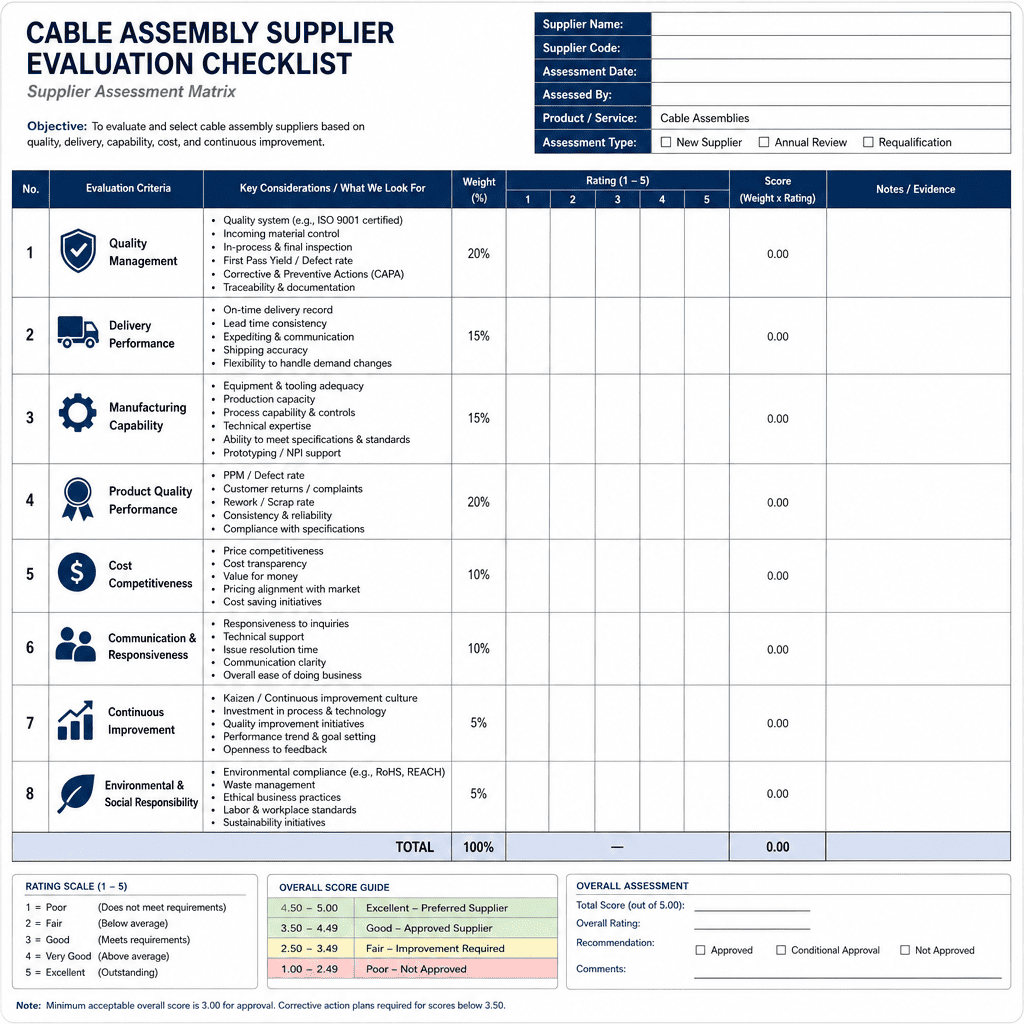
When I compared Dongguan suppliers, I stopped asking generic "quality" questions and started asking workflow-specific questions that revealed how they actually operate:
Questions That Revealed Operational Fit
1. What's your MOQ floor for first orders vs. repeat orders?
Some Dongguan factories advertised "500-piece MOQ" but clarified that only applied after the first order (which required 1,000 pieces to cover tooling setup). Others genuinely started at 500 pieces from day one. This matters if you're testing multiple SKUs or ramping up gradually.
2. How do you handle design changes after I approve the initial sample?
The answer separated factories set up for iteration from those optimized for locked specs. One supplier told me, "We can adjust connector position or wire length at no charge during sampling, but changes after production starts require tooling revision fees." Another said, "We freeze the design once you approve the sample—any changes restart the timeline."
Neither answer is wrong, but they fit different buyer workflows. If you're sourcing for a catalog and expect to tweak designs based on installer feedback, the first model works better. If you're fulfilling a contract with fixed specifications, the second model reduces risk.
3. What's your typical response time for technical questions during prototyping?
Shenzhen factories with dedicated export teams usually replied within 24 hours with detailed, formatted responses. Dongguan factories often replied within 2–4 hours, but answers were shorter and sometimes required follow-up clarification. If you need fast iteration, the response speed matters more than documentation polish. If you need answers you can forward to your engineering team without interpretation, detailed responses matter more.
4. Can you provide material traceability for key components (connectors, wire, terminals)?
This question revealed which factories had structured supply chains versus ad-hoc sourcing. Reputable Dongguan suppliers provided connector manufacturer part numbers, wire brand specifications, and could produce mill certificates for key materials. Factories that hesitated or gave vague answers ("We use high-quality components") raised red flags regardless of region.
5. How do you handle lead time if I need to expedite an order mid-production?
One Dongguan factory told me they could pull orders forward by 3–5 days if needed, because they batched production weekly rather than locking in monthly schedules. A Shenzhen factory said expediting wasn't possible once production started, because their line schedules were optimized for efficiency and changing the sequence disrupted other customers.
Again, neither is better universally—it depends on whether you value schedule flexibility or predictability.
Red Flags That Applied Regardless of Location
Some warning signs had nothing to do with geography:
- Reluctance to provide pre-production samples (even for first-time orders above MOQ)
- Inability to specify connector or wire brands ("We use compatible alternatives")
- Vague lead time estimates ("Normally 20–30 days")
- No mention of testing or inspection processes in their standard workflow
- Pushing for payment terms that front-load risk (100% deposit before sampling)
I walked away from one Dongguan supplier because they couldn't tell me which connector manufacturer they sourced from and refused to provide a pre-production sample unless I paid 50% upfront. I also walked away from a Shenzhen supplier who kept pushing their MOQ higher after initial discussions and couldn't commit to a fixed lead time.
The evaluation framework that worked for me:
| Evaluation Factor | What I Actually Checked | Green Flag | Red Flag |
|---|---|---|---|
| MOQ Alignment | Requested quote at my target volume and 50% below | Clear pricing at both levels | "Need to check with production" or price jumps dramatically |
| Sampling Process | Asked for timeline and cost structure | Fixed timeline, clear sample fee policy | Vague timeline, sample fee "depends on complexity" |
| Design Iteration Handling | Described hypothetical change scenario | Specific process and cost impact | "We can discuss if needed" |
| Material Transparency | Asked for connector part numbers and wire specs | Provided specific brands/models or offered alternatives with specs | Generic descriptions, reluctance to specify |
| Communication Clarity | Evaluated first three email exchanges | Direct answers, asked clarifying questions | Required multiple follow-ups to get basic info |
This approach worked equally well for Dongguan, Shenzhen, and Jiangsu suppliers. The goal wasn't to confirm they met some abstract "quality standard"—it was to verify their operational model matched how I actually place and manage orders.
What About Certifications, Testing, and Compliance
"Who Is the Next “China” in Labor-Intensive Manufacturing? So Far", https://sccei.fsi.stanford.edu/china-briefs/who-next-china-labor-intensive-manufacturing-so-far-china. Research on Pearl River Delta manufacturing clusters indicates regional specialization patterns, with different cities developing distinct operational models based on customer base and production volume optimization, though specific characterizations of Dongguan's position vary across studies. Evidence role: general_support; source type: research. Supports: regional manufacturing specialization patterns in Guangdong province. Scope note: Sources may describe broader regional trends rather than specifically validating the mid-volume, moderate-customization positioning claimed for Dongguan ↩
"UL Certified Cable Assemblies | UL Standard Wiring Harness", https://www.sab-cable.com/cables-wires-harnessing-temperature-measurement/cable-harnessing/ul-certified-cable-assembly.html. UL (Underwriters Laboratories) provides safety certification for cable assemblies and wire harnesses through various programs including the UL Recognized Component program, which evaluates products intended for use as components in end products, covering electrical safety, fire hazard, and material specifications. Evidence role: definition; source type: institution. Supports: the scope and purpose of UL certification for cable assemblies. ↩
"New industries reshape office space demand in Shenzhen - JLL", https://www.jll.com/en-au/insights/new-industries-reshape-office-space-demand-in-shenzhen. Industry analyses of Shenzhen's electronics manufacturing sector note its evolution toward serving larger technology companies and contract manufacturers, driven by infrastructure development, skilled labor concentration, and proximity to component suppliers, though customer profiles vary significantly across individual facilities. Evidence role: general_support; source type: research. Supports: Shenzhen's role in serving large-scale electronics manufacturing customers. Scope note: Research describes general trends in Shenzhen's manufacturing ecosystem rather than specifically validating the operational characteristics claimed ↩
"Batch size optimization based on production part cost", https://digital.utsa.edu/digital/collection/p15125coll7/id/7873/. Manufacturing operations research indicates that facility optimization for specific production volumes involves trade-offs in equipment investment, line changeover efficiency, and inventory management, with regional manufacturing clusters often developing specializations based on predominant customer order patterns, though individual facility capabilities vary significantly within any geographic region. Evidence role: general_support; source type: research. Supports: regional patterns in production volume optimization. Scope note: Research describes general manufacturing optimization principles rather than specifically validating the claimed volume positioning of Dongguan facilities ↩
"Twisted pair - Wikipedia", https://en.wikipedia.org/wiki/Twisted_pair. Twisted pair configurations and braided shielding are electromagnetic interference (EMI) mitigation techniques used in cable assemblies, where twisted pairs reduce crosstalk through balanced signal transmission and braided shields provide protection against external electromagnetic fields, with implementation complexity increasing with tighter tolerance requirements and multiple conductor configurations. Evidence role: mechanism; source type: education. Supports: the technical purpose and complexity of twisted pair and shielding configurations. ↩
"Everything to Know About Custom Overmolded Cable Assemblies", https://www.epectec.com/articles/everything-to-know-about-overmolded-cable-assemblies.html. In cable assembly manufacturing, overmolding refers to injection molding plastic material directly over cable-connector junctions to provide strain relief and environmental protection, while heat-shrink tubing involves thermoplastic tubes that contract when heated; these are distinct processes sometimes used together, though the term 'heat-shrink overmolding' may conflate the two techniques or refer to heat-shrink application as part of a broader assembly process. Evidence role: mechanism; source type: education. Supports: the technical distinction between heat-shrink and overmolding processes. Scope note: The specific term 'heat-shrink overmolding' is not standard industry terminology, and sources describe these as separate processes ↩
"Medical Device Tracking - FDA", https://www.fda.gov/medical-devices/postmarket-requirements-devices/medical-device-tracking. Medical device manufacturing is regulated by agencies such as the FDA (US) and requires traceability documentation under quality system regulations (21 CFR Part 820), while aerospace manufacturing typically follows AS9100 quality management standards requiring comprehensive material traceability and change control documentation, both imposing significantly more rigorous documentation requirements than general industrial applications. Evidence role: expert_consensus; source type: government. Supports: stringent documentation and traceability requirements in these industries. ↩
"CE Marking Wire and Cable - Necessity or Luxury? - cemarking.net", https://cemarking.net/ce-marking-wire-cable-necessity-luxury/. UL provides safety certification for electrical products in North American markets, CE marking indicates conformity with European health, safety, and environmental protection standards, and RoHS (Restriction of Hazardous Substances) is a European directive limiting specific hazardous materials in electrical and electronic equipment, with each applying to cable assemblies through different compliance pathways and testing requirements. Evidence role: definition; source type: government. Supports: the regulatory scope of these certification requirements. ↩
"Pearl River Delta - Wikipedia", https://en.wikipedia.org/wiki/Pearl_River_Delta. Chinese government labor statistics and regional economic reports indicate wage convergence across Pearl River Delta cities over the past decade, driven by minimum wage standardization, labor mobility, and cost-of-living adjustments, though absolute wage levels and specific inter-city gaps vary by industry sector and skill level. Evidence role: statistic; source type: government. Supports: wage convergence trends in Guangdong province cities. Scope note: Official statistics may not capture informal wage arrangements or provide manufacturing-specific wage comparisons between these specific cities ↩
"Amphenol vs. TE Connectivity: Which Connector Stock is Most ...", https://finance.yahoo.com/news/amphenol-vs-te-connectivity-connector-165900290.html. TE Connectivity and Amphenol are established multinational connector manufacturers with significant presence in Asian electronics supply chains, while Luxshare has grown to become a major connector and cable assembly supplier particularly in consumer electronics, though specific market share data and distribution patterns vary by product category and customer segment. Evidence role: general_support; source type: research. Supports: the market presence of these connector manufacturers in electronics supply chains. Scope note: Market analyses may focus on global or consumer electronics segments rather than specifically validating their role as common suppliers to Chinese cable assembly manufacturers ↩
"[PDF] THE IMPORTANCE OF MATERIAL CERTIFICATION - Parker", https://www.parker.com/content/dam/Parker-com/Literature/Instrumentation-Products-Division/Technical-Articles/The-Importance-of-Material-Certification.pdf. Mill certificates (or mill test reports) are documentation provided by material manufacturers certifying that products meet specified standards and chemical/physical properties, commonly used in metals and raw materials traceability, though their application to cable assembly components typically involves manufacturer certificates of conformance rather than traditional mill certs, as wire and connectors are processed products rather than raw mill output. Evidence role: definition; source type: education. Supports: what mill certificates are and their role in material traceability. Scope note: The term 'mill cert' is more precisely applicable to raw materials like metal wire rod rather than finished cable components, where manufacturer conformance certificates are the standard documentation ↩