2024年4月12日
10 Reliable Custom Wire Harness Manufacturers in China (2026 Guide for OEMs)
China’s booming electronics sector offers thousands of wire harness suppliers, but finding the right fit for mid-to-high volume...
Rapid Prototyping in 3-5 Days
B2B Electronic Connection Solution
Factory-backed connector sourcing and electric connection support for OEMs, distributors and electronic equipment manufacturers.
OEM Ready
Factory Supply
Fast Quote
Product Specifications
Key parameters for OEM, distributor and engineering evaluation.
Detailed Product Information
Structured parameters, material notes, application context and frequently asked questions for engineering and procurement evaluation.
Intermateable: This part is mechanically and electrically compatible for mating with the listed competitor connector. Mixed use in the same connector system is supported.
| Material | Value / Description |
|---|---|
| Contact Material | Copper Alloy |
| Contact Plating | Gold Plating over Nickel |
| Insulator / Core | Flame-Retardant Thermoplastic PA66 (UL 94V-0) |
| Coupling Nut Material | Copper Alloy, Nickel-Plated |
| Sealing O-Ring | NBR (O-Ring) / Silicone (Cable Seal) |
| Characteristic | Value |
|---|---|
| Rated Current | 4.0A |
| Rated Voltage | 60V DC |
| Contact Resistance | ≤ 10 mΩ |
| Insulation Resistance | ≥ 100 MΩ |
| Dielectric Withstanding Voltage | 500V AC (for 1 minute) |
| Operating Temperature Range | -40°C to +80°C |
| Durability / Mating Cycles | ≥ 500 Cycles |
Industrial Photoelectric & Proximity Sensors: Delivers reliable A-coded 4-pin signal connections for field-installed photoelectric switches and proximity sensors, allowing fast on-site cable length adjustments.
Factory Conveyor & Packaging Machinery: Provides an IP67 waterproof and vibration-resistant female socket that withstands oil splatters, moisture, and continuous mechanical motion along automated assembly lines.
Process Control & Flow Metering: Solves unexpected field maintenance downtime by enabling quick solder wire repair on differential pressure transducers and flow meters without needing specialized crimping dies.
Automated Robotic Tooling & I/O Blocks: Ensures robust 4A DC power and sensor signal distribution to compact pneumatic valves and robotic arm I/O expansion modules.
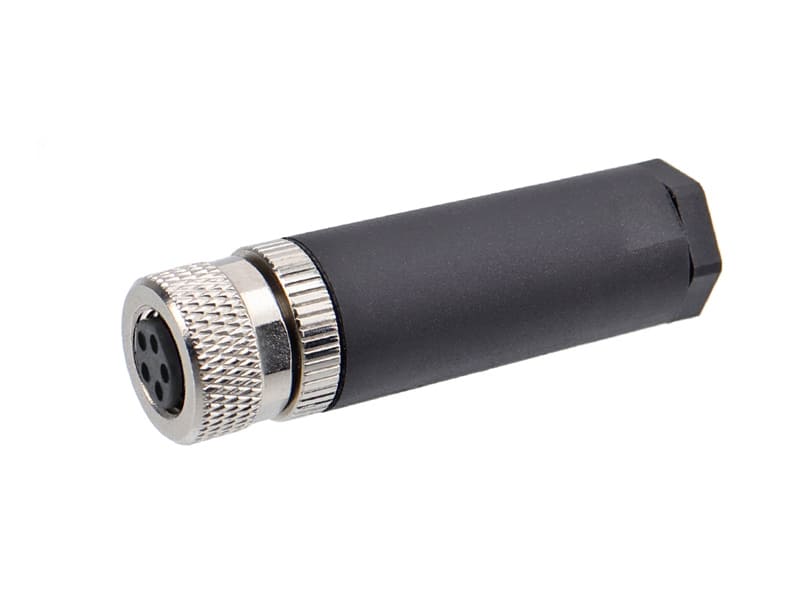
Overview: Engineered for industrial sensor networks and factory automation, the ME08AFXXA6BC01 is an IP67-rated M8 A-coded 4-pin female field wireable connector featuring straight solder cup terminals. Designed for reliable on-site wire termination, this field-installable socket combines a durable nickel-plated copper alloy coupling nut with high-conductivity gold-plated copper alloy contacts to ensure stable signal and 60V/4A power transmission. Fully compliant with IEC 61076-2-104 standards and rated for over 500 mating cycles, it provides OEM/ODM automation equipment builders with a robust, vibration-resistant, and moisture-proof interconnect solution. Manufactured in our ISO-certified facility, every unit undergoes strict quality control to guarantee long-term operational endurance in demanding industrial environments.
Application Notes:
Keyway Alignment: Verify the A-coded mechanical keyway orientation before mating to ensure seamless connection with standard M8 4-pin sensor plugs and panel receptacles.
Soldering Technique: Apply precise soldering temperatures to the straight solder cups and use heat-shrink tubing over individual conductor joints to prevent short circuits inside the housing.
Gland Sealing & Cable OD: Select round flexible cables matching the internal rubber grommet outer diameter (OD range 3.0mm to 5.0mm) to achieve complete IP67 ingress protection.
Strain Relief Tightening: Ensure the rear pressure nut is fully torqued during field assembly to secure the internal seal against cable pulling and twisting forces.
2024年4月12日
China’s booming electronics sector offers thousands of wire harness suppliers, but finding the right fit for mid-to-high volume...
2026年8月1日
Learn aerospace cable harness design to AS50881, material compatibility, and sourcing checks for airworthiness. Get a certifiable harness—read...
2026年8月4日
Learn what makes agriculture wiring assemblies survive vibration, chemicals, and temperature extremes. Discover specs for XLPE insulation, IP67...
2026年7月9日
Learn to vet wiring harness suppliers forensically: live crimp-force curves, 100% continuity tests, and IPC/WHMA-A-620 compliance. Stop field...
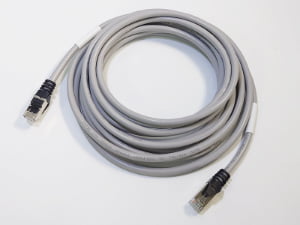
Overview Engineered for rugged industrial environments and high-reliability enterprise networks, our Industrial Cat6A PROFINET Shielded Patch Cable Assemblies...
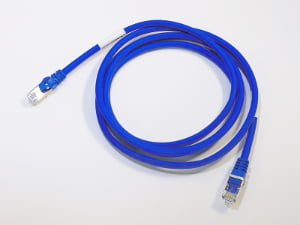
View ProductOverview Engineered for rugged industrial environments and high-speed enterprise networks, our Industrial Cat6A PROFINET Shielded Patch Cable Assemblies...
View ProductThe USB Type-C connector is a compact and versatile interface used in a wide range of electronic devices....
View ProductD-sub connectors, short for D-subminiature connectors, are distinctive D-shaped metal connectors used primarily in computing and telecommunications. Known...
View ProductProduct Document
Use this document for internal review, engineering comparison, and RFQ preparation.
We support importers, distributors, and electronics manufacturers with product matching, alternative sourcing, assembly integration, and factory-direct production coordination.
-300x300.jpg)