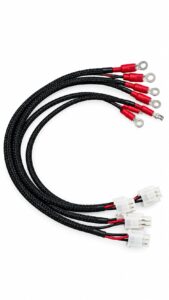
When a tractor harness fails halfway through planting season and the nearest replacement is three weeks out, the real cost isn’t the assembly — it’s the downtime. Every hour a planter sits idle during the narrow spring window translates directly into yield loss. This article breaks down what makes an agriculture wiring assembly survive seasons of vibration, mud, chemicals, and temperature swings, and what to look for before you spec another assembly that might look right but fail early.
Direct Answer: Agriculture wiring assemblies must withstand chemical attack from diesel, fertilizers, and pesticides; continuous vibration that work-hardens terminations; high-pressure washdowns forcing moisture into unsealed connectors; and thermal extremes from -40°C to 125°C. Key differentiators: XLPE (such as SAE J1128 TXL/GXL) insulation instead of PVC; heavy-duty connectors (e.g., DEUTSCH DT/HD series) with IP67/IP69K sealing and silicone gaskets; strain relief at all breakouts; and validation to ISO 16750-4 (chemical loads), SAE J1128, and IPC/WHMA-A-620 Class 3 manufacturing standards.. Off-the-shelf automotive harnesses fail quickly — field-tough assemblies demand material and design choices far beyond wire gauge and pin count.
What Qualifies a Wiring Assembly for Agricultural Use – Materials and Sealing
Most harnesses that reach the field are built to specifications that look adequate on a datasheet but collapse under real agricultural conditions. The difference between a harness that lasts five seasons and one that fails in five weeks starts with insulation chemistry and sealing architecture.
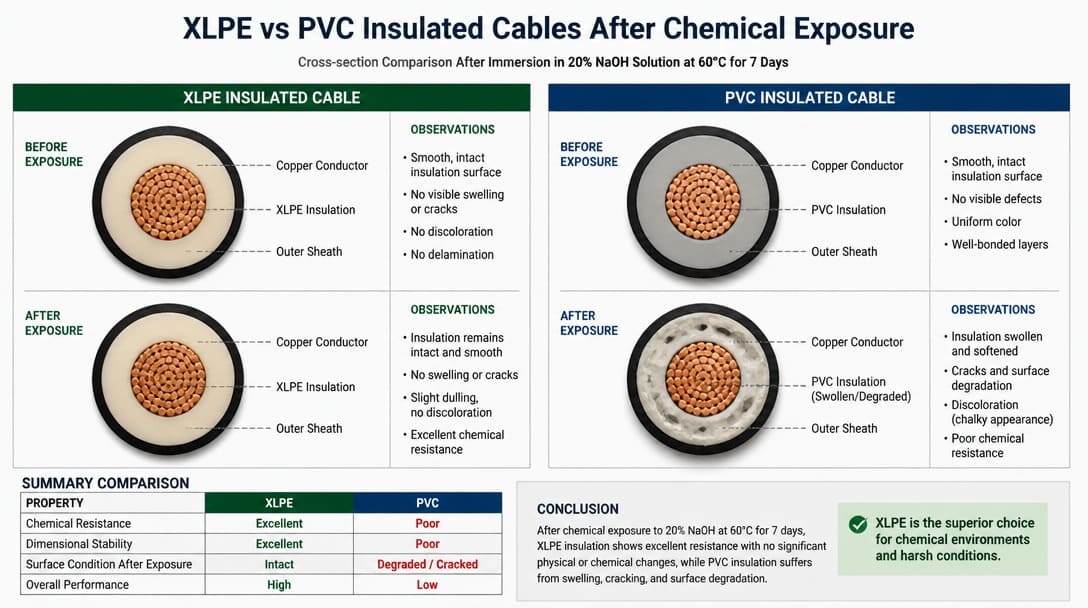
The dominant insulation material in general industrial and automotive harnesses is PVC — polyvinyl chloride. It is inexpensive, easy to process, and passes basic dielectric tests. What PVC does not do is survive sustained exposure to the chemical cocktail present on every farm. Diesel fuel splashes onto harnesses routed near engine bays. Glyphosate-based herbicides, liquid urea fertilizers, and pesticide residues coat wiring that runs along sprayer booms and implement frames. PVC plasticizers migrate out within days of contact with these fluids, leaving the insulation brittle and micro-cracked. Within weeks, moisture penetrates those cracks, and the harness develops intermittent shorts that no continuity tester will catch on a dry bench.
Cross-linked polyethylene — XLPE — changes the chemistry entirely. The cross-linking process creates molecular bonds between polymer chains that resist chemical attack and maintain flexibility across a far wider temperature band. XLPE insulation survives diesel immersion, agricultural chemical contact, and repeated thermal cycling without the progressive hardening that dooms PVC. For harness sections exposed to engine bay heat or sprayer boom chemicals, XLPE is not an upgrade — it is the minimum viable material.
| Property | PVC Insulation | XLPE Insulation |
|---|---|---|
| Chemical resistance (diesel, glyphosate, urea) | Poor — plasticizer migration within days | Excellent — cross-linked structure resists attack |
| Temperature range | -20°C to 80°C (brittle at low end) | -40°C to 125°C (maintains flexibility) |
| Abrasion resistance | Moderate | High |
| Relative cost | Low | Moderate — justified by service life |
| Suitable for ag environment | No — fails within one season | Yes — multi-season durability |
Conductor construction matters as much as insulation. Agricultural equipment subjects every wire to continuous low-amplitude vibration — engine firing pulses, hydraulic system harmonics, and ground-induced shocks transmitted through the chassis. Solid or coarse-stranded copper conductors work-harden under these conditions, developing fatigue cracks at termination points and anywhere the wire flexes. Fine-strand, high-flex copper conductors — typically Type B or symmetric flexible stranding under ISO 6722-1 and SAE J1128 — distribute bending stress across many small filaments, dramatically extending flex life at pivot joints and along vibrating frame rails.
Sealing is the second half of the survival equation. An IP67 rating — dust-tight and protected against temporary immersion — should be the absolute minimum for every connector in an agricultural harness. But static IP ratings tested in a laboratory dunk tank do not tell the whole story. A tractor or sprayer undergoes high-pressure washdowns at 80 to 100 bar, with water jets directed straight at connector interfaces. Standard automotive-grade connector seals compress adequately for splash protection but can lift under dynamic jet pressure, allowing water to wick past the seal and into the contact cavity.
Connector seals made from silicone rather than generic EPDM rubber provide superior performance in this environment. Silicone maintains elasticity after repeated chemical exposure and across the full agricultural temperature range. Sealed splices, protected by dual-wall adhesive-lined heat shrink, prevent moisture from wicking along the wire strands — a failure path that bypasses connector seals entirely. UL compliance provides a baseline verification of insulation integrity and flame resistance, while RoHS compliance ensures environmental acceptability. Neither, however, guarantees chemical durability — that requires application-specific testing per ISO 16750-4 or ASTM D543.
The relevant performance standards form a framework for validation: ISO 16750-4 defines chemical load tests (exposure to diesel, urea, and agricultural chemicals), SAE J1128 establishes requirements for high-temperature primary cable (TXL/GXL), and ISO 20653 defines IP69K washdown resistance.
The Four Silent Killers in Ag Wiring Assemblies
Field failures rarely announce themselves in advance. A harness that passes every production-line continuity test can still die silently within weeks of installation. Understanding the four dominant failure mechanisms — and why standard bench testing misses them — is essential for any buyer specifying agricultural wiring.
1. Chemical Degradation
Diesel softens PVC. Glyphosate solutions and liquid urea fertilizers attack both insulation polymers and the plasticizer systems that keep seals flexible. The degradation is progressive: a harness that looks perfect at installation develops hairline cracks in the insulation within weeks, then hardens until it resembles cracked porcelain. Silicone connector seals swell and lose compression set after repeated exposure, opening microscopic paths for moisture. ISO 16750-4 provides the industry framework for chemical exposure testing. Test profiles must submerge or splash actual field fluids—such as glyphosate formulations, 32% UAN liquid fertilizer, and biodiesel blends—onto both XLPE insulation and silicone connector seals at elevated temperatures to verify long-term resistance.
2. Vibration Fatigue
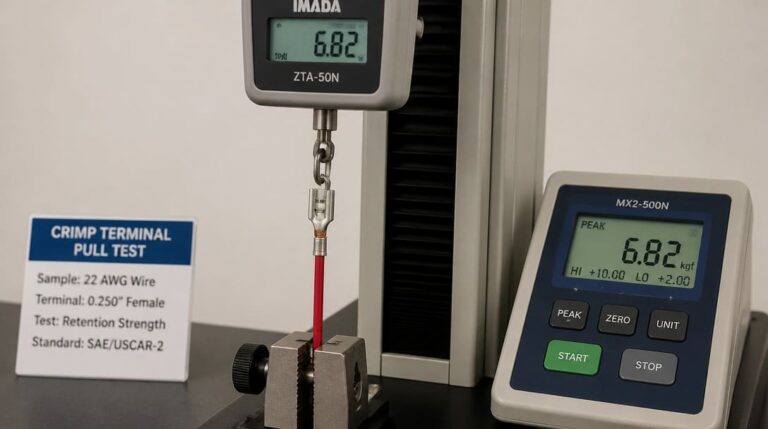
Every crimp terminal is a stress concentrator. Under continuous vibration, copper strands work-harden at the crimp transition point and eventually fracture — even though the joint still passes a static pull test. The failure is cumulative and invisible until the last few strands break and the circuit opens intermittently. Chafing and physical impact at routing points add critical failure paths: crop residue and corn stubble can puncture unarmored bundles along implements, while cable ties abrade through soft insulation during frame flexing. Utilizing PA6 or PA12 flame-retardant polyamide corrugated conduits over wire bundles is essential to resist both chassis chafing and stubble impact. Nobody specified protective sleeving at those points, because nobody identified them as abrasion risks during design review.
Field Observation: “We’ve stripped back tape on a failed harness and found wire insulation that looked like cracked porcelain — it passed a bench continuity test but couldn’t survive a season of flexing through a pivot point. Nobody tested for that.”
3. Moisture Ingress
Water enters harnesses through paths that bench testing rarely simulates. Capillary action draws moisture along wire strands from an unsealed connector cavity deep into the harness bundle. High-pressure washdown jets force water past connector seals that held fine in a static dunk test. Once inside, moisture migrates through the harness, corroding terminals and creating high-resistance faults that come and go with humidity. By the time the fault appears as a diagnostic trouble code, the internal corrosion has progressed far beyond the original entry point.
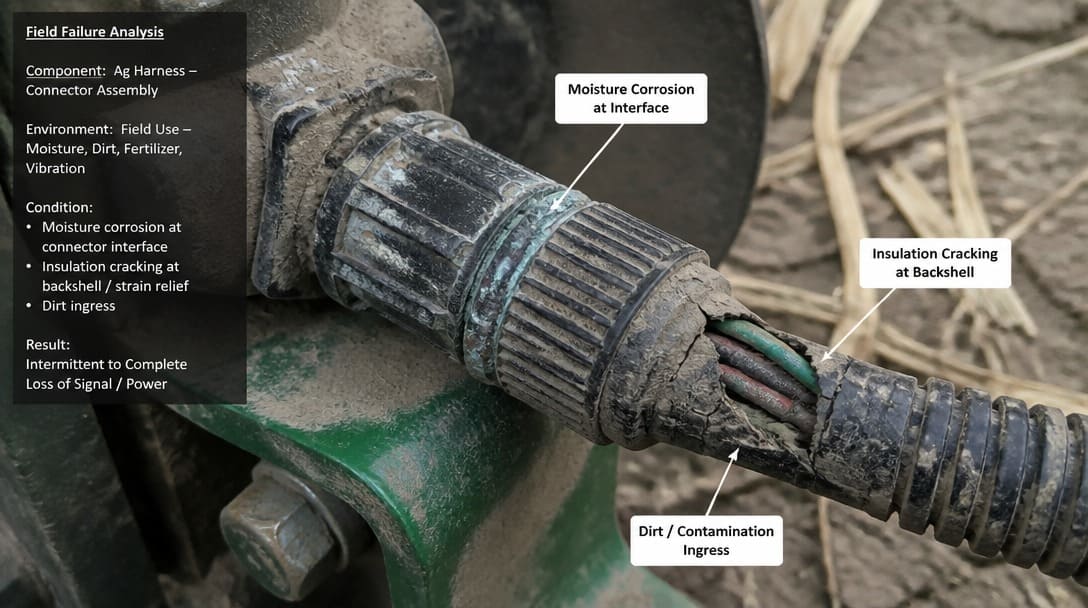
4. Thermal Shock
Agricultural equipment operates from cold-soaked winter cold starts at -40°C to engine bay temperatures exceeding 105°C to 125°C during peak summer heavy load operation. PVC insulation that is adequately flexible at room temperature becomes glass-brittle at -20°C, cracking during the first movement of an articulating joint. Near the engine, temperatures soften insulation and relax terminal retention forces, leading to creep and eventual contact fretting. Harnesses that pass a room-temperature bench test can fail catastrophically during the first cold-start cycle of the season — a failure that no amount of production-line continuity testing will predict.
Reading Harness Drawings: Specifying for Survival, Not Just Fit
A harness drawing that specifies only wire gauge, color, and connector part numbers is a warranty claim waiting to happen. Translating field durability requirements into drawing notes that a production team can execute requires specificity that goes beyond basic fit and function.
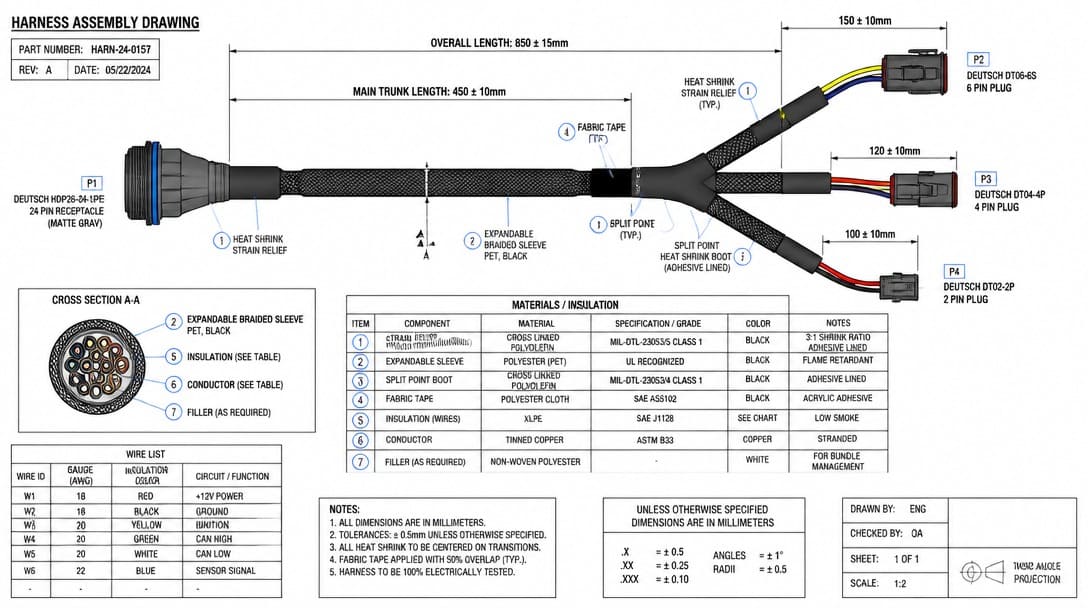
Start with insulation material callouts. Every wire on the drawing should identify the insulation type — not generically as “automotive wire” but specifically as XLPE, with the applicable standard reference such as SAE J1128. For conductors, specify the stranding class: fine-strand Class 5 or 6 construction for any wire that flexes during equipment operation, including routes through pivot joints, folding implement sections, and engine-mounted sensors.
Connector seal material deserves explicit attention on the drawing. A connector part number tells you the housing series but often not the seal compound. Specify silicone seals for any connector exposed to agricultural chemicals or frequent washdowns. Where the drawing calls out a sealed connector, add a note confirming that the seal material has been verified against the target chemical exposure list — generic “rubber” seals fail early in this environment.
| Seal Material | Chemical Resistance (Ag Fluids) | Temperature Range | Washdown Survival |
|---|---|---|---|
| Silicone | Excellent — resists diesel, glyphosate, urea | -55°C to 200°C | Maintains elasticity under jet pressure |
| EPDM | Moderate — degrades with repeated petroleum exposure | -40°C to 125°C | Adequate for splash, unreliable under high pressure |
| Generic rubber/NBR | Poor — swells and cracks with diesel contact | -25°C to 100°C | Not recommended for ag washdown |
Strain relief is not decorative. Every breakout point, connector backshell, and pivot joint needs an explicit strain-relief callout on the drawing. This means specifying a minimum bend radius allowance, adding flex loops to wire length calculations, and mandating protective sleeving at any routing point where the harness contacts a frame edge, engine mount, or moving linkage. A harness that fits perfectly on the assembly bench often binds once the implement articulates to its full range of motion — wire length calculations must include routing tolerance for dynamic movement, not just static fit.
Routing notes on the drawing should actively avoid known trouble zones: engine mounts where vibration amplitudes peak, sprayer boom fold points where the harness flexes with every pass, and any location where the assembly passes within 50 mm of a hot exhaust or hydraulic line without a thermal barrier. These notes are not suggestions — they are the difference between a harness that survives and one that gets replaced mid-season.
Pre-Sourcing Verification Checklist
Before committing to a production run, procurement teams and engineers should verify that the proposed harness design has been validated against real agricultural conditions — not just against a generic datasheet. The following checklist provides a concrete, shareable framework for pre-sourcing due diligence. Suppliers such as EDOM Electronics support OEM buyers with this verification process, including drawing review, connector matching, sample inspection, and production follow-up tailored to harsh-environment applications.
- Confirm insulation passes a chemical immersion test in target field fluids — diesel, glyphosate solution, liquid urea — per ISO 6988 or a custom protocol that matches the actual chemical profile of the machine’s operating environment.
- Verify connector IP rating under dynamic pressure. Request a test report or video demonstrating seal integrity under washdown jets at 80–100 bar. A static IP67 rating does not guarantee survival under high-pressure spray.
- Request vibration test data using a random vibration profile matched to the equipment type — tractor, combine, or sprayer — not a generic sine sweep that fails to excite the real failure modes.
- Inspect strain relief at all breakouts and connector backshells on a physical sample. There should be no rigid transitions from wire to connector, no unsupported wire loops, and protective sleeving at every abrasion risk point.
- Validate wire length includes flex loops and routing tolerance. A harness that fits on a static bench often binds or pulls tight once the implement articulates through its full range of motion. Routing validation should include dynamic movement, not just static fit.
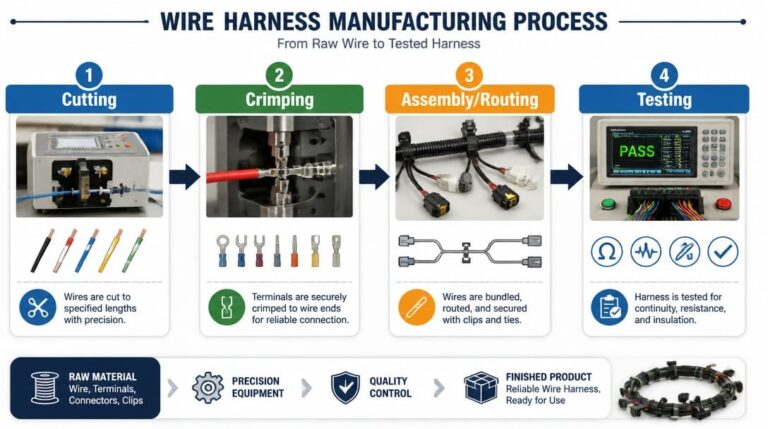
- Review the wire harness manufacturing quality plan — confirm that in-process continuity testing, crimp force monitoring, and visual inspection checkpoints are defined before production begins.
Ready to de-risk your next agricultural harness design? Submit your drawing or concept for a no-obligation review — we’ll verify insulation, sealing, and strain relief against real field conditions before you commit to tooling.
Choosing Connectors for Chemical, Vibration, and Washdown Resilience
| Connector Family | Sealing Rating | Key Ag Applications | Critical Sourcing Note |
|---|---|---|---|
| TE DEUTSCH DT / DTM Series | IP68 / IP69K | Engine, transmission, & implement CAN buses | Thermoplastic housings resist chemical splash; silicone seals prevent washdown ingress. |
| Amphenol AT Series | IP68 / IP69K | Chassis lighting & auxiliary sensors | Drop-in compatible with DT footprints; verify contact retention wedge locks. |
| Aptiv (Delphi) Weather-Pack | IP67 | Legacy tractor cab & auxiliary power | Pin & sleeve system; ensure dual-tang terminal retention under high vibration. |
Connector selection narrows quickly when the requirements include chemical resistance, vibration endurance, and high-pressure washdown survival. Several proven sealed connector systems dominate agricultural applications, each with specific sealing technologies that differentiate them from standard automotive-grade alternatives.
The DEUTSCH DT series from TE Connectivity uses multi-lobe silicone wire seals that maintain compression through repeated thermal cycling and chemical exposure. Their wedge-lock contact retention system prevents terminal back-out under vibration, and the interfacial seal between connector halves provides a secondary moisture barrier. For power distribution and high-pin-count applications, the DT series offers a track record across construction, agricultural, and off-highway equipment.
Molex MX150 sealed connectors employ a matte seal design with pre-assembled silicone-based wire seals that reduce assembly complexity while maintaining IP67 performance. The single-wire seal architecture simplifies harness production and reduces the risk of seal damage during terminal insertion — a practical consideration that affects long-term field reliability.
Amphenol AT Series connectors, built around the same DEUTSCH-compatible interface, provide an alternative sourcing path with comparable silicone seal performance and wedge-lock retention. For buyers managing supply chain diversification, AT Series connectors offer interchangeability with DT-series layouts while maintaining the same sealing and vibration resistance characteristics.
For lower-current sensor circuits and control module connections in semi-protected locations, compact sealed options from Hirose (DF62 series) and JST (JWPF series) provide IP67-rated interfaces in smaller footprints. These connectors suit cab-interior and controller-area applications but still require additional loom protection — conduit or split-braided sleeving — when routed through exposed frame areas or sprayer boom sections.
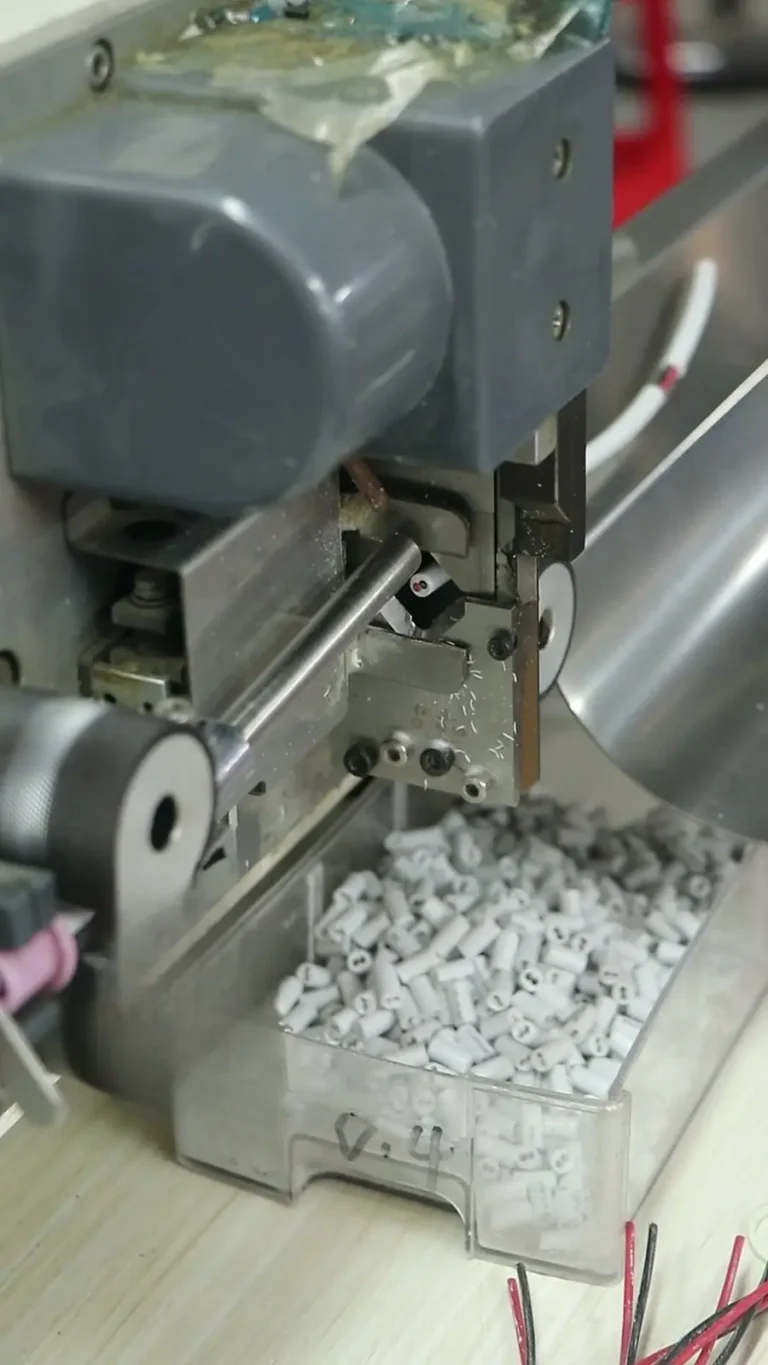
The termination method matters as much as the connector choice. In high-vibration agricultural environments, a properly executed crimp joint with dual-wall adhesive-lined heat shrink outperforms a soldered splice. Solder wicks up the wire strands, creating a stiff transition point that concentrates bending stress exactly where vibration-induced work-hardening occurs. A crimp barrel, properly sized and validated with crimp force monitoring, maintains a gas-tight connection while the adhesive-lined heat shrink provides strain relief and moisture sealing in a single operation.
Terminal plating selection follows the circuit function. Selective gold plating on low-current sensor signal contacts — millivolt-level outputs from pressure transducers or position sensors — prevents the high-resistance oxide buildup that tin plating develops in humid, corrosive environments. For power circuits carrying several amps, tin plating in dry-zone locations provides adequate performance at lower cost. All terminals should be subjected to mixed flowing gas testing per EIA-364 standards to verify corrosion resistance before release. UL and RoHS compliance remain baseline requirements, but real-world verification means cross-referencing the manufacturer’s salt-spray test data and vibration endurance ratings against the specific field profile of the target machine.
Testing Protocols That Validate Ag Harness Durability
Standard production-line continuity testing catches assembly errors — miswired pins, open circuits, and intermittent contacts detectable under static conditions. It does not predict field survival. Agricultural harness validation requires a structured approach to environmental and mechanical testing that simulates the cumulative degradation a harness experiences over multiple seasons.
ISO 16750-4 defines chemical load testing for road vehicle electrical components, specifying immersion in fluids that include diesel, battery acid, and crop protection chemicals. Buyers should specify which test fluids apply to their equipment’s operating profile — a generic test menu that omits glyphosate or liquid urea tells you nothing about real-world durability. The standard provides a test methodology; the fluid list must come from the application.
SAE J1128 covers low-tension primary cable and defines construction requirements, abrasion resistance tests, and dielectric withstand verification. For any primary power or ground wiring in an agricultural harness, J1128 compliance provides a baseline assurance that the cable itself — independent of the connector system — meets minimum durability thresholds for mechanical abuse and insulation integrity.
The EIA-364 series provides connector-level test methods for thermal shock, humidity cycling, vibration, and salt spray exposure. These tests can be mapped to the specific field profile of the target machine: the temperature range of EIA-364 thermal shock testing should bracket the equipment’s cold-start and peak-operating temperatures, and the vibration profile should match the engine firing frequencies and chassis resonances of a tractor or combine rather than a passenger car.
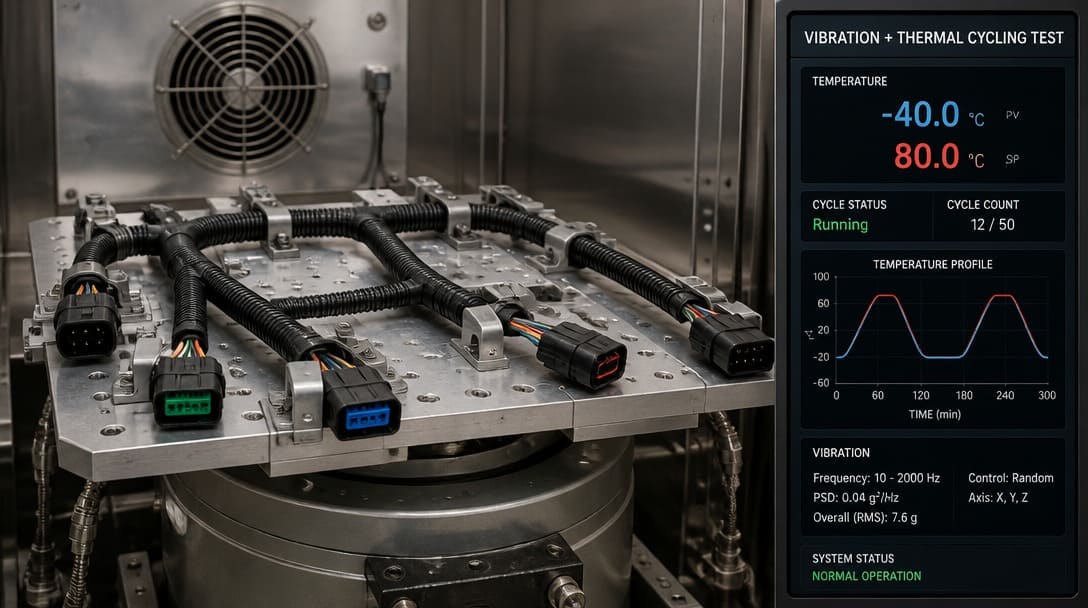
Combined-environment testing — simultaneous vibration, temperature cycling, and chemical splash exposure — provides the highest confidence before field deployment. A harness that passes vibration testing at room temperature may fail the same profile at -20°C, where insulation is brittle and seal compression is reduced. Progressive degradation over hundreds of cycles, not a single pass/fail test after one stress exposure, reveals the real failure path. Passing a continuity test after one thermal shock cycle proves very little; maintaining electrical integrity through 500 combined-environment cycles predicts multi-season survival.
Final production validation should also confirm that quality inspection and export packaging processes preserve the harness integrity built into the design. A properly validated harness can still arrive at the OEM assembly line with damage if packaging does not protect against crushing, moisture, and handling abuse during transit.
Applying Ag-Relevant Lessons to Other Harsh-Environment Assemblies
The same chemical resistance, vibration endurance, and sealing discipline that protects a sprayer harness applies directly to other harsh-environment interconnect applications. Off-highway construction equipment faces identical mud, washdown, and thermal cycling challenges. Marine electrical systems contend with salt spray and continuous moisture. Even aerospace interconnects — though operating at different altitudes and temperature extremes — share the fundamental requirement that insulation materials, connector sealing, and strain-relief design must be validated against the specific environmental loads of the application, not generic benchmarks.
While agricultural machines battle chemical spray and high-pressure washdowns on the ground, high-reliability interconnect engineering applies the same core principles—chemical resistance, vibration isolation, and hermetic sealing—to aerospace environments. To explore how ultra-harsh environment engineering scales to flight-critical standards like AS9100 and DO-160, see our comprehensive guide to aerospace cable assemblies.
Frequently Asked Questions
Why do agricultural wiring harnesses fail faster than automotive harnesses?
Agricultural harnesses face a combination of stressors that automotive harnesses rarely encounter simultaneously: continuous exposure to diesel, fertilizers, and pesticides; high-pressure washdowns that force moisture past connector seals; sustained vibration from engine and hydraulic systems transmitted through rigid chassis frames; and temperature swings from sub-freezing cold starts to engine bay heat exceeding 60°C. Automotive harnesses are designed for splash protection and moderate vibration; agricultural harnesses must survive chemical attack and dynamic mechanical loads that standard automotive components cannot withstand.
What is the minimum IP rating for agricultural connectors?
IP67 — dust-tight and protected against temporary immersion — should be the minimum for agricultural connectors. However, static IP67 testing does not guarantee survival under high-pressure washdown jets at 80–100 bar. Connectors destined for sprayer booms, exposed frame locations, or any area subject to directed pressure washing should be verified under dynamic jet conditions, and seal materials should be specified as silicone rather than generic rubber to maintain compression after repeated chemical exposure.
Is PVC insulation ever acceptable in agricultural wiring?
PVC insulation is not recommended for any agricultural harness section exposed to chemicals, temperature extremes, or flexing. PVC plasticizers migrate out within days of diesel or agro-chemical contact, leading to embrittlement, cracking, and moisture ingress. XLPE (cross-linked polyethylene) provides the chemical resistance and temperature range necessary for multi-season durability. The cost difference between PVC and XLPE is negligible compared to the downtime and warranty cost of a field failure.
How can OEM buyers verify that a harness supplier understands agricultural requirements?
Request evidence of chemical immersion testing in the specific fluids the equipment will encounter — diesel, glyphosate solution, liquid urea, and common pesticide formulations. Ask for vibration test data using random vibration profiles matched to the equipment type, not generic sine sweeps. Inspect sample harnesses for strain relief at every breakout and connector backshell, and confirm that connector seal materials are specified as silicone for exposed locations. Suppliers who cannot provide this level of application-specific validation data may not have experience with agricultural-grade durability requirements.
What role does crimp quality play in agricultural harness reliability?
Crimp quality is critical for vibration survival. A properly executed crimp creates a gas-tight, cold-welded connection between the wire strands and terminal barrel, preventing oxidation and maintaining low contact resistance through years of thermal cycling and mechanical vibration. Crimp force monitoring during production — measuring the force required to compress the terminal barrel — provides objective verification that each crimp meets the specified compression range. A soldered splice, by contrast, creates a stiff transition point that concentrates bending stress and is more prone to fatigue failure in high-vibration agricultural environments.
Key Takeaways
- Insulation material is the first line of defense — XLPE survives diesel, agro-chemicals, and temperature extremes that destroy PVC within weeks. Specify insulation type explicitly on harness drawings, not generically as “automotive wire.”
- Sealing must withstand dynamic pressure, not just static immersion. IP67 is the minimum; silicone seals outperform EPDM and generic rubber under repeated chemical exposure and high-pressure washdown. Verify connector seal performance under jet spray conditions before production release.
- Field failures are cumulative and progressive. Bench continuity tests catch assembly errors but miss the vibration fatigue, chemical degradation, moisture ingress, and thermal shock damage that accumulate over hundreds of operating cycles. Validation testing must combine environmental stressors — not test them one at a time.
- Harness drawings must specify survival details, not just fit. Insulation material, stranding class, seal compound, strain-relief design, flex loops, and routing prohibitions are not optional notes — they are the difference between a harness that fits the machine and one that survives the season.
- Pre-sourcing verification saves warranty cost. A checklist-driven review of chemical immersion data, dynamic IP testing, vibration profiles, strain relief samples, and routing tolerance before production commitment prevents field failures that cost far more than the harness itself.
Explore custom cable assembly and wire harness OEM services designed for harsh-environment agricultural, off-highway, and industrial applications — with requirement review, connector matching, sample coordination, and export-ready packaging.