If your search for aerospace cable manufacturers has left you with a stack of quotes that range from surprisingly cheap to budget-blowing high, you’ve probably realized that an AS9100 certificate on its own tells you very little about whether a shop can build flight-ready harnesses.
What to Demand from an Aerospace Cable Manufacturer
- Engineering that catches failure modes before prototyping.
- Total material traceability, from OEM source to final test.
- In-process testing that mimics real-world stress, not just end-of-line go/no-go checks.
How to Evaluate Aerospace Cable Manufacturers
Step 1: Verify Engineering Depth Beyond the Drawing
A genuine aerospace partner doesn’t just follow a print—they interrogate it. The first thing to assess is whether the manufacturer reviews your design against DO-160 or MIL-STD-810 vibration and thermal profiles. Any shop can build to a wiring diagram, but fewer will flag a potential stress riser in a pressurization zone harness or suggest a connector orientation that survives vibration at 40,000 feet.
This engineering depth also surfaces in how they handle component selection. If your BOM calls for a long-lead mil-spec connector, an experienced partner can rapidly propose alternative components from brands like Molex, TE Connectivity, Amphenol, or JST that match or exceed the electrical and environmental specs while trimming weeks off delivery. That kind of proposal requires real bench strength—knowing not just part numbers, but the underlying material compatibility and termination behavior of each contact-wire combination. It also means generating first article inspection reports per AS9102 without you having to explain the process step-by-step, which demonstrates embedded aerospace process knowledge.
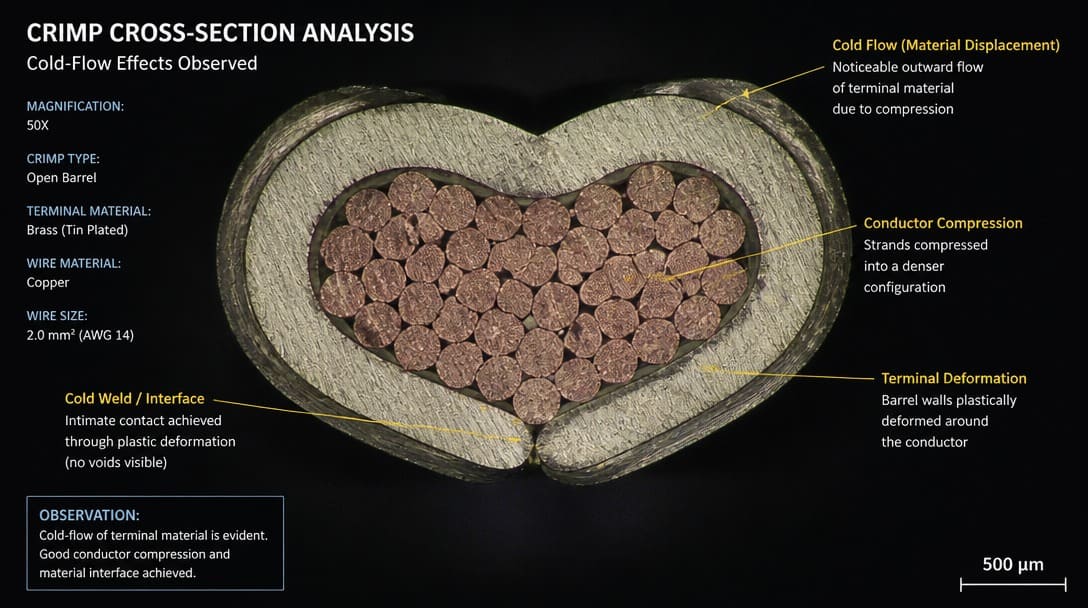
Experienced aerospace production partners point to a specific example that separates the qualified from the merely certified: a shielded twisted pair crimped for an engine nacelle can develop an intermittent connection months later due to cold-flow relaxation on PTFE-insulated wire. A shop without deep engineering foresight will pass the initial pull test and never predict the failure. Engineering depth means designing with derating margins for altitude and thermal cycling from day one.
Step 2: Demand Total Material Traceability from Reel to Report
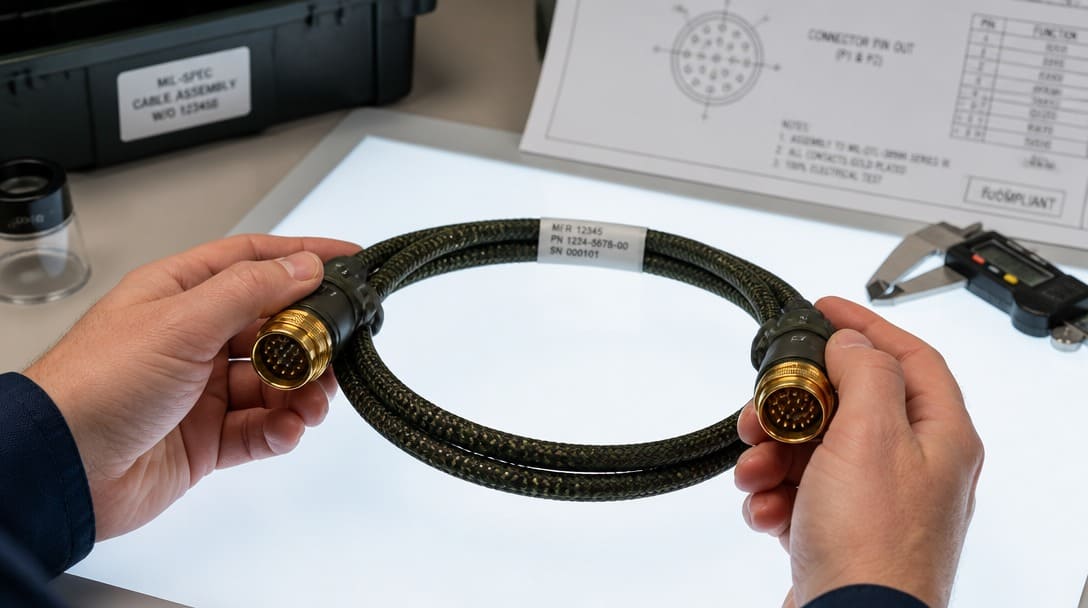
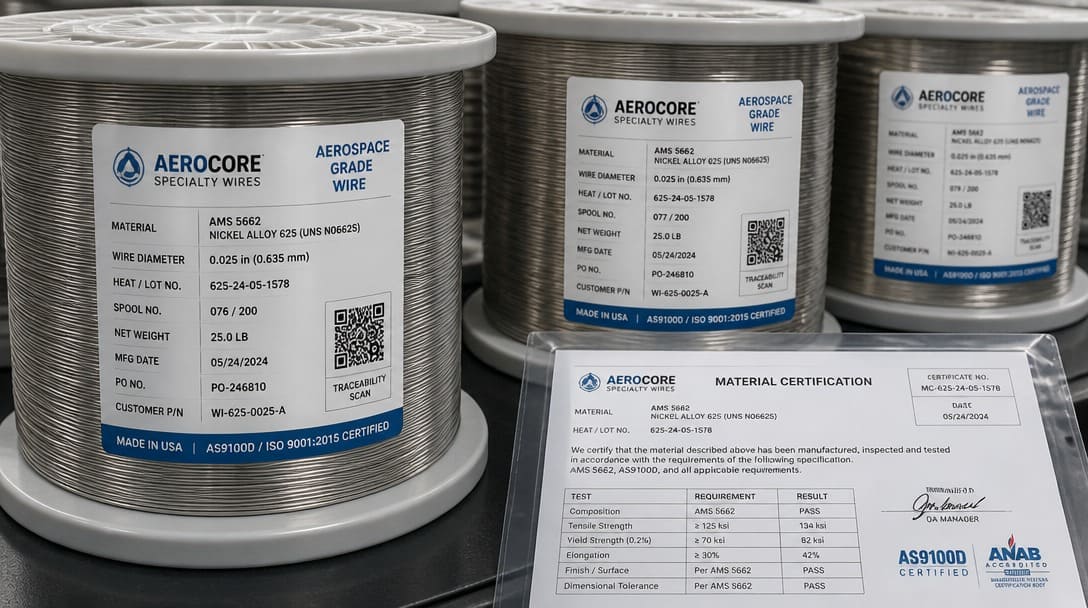
For flight hardware, lot-level traceability isn’t a nice-to-have—it’s the backbone of reliability. The manufacturer must demonstrate unbroken chain of custody from the OEM reel through every cutting, stripping, and crimping operation to the final test report. Without it, a single suspect batch of wire can ground an entire fleet.
Reputable manufacturers source only through authorized franchised distribution channels to strictly adhere to AS5553 counterfeit mitigation standards. This is particularly critical when specifying mil-spec connectors where material pedigree and avoiding pure-tin plating (to mitigate tin whisker risks) are non-negotiable for flight-critical applications. A traceable material pedigree ensures that the final assembly’s compliance rests on verified data, not assumptions. When mil-spec component shortages hit, a capable partner handles them by proposing compliant alternatives that maintain certification integrity, re-validating the traceability chain rather than hoping for the best.
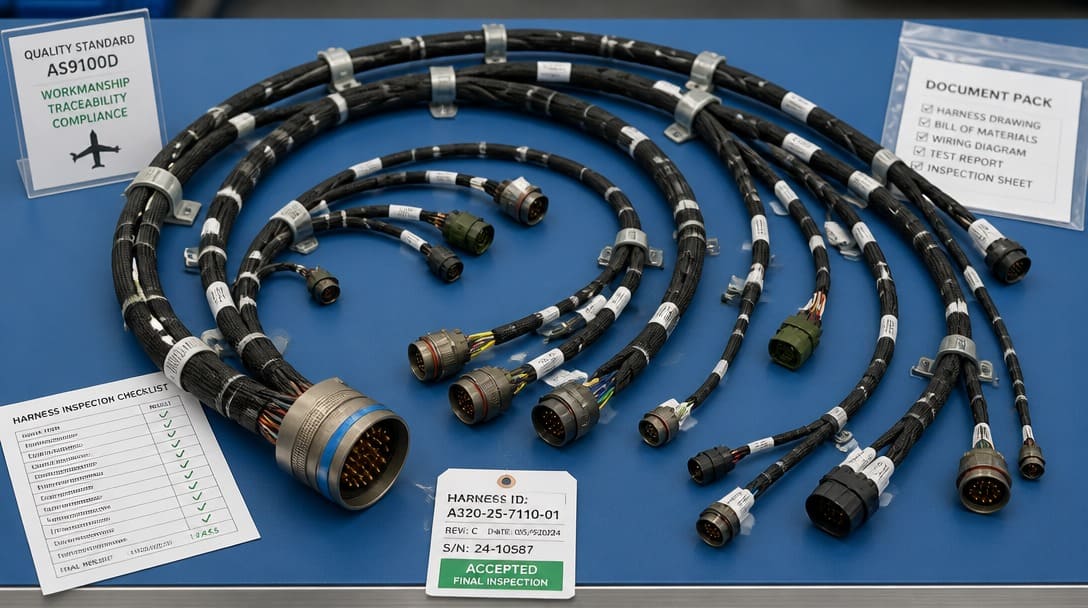
This discipline also flows naturally into other production areas. For example, wire harness manufacturing processes that integrate lot-level control ensure that every terminal, sleeve, and label ties back to a documented source—exactly what inspectors look for during a production readiness review.
Step 3: Assess Production Testing That Replicates Flight Conditions
The biggest mistake OEM buyers make is stopping at continuity and hi-pot testing. While necessary, those are gate checks that catch the coarsest defects. True aerospace capability reveals itself in testing that simulates the physical stressors of flight: cyclic bend testing for flex assemblies, thermal shock testing for harnesses that transition between pressurized and unpressurized zones, and real-time crimp height monitoring with statistical process control. This last point is a key discriminator. End-of-line pull-test pass/fail data tells you the crimp held during one pull. Real-time crimp force monitoring during production tells you it will hold after 3,000 flight cycles.
The IPC/WHMA-A-620[1] Space and Military Addendum sets the workmanship and inspection criteria that separate aerospace from industrial assembly. Ask for validation data that shows your exact contact-wire combination has documented crimp force windows before production begins—not something the shop generates on request when you push back. For a deeper look at how testing integrates with manufacturing flow, including process control around cutting, stripping, and inspection, see quality inspection and export packaging protocols that maintain consistency right through to final shipment.
Step 4: Benchmark with a Supplier Evaluation Scorecard
What looks like a strong qualification on the surface often masks critical gaps. Use the scorecard below to move past common marketing claims and uncover aerospace-specific capability.
| Commonly Checked Criteria | What It Actually Tells You | A Better Indicator |
|---|---|---|
| “AS9100 certified” | Has a quality management system in place | How many first articles per year they complete for aerospace primes |
| “Uses automated crimping presses” | May achieve consistent crimp force | Can they show real-time crimp force monitoring data for your exact contact-wire combination? |
| “Offers competitive pricing” | May be using low-cost materials | Ask for a cost breakdown of connector, wire, and labor—and where substitutions are proposed |
When a cable assembly is the nervous system of a flight-critical system, every connection tells a story. Let’s write one that ends with a mission accomplished—talk to our aerospace engineering team.
Step 5: Study Real-World Failure Modes to Reinforce Your Selection Criteria
Understanding what fails in the field—and why—forces you to ask the right questions during evaluation. Consider these all-too-common incidents that separate design intent from physical reality:
- Intermittent connections from mismatched platings. When a gold-plated contact is crimped onto tin-plated wire, intermetallic growth at the interface can create micro-resistance changes that only appear under thermal cycling. A manufacturer that doesn’t challenge plating mismatches is setting up a field failure.
- Outgassing of non-space-grade insulators. In vacuum or high-altitude environments, wrong insulation materials release trapped gasses that can condense on optical surfaces or corrode nearby components. Skipping thermal vacuum outgassing data is a gamble.
- EMI leakage from improperly terminated braids. A shield termination that looks acceptable visually may fail transfer impedance testing, letting noise into sensitive avionic signals. Without in-process testing that mirrors installation conditions, you won’t know until flight test.
We’ve seen certified shops struggle to differentiate between a torque-balanced twist and a simple lay-up for an accelerometer cable—a subtlety that makes the difference between a clean signal and a noisy one at 40,000 feet. The IPC/WHMA-A-620 Space Addendum and AS9102 define the minimum workmanship standards, but they don’t replace the need for a manufacturer with genuine material science knowledge at the connector interface. Those standards are the floor, not the ceiling.
Frequently Asked Questions
Is an AS9100 certificate enough to qualify an aerospace cable manufacturer?
No. AS9100 certifies that a quality management system exists—it doesn’t validate specific engineering competence for flight hardware. The real test is the manufacturer’s ability to produce first article inspection reports per AS9102, anticipate failure modes like cold-flow relaxation, and generate validated crimp data for your exact materials..
How do I verify that a manufacturer’s material traceability is genuine?
Request a sample lot-level traceability report that links the OEM reel certificate directly to your prototype assemblies. Look for intermediate process logs—cutting, stripping, labeling—that maintain the chain. Reputable manufacturers will provide this without hesitation; if they demur, treat it as a red flag.
What production tests should I specify beyond continuity and hi-pot?
For aerospace harnesses, demand cyclic bend testing for flex sections, thermal shock testing for zone transitions, and real-time crimp force monitoring with SPC data. If the assembly includes shielded pairs, ask for transfer impedance testing results. These tests replicate the physical environment, not just electrical isolation at room temperature.
Can a manufacturer with no aerospace prime experience produce reliable flight cables?
While an experienced industrial manufacturer might learn, the learning curve imposes risk. The safest path is to choose a partner that regularly completes first articles for aerospace primes, demonstrates mastery of IPC/WHMA-A-620 Space Addendum, and can show you failure mode analyses from past projects that prove they think beyond the drawing.
How do I balance lead time against quality requirements when selecting suppliers?
Start by accepting that aerospace cable assemblies cannot be rushed without trade-offs. Identify early in the design review which components have long lead times and collaborate with the supplier to propose compliant alternatives from brands like Molex, TE Connectivity, or Amphenol that maintain performance while compressing the schedule. A partner who can do this without compromising material traceability gives you both speed and confidence.
Key Takeaways
- AS9100 is a starting point, not a guarantee. Dig deeper into first article history, engineering review habits, and failure mode awareness.
- Material traceability must be unbroken. From OEM reel to final test report, every contact and wire segment needs documented provenance.
- Production testing must replicate flight stress. Insist on crimp force monitoring, cyclic bend, thermal shock, and transfer impedance tests—beyond simple hi-pot.
- Use a structured scorecard. Replace “competitive pricing” with a cost breakdown that reveals material substitution risks; replace “automated presses” with validated crimp data for your specific combination.
- Field failures are preventable. Intermetallic growth, outgassing, and EMI leakage are well understood in aerospace engineering; choose a manufacturer that demonstrates applied material science, not just assembly labor.
For a deeper dive into the foundational specifications that define aerospace cable assemblies—from connector selection to termination methods—read our pillar guide: What Are Aerospace Cable Assemblies