Medical cable assembly cost-down(see our What Are Medical Cable Assemblies? Key Types and Design Factors article) is a structured sourcing decision process that scores each potential substitution against IEC 60601-1 means-of-patient-protection isolation, IPC/WHMA-A-620 workmanship class, mating-cycle life, sterilization chemistry, and material traceability before a production order is released.
Start From the Safety Boundary, Not the Price Column
A supplier BOM lands with unfamiliar connector part numbers. Engineering says the cable design is frozen. Procurement still needs cost relief, but every proposed change appears to trigger a downstream revalidation conversation. That is the moment most medical cable assembly cost-down initiatives stall.
The first question is not which line item can be cut. The first question is which changes can be proposed without forcing a revalidation of the IEC 60601-1 isolation classification (specifically 2x MOPP vs. 1x MOOP, and patient leakage current limits for Type B/BF/CF applied parts). A lower piece price on a connector, shield, or strain relief only counts as a cost-down if the alternate holds isolation, workmanship, and field life within that exact classification boundary.
Separate the cost levers into four independent tracks so each can be scored without collapsing the whole design review:
- Connector substitution, including part-number equivalents and lower-cost molded alternatives
- Cable construction changes, such as shielding type, jacket material, and strain relief geometry
- Shielding and termination process changes, including braided shielding to foil shielding swaps
- Part-number consolidation across patient monitor variants that does not alter the approved component baseline
For engineering and sourcing teams evaluating these trade-offs, technical manufacturing partners can derisk the substitution before tool release. Engaging experienced manufacturing engineers for early DFM reviews, connector pin-to-pin cross-referencing, mold flow tooling optimization (NRE reduction), and 3-5 day rapid functional prototyping prevents unverified component changes from stalling the production timeline.
How to Sort Cost-Down Levers by Qualification Risk
For procurement, the useful scoring logic is simple: a lower BOM line price is not a cost-down if the alternate reduces electrical isolation or assembly quality below the standard’s requirements. IEC 60601-1 sets the isolation rules for patient-connected parts. IPC/WHMA-A-620 defines the workmanship acceptance classes for cable and wire harness assemblies, as detailed in our medical cable assembly manufacturing standards guide. Neither is a design preference; both are go/no-go boundaries.
Every candidate substitution should be scored against five criteria before engineering or a supplier is asked to quote:
- Dielectric Withstand Voltage (DWV): Must survive standard proof test levels (e.g., 4,000 VAC / 5,656 VDC for 2x MOPP, with leakage current cut-off below 10 µA for CF applications) with zero arc-over.
- Creepage & Clearance Boundaries: Verify physical barrier distances against IEC 60601-1 Table 12 (e.g., minimum 8.0 mm creepage and 5.0 mm clearance for 250 VAC 2x MOPP).
- Mechanical Cycle Durability: Differentiate disposable target thresholds (10–50 mating cycles) from reusable leadsets (typically 5,000–10,000 push-pull cycles per EIA-364-09) without contact plating breakthrough.
- Workmanship Acceptance: Must provide Cpk data (Cpk ≥ 1.33) and microsection analysis proving adherence to IPC/WHMA-A-620 Class 3 standards for critical medical applications (or Class 2 for general monitor peripherals).
- Chemical & Autoclave Compatibility: Validate resistance against designated wipe protocols (e.g., Quaternary Ammonium, 70% IPA, Bleach/Sodium Hypochlorite) and autoclave requirements (up to 134°C steam under ISO 17665) without polymer cracking.
The decision table that follows turns those criteria into a copy-ready tool. Procurement can send it to a supplier or to engineering as the first screen before any sample request is authorized.
Medical Cable Assembly Cost-Down Decision Table: Connector Alternatives Ranked by Qualification Risk
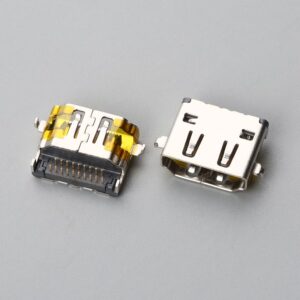
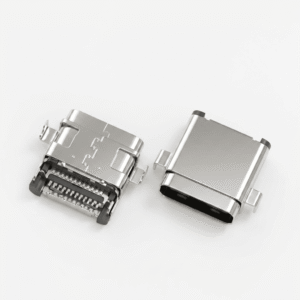
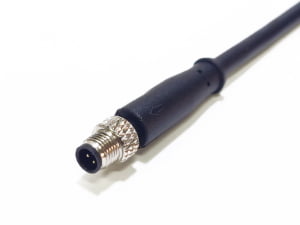
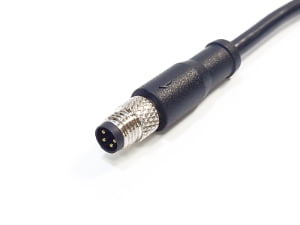
Connector substitution is rarely a one-line saving. The table below compares three candidate positions: the approved connector already in the medical device record, a push-pull style alternate represented here by a LEMO connector option, and a lower-cost molded connector that a supplier may propose as a direct replacement. Each row shows the qualification work required before the alternate can move forward.
| Evaluation criterion | Approved connector | LEMO-style push-pull alternate | Lower-cost molded connector alternate |
|---|---|---|---|
| IEC 60601-1 creepage/clearance | Documented for patient-connected use; isolation distances known | Requires drawing review to confirm creepage and clearance against the approved isolation strategy | Often reduced spacing due to tighter package; must be tested, not assumed |
| IPC/WHMA-A-620 workmanship class | Already qualified to the required class with defined inspection criteria | Supplier can document assembly to the same class if termination and overmolding processes are validated | Overmold void and encapsulation quality must be checked; may not meet higher workmanship classes without added inspection |
| Mating-cycle life | Documented for the expected reusable patient monitor service model | Push-pull latching may offer high cycle rating; request actual specification from the connector source | Often lower insertion durability; confirm cycles before specifying for reusable equipment |
| Sterilization chemistry compatibility | Validated for the specified disinfection or sterilization protocol | Check contact plating and housing material against autoclave cycles or repeated disinfectant wipes | High risk of housing stress cracking under disinfectant exposure; require chemical compatibility test data |
| Traceability documentation | Full material and lot traceability available | Request ISO 13485-relevant documentation and source control evidence | Fragmented traceability risk; need supplier qualification and incoming inspection records |
| Decision outcome | Baseline; no revalidation required | Safe to propose with samples; requires dielectric withstand testing and documentation review | Not acceptable for patient-contact use unless full isolation and sterilization testing passes; do not sign without test reports |
Connector Substitution: Propose an Alternate Only After the Isolation and Mating-Cycle Check
An unfamiliar connector part number on a supplier BOM is not automatically a cost-down candidate. Before accepting any unknown connector, procurement should verify three things, and only then request samples.
First, check dielectric withstand and creepage/clearance against the IEC 60601-1 isolation strategy for the patient monitor circuit. If the connector sits between the applied part and the patient, the available spacing across the insulator and through the mating interface matters more than the unit price. A connector that passes a continuity check can still fail isolation testing.
Second, compare mating-cycle life to the expected service model. Reusable patient monitors see far more insertions than disposable accessory sets. A connector rated for a limited number of cycles may be acceptable for a single-use cable but will generate field failures in a reusable leadset. The purchasing decision must match the clinical use profile, not just the drawing fit.
Third, review contact plating under the actual sterilization or disinfection protocol. A lower-cost plating can pass initial electrical tests but degrade after autoclave cycles or repeated disinfectant wipes. When the plating thins or oxidizes, intermittent signal paths appear. The cost of a returned lot and a field correction dwarfs the connector saving.
Finally, request full material traceability and supply-chain control evidence from the alternate connector source, including ISO 13485-relevant documentation where required. A connector that cannot document raw material lot control and process records becomes a regulatory liability even if the sample bench test passes.
Cable Construction Levers: Changing Shielding and Strain Relief Without Moving the Failure Point
Cable construction changes offer real cost reduction, but only when the failure point does not simply move from one component to another. Two levers are commonly proposed, and each demands specific verification before release.
The first lever is the braided shielding to foil shielding substitution. Braided shielding provides robust mechanical flex life and effective low-frequency coverage. Foil shielding can cost less and may improve high-frequency performance, but foil is more sensitive to flex and termination damage. Procurement should not approve a braid-to-foil swap based on raw material price or cable diameter alone. The alternate must pass flex-life testing at the expected bend radius and shield-effectiveness testing over the intended frequency range. Without that data, the lower-cost shield becomes a field return generator.
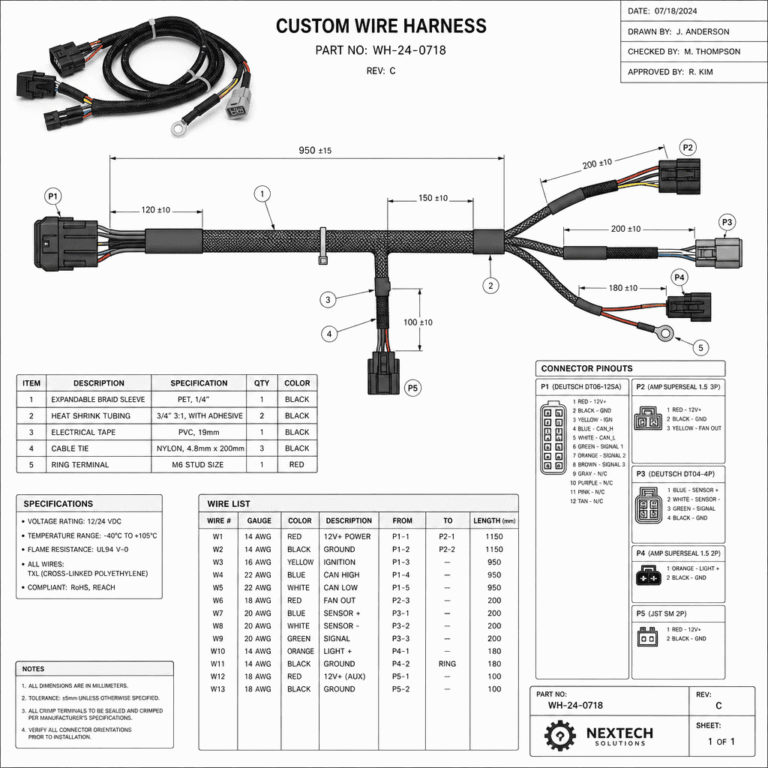
The second lever is overmolding. Overmolding is both a strain relief and a sealing decision. An alternate overmold geometry may reduce piece price because it uses less material or a simpler tool setup, but changing the cable exit angle, overmold hardness, or bond length can alter serviceability and field durability. A softer strain relief that passes continuity may still fail after repeated flexing because it allows too much cable movement at the connector back end. Keep the strain relief design consistent with the IPC/WHMA-A-620 workmanship class called out in the assembly drawing; that class defines the acceptance expectations for cable exit, support, and insulation integrity. For OEM buyers evaluating whether to re-source the full harness or only the cable assembly, a supplier with dedicated wire harness manufacturing capability can assess cutting, stripping, crimping, and routing consistency before the lower-cost construction is released for samples.
Part-Number Consolidation and Traceability as a Cost Lever
One of the safest cost-down paths does not require any design revalidation. When a patient monitor family carries multiple connector and terminal part numbers for the same electrical function, consolidating those part numbers across variants reduces BOM complexity, inventory, and procurement transaction cost without touching the approved component baseline.
Consolidation works only if the approved part numbers are true functional equivalents under the same drawing and workmanship class. Procurement should pull the variant drawings and confirm that pin count, keying, crimp tooling, and insulation support match before proposing a single part number. If any isolation or mating geometry differs, the consolidation triggers the same qualification review as a new connector alternate.
Traceability is the second half of this lever. Use supplier documentation requirements — RoHS compliance evidence, incoming inspection records, process control evidence, and final verification — as a procurement filter, not a post-award formality. A lower unit price that hides fragmented material traceability across connector, cable, and termination sources creates downstream audit exposure. Push for one-source accountability across the cable assembly, wire harness, and termination processes so that the final build carries a single documented quality chain. A structured quality inspection and export packaging process helps ensure the cost-down sample and the production run are inspected against the same acceptance criteria before shipment.
What goes wrong in the field: substitution failures nobody tells procurement about
Substitution failures often surface months after the cost-down release, and they rarely appear in a continuity test. Three failure modes show how a sourcing decision made without a qualification matrix converts a small BOM saving into a field correction.
The first is connector housing crazing after repeated disinfectant wiping. A connector housing may look dimensionally identical to the approved part, but a different polymer grade can develop micro-cracks under chemical exposure. Those micro-cracks open isolation paths even when the connector still passes continuity. IEC 60601-1 isolation is then compromised in exactly the application where the connector is supposed to protect the patient and operator.
The second is contact plating degradation under autoclave cycles or aggressive sterilants. A lower-cost plating may pass initial contact resistance. After repeated sterilization, the plating thins, oxidizes, or delaminates, creating intermittent signal paths. Field returns rise, but the root cause is not visible on the outside of the connector.
The third is shield termination failure after cable flexing. A lower-cost termination process may change how the braided shielding or foil shielding is bonded to the connector backshell. The assembly passes initial continuity and even dielectric withstand on a straight cable. After hundreds or thousands of flex cycles, the shield bond opens or the foil tears, and signal integrity degrades. The cost-down decision looked good on the BOM line item; the field failure trace leads directly back to a termination change that was never scored against flex-life requirements.
Sign-Off Criteria Before You Release the Production Order
The production order should not be released because the alternate line item is lower. It should be released only when the alternative scores as safe under the decision table and the supplier documentation proves it.
Require the supplier to submit test reports for dielectric withstand, creepage/clearance verification, mating cycles, flex life, and sterilization compatibility on the exact cost-down sample — not on a similar part from a previous program. Compare those reports against the IPC/WHMA-A-620 workmanship class called out in the assembly drawing and the IEC 60601-1 isolation requirements for patient-connected parts. If the test report references a different cable length, shield construction, or overmold configuration than the production drawing, it does not support sign-off.
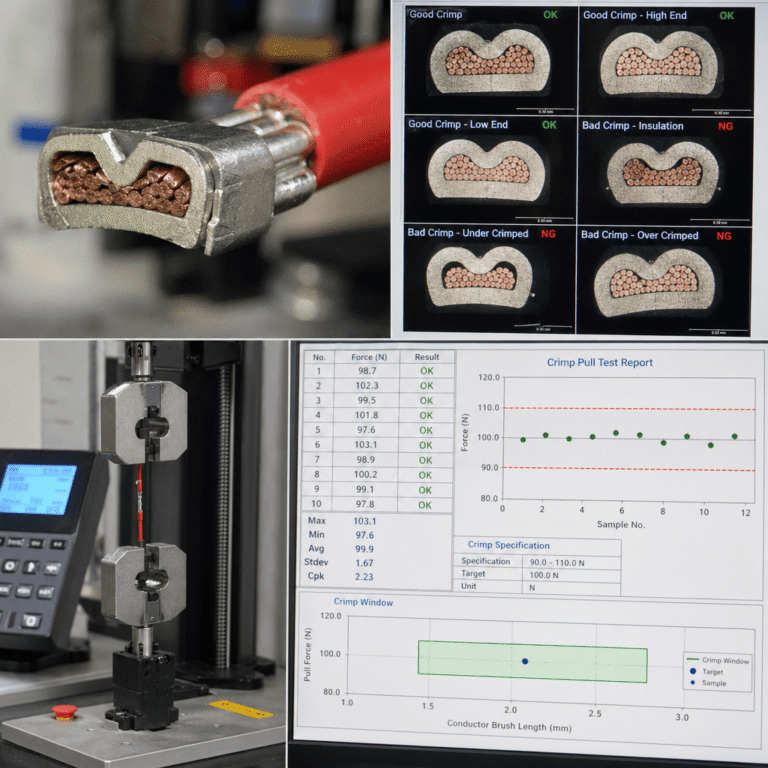
Confirm production process controls before shipment: incoming inspection, crimping, termination, overmolding, continuity testing, and final verificationas covered in our consistent cable assembly quality guide. A supplier that can document each step with a quality record provides the traceability chain that ISO 13485-oriented medical programs expect. A supplier that cannot show those process controls should not receive the production order, regardless of the quoted unit price.
Frequently Asked Questions
What is the first check before proposing an alternate medical cable assembly connector?
The first check is dielectric withstand and creepage/clearance against the IEC 60601-1 isolation strategy for the patient-connected circuit. If the alternate does not preserve the required isolation distances, the cost-down is not viable regardless of the lower piece price.
Can a lower-cost molded connector be used in a patient monitor cable?
A lower-cost molded connector can be proposed only after full isolation and sterilization testing passes. The overmold process must also meet the IPC/WHMA-A-620 workmanship class called out in the drawing. If void, encapsulation, or chemical compatibility data is missing, the molded alternate is not acceptable for patient-contact use.
How does braided shielding compare to foil shielding for cost-down?
Braided shielding offers higher mechanical flex life and robust termination. Foil shielding may reduce raw material cost and improve high-frequency performance, but foil is more sensitive to bending and termination damage. A braid-to-foil substitution should be approved only after flex-life and shield-effectiveness testing on the actual cable construction.
What documentation should a supplier provide for ISO 13485 traceability on medical cable assemblies?
The supplier should provide material and lot traceability for connector, cable, shield, overmold, and termination materials, plus incoming inspection records, process control evidence, and final verification reports. Documentation should cover the exact sample and production configuration, not a similar part from a previous build.
How does IPC/WHMA-A-620 workmanship class affect cost-down decisions?
IPC/WHMA-A-620 defines three acceptance classes with increasing inspection and documentation rigor. A cost-down alternate that can only be built to a lower class than the drawing specifies is not a valid substitution. The workmanship class anchors the strain relief support, insulation integrity, and termination acceptance criteria that the alternate must match.
Key Takeaways
- Start cost-down from the IEC 60601-1 safety boundary, not from the BOM price column; a lower unit price is not a saving if patient isolation (MOPP/MOOP) or workmanship class drops.
- Score every connector, shield, cable construction, and part-number change against creepage/clearance, dielectric withstand, mating-cycle life, sterilization compatibility, and traceability.
- Propose connector alternates only after verifying isolation, mating cycles, contact plating chemistry, and ISO 13485-relevant documentation.
- Braid-to-foil shielding and overmold geometry changes require flex-life and shield-effectiveness data; field failures often trace back to those unverified swaps.
- Release the production order only when the supplier provides test reports and process control evidence on the exact cost-down configuration, not on a similar part.
For medical OEM programs where the cable assembly may require connector matching, sample coordination, and export-ready packaging, explore custom cable assembly solutions that support requirement review, production follow-up, and final inspection before shipment.