An automotive wire harness manufacturer is a production partner with verified crimp process capability, material traceability, PPAP submission discipline, and substitution control, used to build vehicle wiring subassemblies, as covered in our How Specialized Cable Assemblies Solve OEM Design Challenges guide, that meet IPC/WHMA-A-620[1] acceptance criteria for OEM programs.
You are holding an RFQ for a new model launch with mixed FAKRA, Deutsch DT, and MCON connector series, and a shortened PPAP window. Or you have already been burned by a pre-production sample that passed visual and continuity checks while volume builds drifted on crimp height and wire gauge. Both situations share the same root cause: comparing quoted piece prices without a supplier-side crimp and PPAP capability scorecard. The go/no-go decision must be made before the first sample is approved, not after golden sample sign-off.
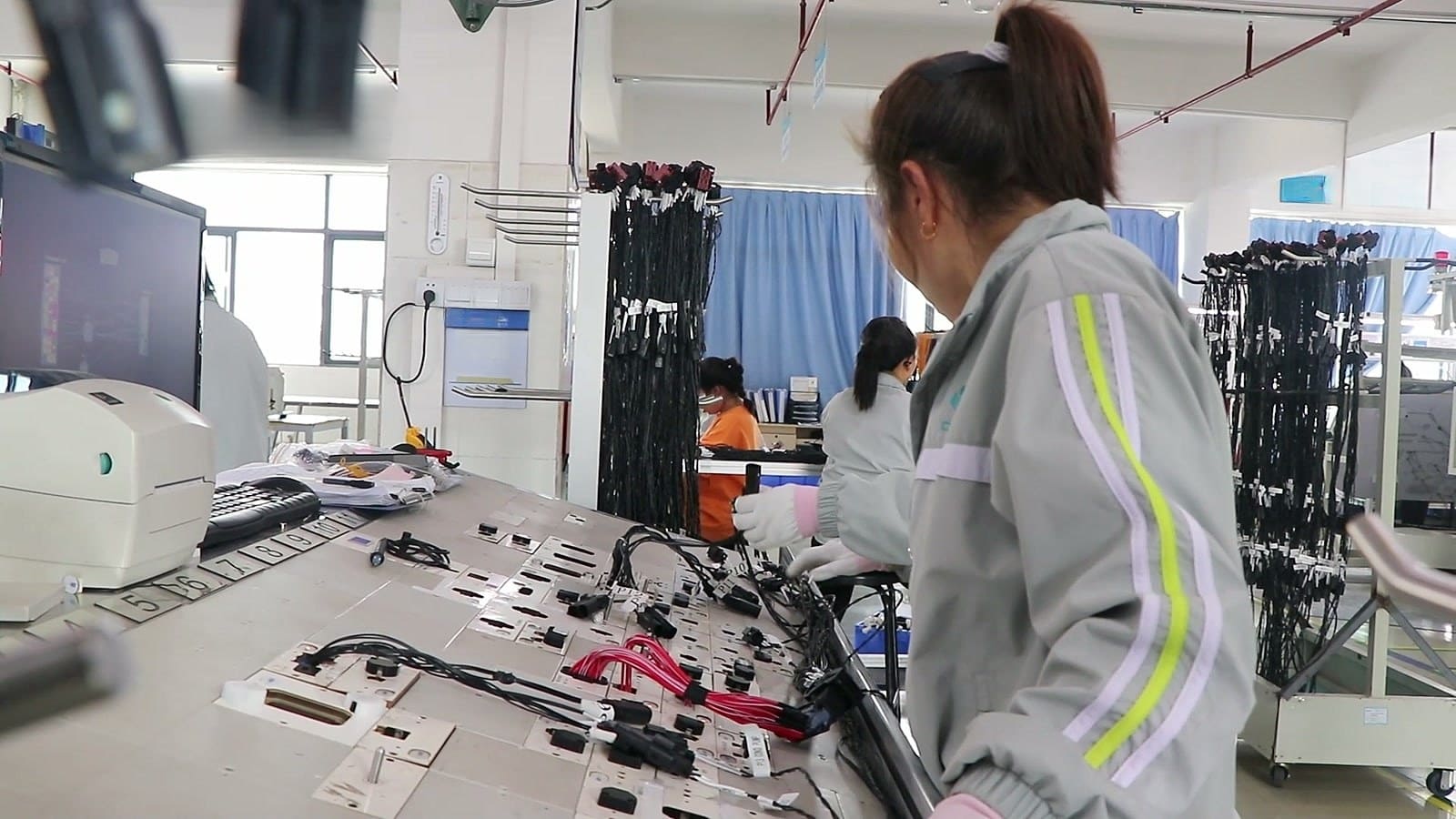
How to Evaluate Automotive Wire Harness Manufacturers for OEM Projects
Step 1: Build the Go/No-Go Evaluation Matrix Before Releasing the RFQ
Start by scoring four go/no-go areas: crimp process capability, material traceability, PPAP submission timing, and substitution control. A passing golden sample without production-tooling data is not a pass. The matrix below converts that principle into a practical pre-RFQ screen.
| Go/No-Go Area | Pass Criteria | Disqualifying Finding |
|---|---|---|
| Crimp process capability | Cpk/Ppk or equivalent process capability data with cross-section and pull-force records for the project’s specific terminals | Generic certificates only; no production-tooling data; golden sample accepted without statistical evidence |
| Material traceability | Batch-level lot tracing for insulation, conductor, terminal base material, and plating | Mixed lots without traceability; undocumented plating source or base material change |
| PPAP submission timing | Dimensional layout, crimp cross-sections, pull-force data, material certifications, IMDS/ELV data if required, and PSW packaged before deadline | Missing PFMEA or control plan; PPAP elements arriving after golden sample sign-off |
| Substitution control | Written engineering approval with documented validation for any alternate terminal, housing, or material change | Mid-run terminal or jacket color swap without notice; second-source connector without PSW approval |
Use this matrix before sending drawings. A supplier that cannot produce project-specific cap capability records should be treated as a no-go before the RFQ is issued.
Step 2: Lock Pinout, Plating, and Wire Gauge Before the RFQ Goes Out
Supplier comparison is only valid when the harness design is frozen. Define the locked pinout and cavity numbering for mixed connector types before asking for pricing. FAKRA connectors for RF and coax links use standardized mechanical keying and color-coding to prevent mismating. Deutsch DT connectors, often specified in agricultural platforms as discussed in our Agriculture Wiring Assemblies: What OEM Buyers Need to Know article, provide sealed power and ground circuits with wedge locks and silicone seals for underhood and chassis environments. MCON contacts support ECU and sensor circuits with compact terminal geometries and low insertion force.
Specify wire gauge and insulation to ISO 6722[2], the international standard for road vehicle cables that defines test methods and performance requirements for low-voltage and high-voltage automotive conductors. For low-voltage primary circuits, SAE J1128[3] defines the primary cable requirements used in surface-vehicle electrical systems. Do not accept an equivalent grading without cross-reference and test data.
Freeze terminal plating and connector housing material and color before sourcing. Include connector keying and latch retention requirements in the RFQ so second-source connectors must match mechanical fit as well as electrical performance. If the harness includes breakout legs or custom cable assembly feeders, lock those drawing details at the same time.
Step 3: Anchor Acceptance to IPC/WHMA-A-620 and Process Capability Data
IPC/WHMA-A-620 defines three workmanship acceptance classes for cable and wire harness assemblies, each with increasing inspection and documentation rigor. Claimed compliance matters only when the supplier can produce crimp cross-section and pull-force records for the buyer’s specific terminals. A generic certificate is not a substitute for project-level evidence.
Require Cpk/Ppk or equivalent process capability for critical crimp dimensions. Production tooling and production operators must generate that data, not prototype or toolroom samples. If the supplier cannot connect statistical capability to the exact terminal, wire gauge, and crimp tooling in the RFQ, the acceptance decision cannot move forward.
Step 4: Separate Tolerable Batch Variation from Disqualifying Substitutions
Tolerable variation appears as a stable crimp height distribution and pull-force values within control limits across batches. That is normal production noise. Disqualifying substitution is different: changed conductor material from copper to CCA, reduced strand count, undocumented plating change, or an alternate terminal base material without approval.
A disqualifying substitution may pass a quick visual check but degrade under thermal cycling, vibration, or corrosion(a concern detailed in our Rugged Robotics Cable Assemblies: Key Design Considerations article). When in doubt, return to IPC/WHMA-A-620 acceptance criteria and the project’s locked material and plating specification. If the evidence cannot be produced, treat it as a no-go.
Step 5: Require Written Engineering Approval for Second-Source Terminals
For FAKRA, Deutsch DT, and MCON circuits, a second-source terminal may require validation under USCAR-21, the automotive terminal performance validation standard, or an equivalent terminal-level performance specification. Do not accept an alternate terminal series, plating, or base material without written engineering approval that records testing, dimensional checks, and connector mating validation.
Document plating changes because tin, silver, gold, or selective plating affects corrosion resistance, insertion force, and long-term contact resistance. Add change-notification language to the RFQ: any terminal, housing, or material change after PPAP requires new PSW approval before shipment.
Step 6: Map the PPAP Submission Sequence and Align Sub-Harness Lead Times
Map the PPAP evidence sequence before sample approval: dimensional layout, crimp cross-sections, pull-force data, material certifications, IMDS/ELV data if required, PSW, and packaging and labeling approval. In shortened windows, prioritize process capability evidence over polished sample assembly. A late PFMEA or control plan omission is a go/no-go flag.
Break the harness BOM into primary runs and secondary sub-harness feeds. Ask each supplier for cut, strip, and crimp capacity and planned production dates. Share main chassis build timing with sub-harness suppliers so secondary harness PPAP and packaging align before line set. Require a pre-production balance-out for each supplier: sample quantities, first-article inspection, and a pilot lot.
Before shipment, a documented quality inspection and export packaging step should verify terminal retention, connector latch function, and sealed connector protection. For project teams managing multi-supplier programs, working with a production-coordinated partner such as EDOM Electronics can consolidate requirement review, connector matching, sample coordination, production follow-up, inspection, and export-ready packaging for both main chassis and sub-harness builds.
What Nobody Tells You About Automotive Harness Production Failures
Several field failures appear only after a harness leaves the bench. These are the reasons the go/no-go matrix and PPAP evidence are non-negotiable.
- Thermal-cycle loosening from CCA substitutes: Copper-clad aluminum has different thermal expansion behavior and lower thermal conductivity than solid copper. In underhood environments, that difference can loosen crimps and degrade conductivity even when the initial connection passes continuity testing.
- Birdcaged strands that pass visual checks: Conductor strands can be bent outside the terminal barrel while still passing a quick visual inspection. The reduced cross-section creates hot spots and increased resistance under load.
- Recycled connector housing latches: Regrind or recycled material can make latch retention brittle. A connector that mates correctly on the bench may unmate under vibration because the latch loses retention force.
- Mid-run jacket color swaps: A supplier may run a different insulation color to meet schedule. That change can create downstream module miswiring or harness routing errors even when the original drawing called for a specific color.
Each failure mode reveals the same gap: a supplier changed a material, process, or component without written engineering approval and without new PPAP evidence. The evaluation framework exists to prevent that gap before the first sample is approved.
Key Takeaways
- Score crimp process capability, material traceability, PPAP timing, and substitution control before releasing the RFQ.
- Lock pinout, wire gauge, insulation, plating, and connector housing details to ISO 6722, SAE J1128, and the specific connector series.
- Accept IPC/WHMA-A-620 compliance only when the supplier produces crimp cross-section and pull-force data for your specific terminals.
- Treat CCA conductor substitution, undocumented plating changes, recycled latch material, and mid-run jacket color swaps as disqualifying events, not tolerable variation.
- Align main chassis and secondary sub-harness PPAP and production timing with a documented pre-production balance-out.
Frequently Asked Questions
What is the most common reason automotive wire harness samples pass but volume builds fail?
The most common reason is that the golden sample was assembled under prototype or toolroom conditions without production tooling, production operators, or statistical crimp capability data. Volume builds then drift on crimp height or wire gauge because the process was never qualified to IPC/WHMA-A-620 for the buyer’s specific terminals.
Should I accept a supplier’s claim of IPC/WHMA-A-620 compliance without seeing records?
No. IPC/WHMA-A-620 defines acceptance criteria, but the critical evidence is project-specific crimp cross-section and pull-force data for the exact terminal, wire gauge, and crimp tooling. A supplier such as EDOM Electronics can coordinate that evidence as part of sample confirmation and production follow-up.
When does a second-source terminal require written engineering approval?
Any alternate terminal series, plating, base material, or housing change requires written engineering approval. For FAKRA, Deutsch DT, and MCON circuits, validation may need to follow USCAR-21 or an equivalent terminal performance standard before the change is accepted.
What is the role of ISO 6722 and SAE J1128 in harness evaluation?
ISO 6722 defines test methods and performance requirements for road vehicle cables, while SAE J1128 defines low-voltage primary cable used in surface-vehicle electrical systems. Specifying wire gauge and insulation against these standards prevents equivalent grading without cross-reference and test data.
How far in advance should secondary sub-harness PPAP be aligned?
Sub-harness PPAP and packaging should align with the main chassis build timing before line set. Each sub-harness supplier needs a pre-production balance-out with sample quantities, first-article inspection, and a pilot lot, not just the main harness supplier.
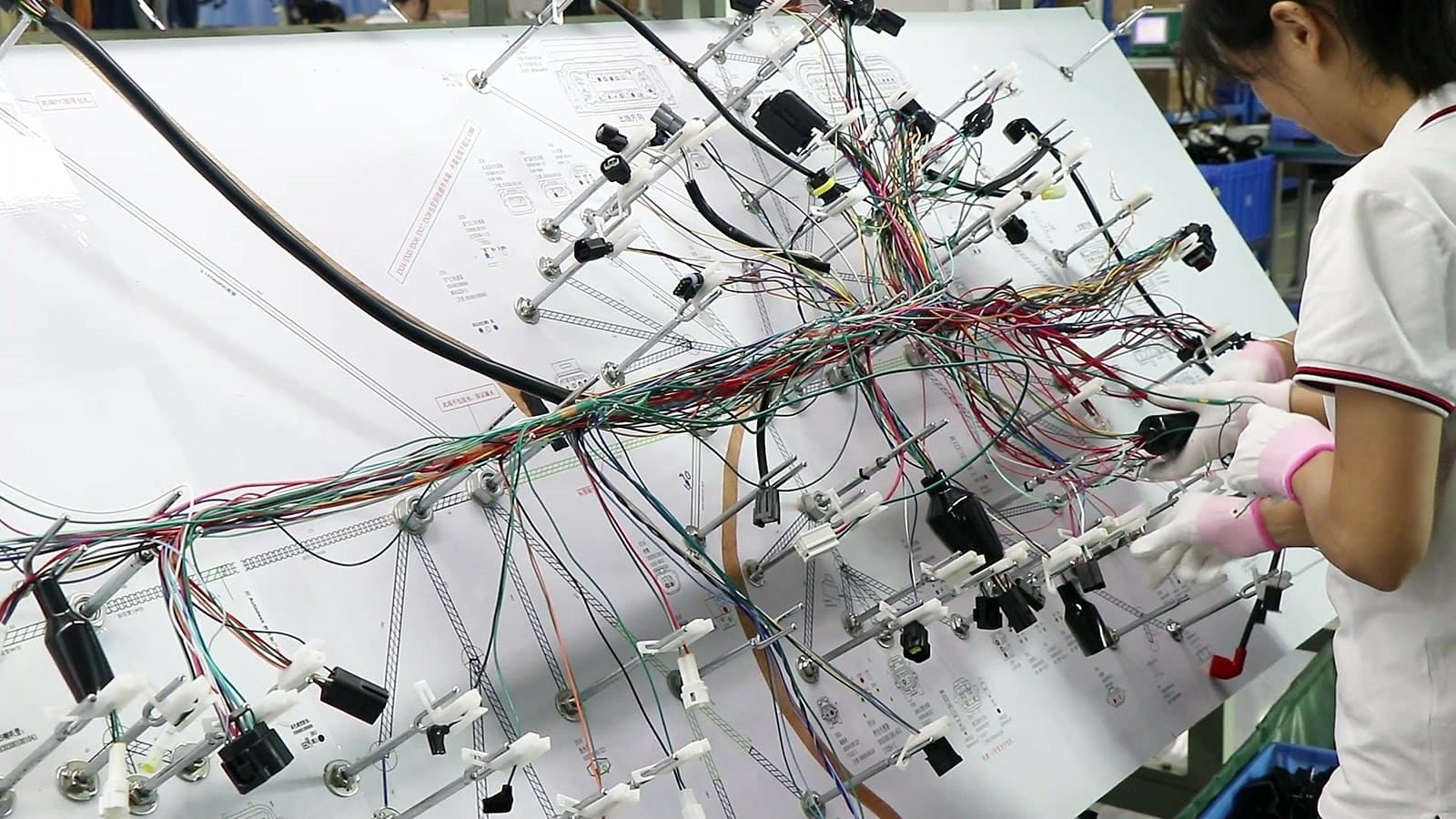
For teams that need production-coordinated support from drawing review through final inspection and shipping, learn more about wire harness OEM manufacturing support for custom automotive projects.