Sourcing a local wire harness manufacturer is often the fastest path to valid NPI prototypes and immediate design iterations. However, local proximity must be balanced with verified engineering capability, accredited crimp controls, and scalable capacity.
The impulse is understandable. A supplier fifteen minutes away feels safer than one an ocean away. You can visit the floor, shake hands with the production manager, and watch a harness come together in real time. But proximity does not equal competence, and the wrong local choice can introduce field failures that an audited overseas partner would have caught at the crimping station.
Direct answer: While local wire harness manufacturers shorten NPI prototype lead times from weeks to 3-5 days, buyers must verify Class 2/3 IPC/WHMA-A-620[1] compliance, calibrated pull-test limits (e.g., Section 19.2), and crimp height tolerances before scaling. For high-volume runs, a hybrid model leveraging local NPI with ISO 9001/IATF 16949 certified offshore plants optimizes unit costs by 30-50% while preserving design agility.
What ‘Near Me’ Actually Means for Wire Harness Sourcing
Searching for “wire harness manufacturing near me” usually starts with a legitimate business need. Engineering wants rapid prototype turns. The supply chain team wants to avoid customs delays. Intellectual property concerns might require manufacturing within a specific jurisdiction. These are valid reasons to prioritize a local supplier.
But the map view hides what actually determines whether a harness meets specification. A shop can be twenty minutes away and still lack calibrated crimping tools, pull-test documentation, or an electrical test bench. Logistics speed means nothing if the harness ships with intermittent opens from uncontrolled soldering.
Local proximity adds genuine value in three scenarios:
- Rapid prototyping loops: When an OEM design team needs three iterations in a single week, a local shop with quick-turn capability eliminates overnight shipping costs and keeps the engineering cadence tight.
- Sensitive intellectual property: Defense, aerospace, and certain industrial programs require manufacturing within controlled regions. A local supplier with the right certifications becomes a compliance partner, not just a vendor.For military, defense, and high-reliability aerospace applications, verify that the supplier adheres to specialized airframe standards. Learn more about high-reliability requirements in our technical hub on High-Reliability Aerospace Cable Assemblies Specifications.
- True just-in-time delivery: If the harness feeds directly into a production line that cannot hold more than a day of inventory, transit times measured in hours rather than days matter operationally.
Outside these conditions, the “near me” filter often imposes unnecessary constraints. It shrinks the supplier pool, may raise unit costs from higher local labor rates, and can mask limited equipment availability—a shop with only hand-operated crimpers cannot reliably produce harnesses with UL-rated insulation and tight AWG-tolerance requirements. The myth that a walkable floor guarantees quality collapses once you know what to look for.
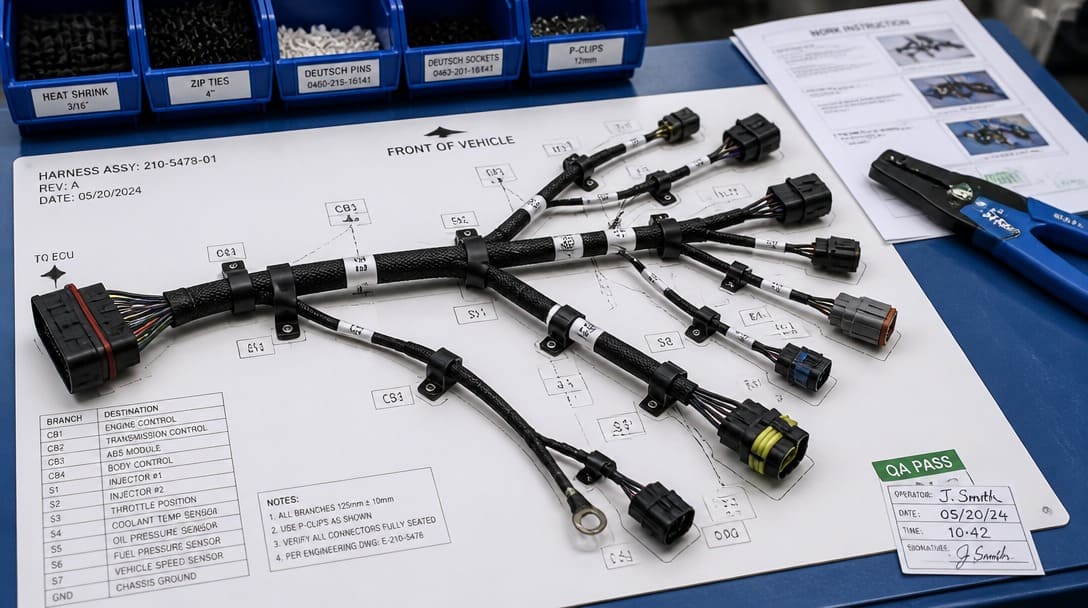
Must-Verify Manufacturing Capabilities: A Decision Table
Before scheduling a floor visit or requesting a quote, establish the minimum capability baseline. The table below maps each essential manufacturing process to the standard it should meet and the red flag that signals a gap. Use it as a pre-qualification filter—if a shop cannot produce documentation for three or more of these, move on.
| Capability | Why It Matters | Red Flag If Missing |
|---|---|---|
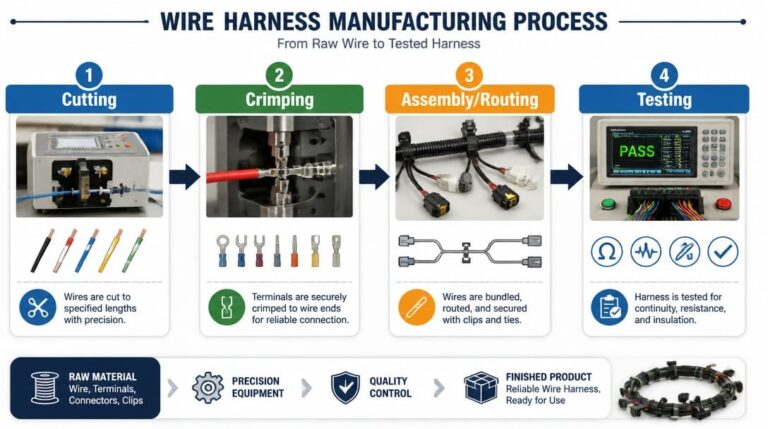
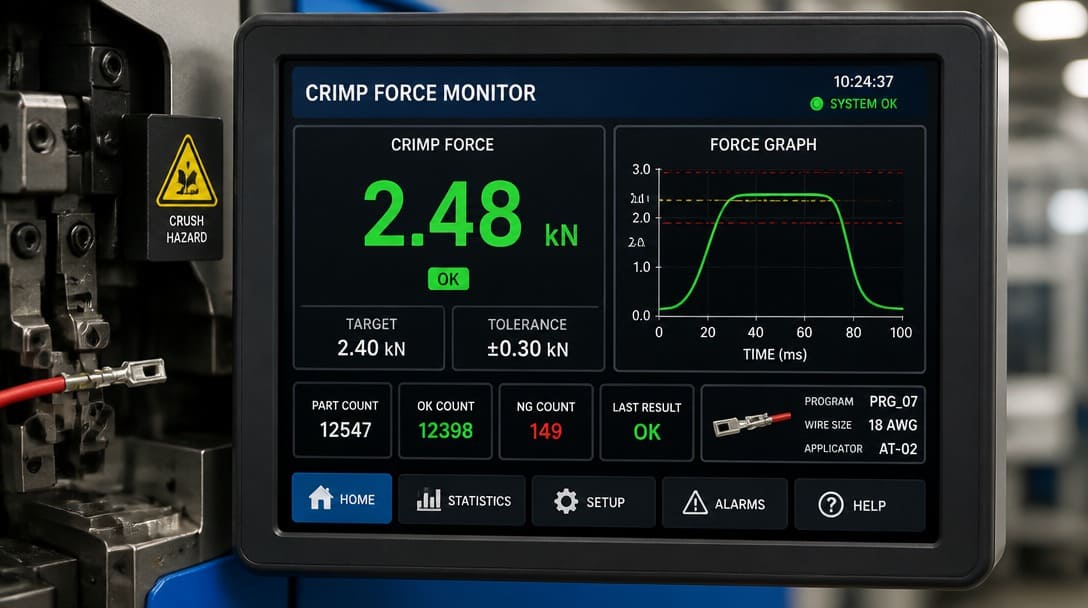
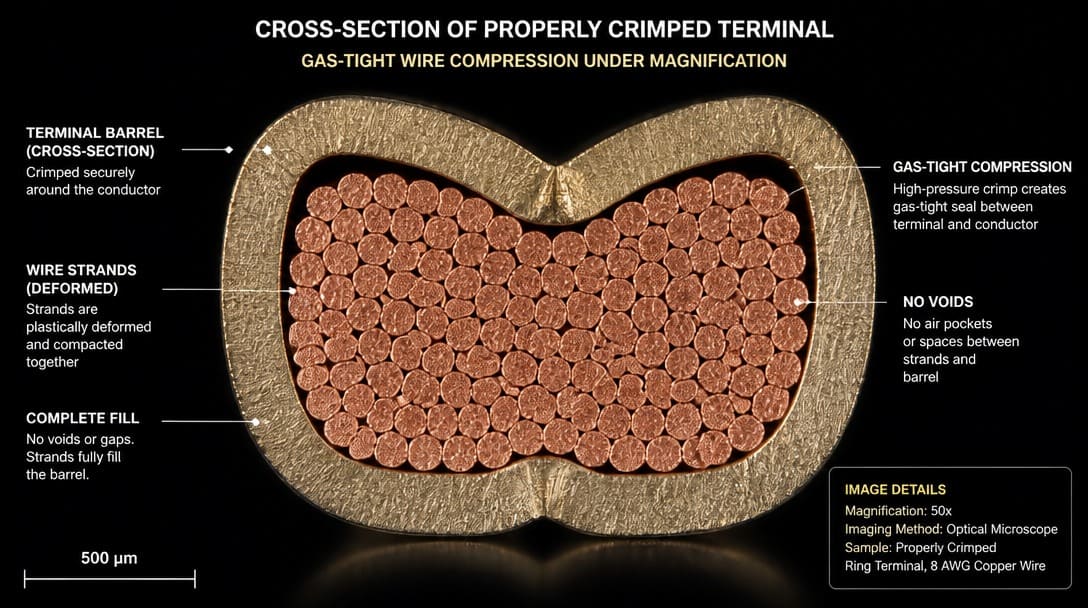
| Crimp Height & Force Validation | Ensures gas-tight cold welds for specified AWG and terminal combinations. | For bench presses: Lack of digital Crimp Force Monitoring (CFM). For hand tools: Lack of calibrated crimp-height micrometers or ratchet locking mechanisms. |
| Pull-Test Documentation (IPC/WHMA-A-620 Sec 19 / SAE AS7928 / USCAR-21) | Proves mechanical integrity of crimped terminals with force-gauged measurements, not subjective feel | “We pull by hand”—no calibrated pull tester, no force values recorded per lot |
| IPC/WHMA-A-620 Certification | Baseline workmanship standard covering crimping, soldering, routing, securing, and inspection acceptance criteria | Blank stares, “we follow our own standard,” or operators unable to identify which class they build to |
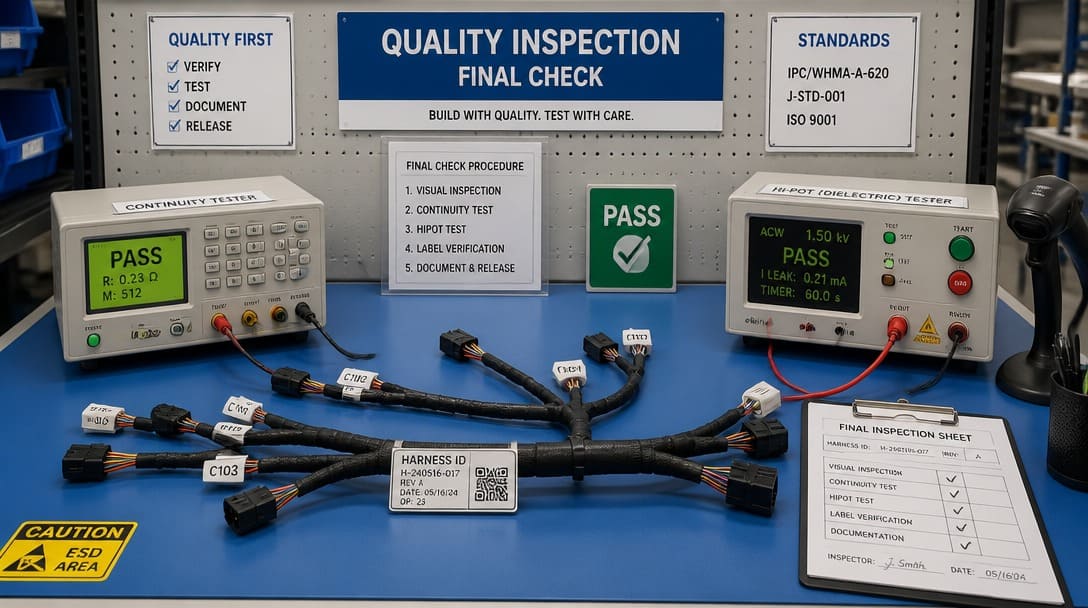
| Continuity & Hi-Pot Testing | Catches missed wires, shorts from insulation nicks, and dielectric weaknesses in UL-rated insulation before the harness leaves the floor | Only a visual check before shipping; no hi-pot tester visible on site |
| Soldering to J-STD-001 (if applicable) | Prevents cold joints that cause intermittent opens under vibration or thermal cycling | No defined solder alloy specification, uncontrolled iron temperatures, no solder inspection protocol |
| Overmolding & Strain-Relief Capabilities | Protects terminations from flex failures at the connector interface in dynamic applications | Only generic heat-shrink applied without mechanical anchoring or molded strain-relief geometry |
| Insulation & Material Traceability | Confirms UL-recognized flame ratings (e.g., VW-1) and ASTM AWG conductor tolerances. | Inability to provide lot-traceable CoC (Certificate of Conformance) linked to wire spools and terminal reels. |
These capabilities are not aspirational. They represent the minimum process control that separates a production-ready harness manufacturer from a general wiring shop. Suppliers such as EDOM Electronics support OEM buyers with requirement review, connector matching, sample coordination, production follow-up, inspection, and export-ready packaging for custom cable assemblies and wire harnesses—processes built around these same verification points. For deeper guidance on how custom cable assemblies integrate with broader project requirements, the custom cable assembly resource covers specification alignment from drawing review to first-article inspection.
Still unsure if the shop down the street can handle your next production run? EDOM’s manufacturing coordination service bridges the gap between your design files and a certified, export-ready production line—even if a local vendor falls short.
How to Audit a Local Wire Harness Shop: Floor Visit Questions
A floor visit reveals more in ten minutes of observation than an hour of conference-room discussion. Walk the production area with a specific checklist, not just a general impression. A clean floor with organized workstations can still hide uncalibrated tools, while a slightly cluttered bench with documented process travelers and in-date calibration stickers tells a different story.
What to look for visually:
- Calibration stickers on crimping tools, pull testers, and hi-pot testers—check the expiration dates
- ESD flooring or grounded workstations, especially where connectors with fine-pitch contacts are handled
- Traceable materials racks with UL-labeled spools showing manufacturer, style number, and lot codes
- How harnesses are labeled—capable shops use machine-printed labels with bar codes, not masking tape or handwritten tags
- Sample production travelers or inspection reports posted at workstations—their presence indicates a documented process
Questions to ask during the visit:
- “Can you show me crimp height monitoring records for the last three jobs?” A capable shop has digital logs from a crimp force monitor or at minimum written records with operator sign-off.
- “What is your process when a batch fails hi-pot?” Listen for root-cause investigation—do they segment the harness to isolate the fault, or do they simply re-test until it passes?
- “Which IPC/WHMA-A-620 class do you build to, and can I see the relevant acceptance criteria for one of my harness types?” Operators should be able to point to the specific inspection standard they work against.
- “How do you handle a rejected lot internally? Can you walk me through the last one?” Reluctance to discuss rejections, or a claim that rejections never happen, signals a culture that hides problems rather than fixing them.
Red flags to note: expired calibration stickers, no sample of a production traveler, inability to produce any test record within minutes of asking, and a production manager who deflects technical questions with relationship-building language. Trust the documented process, not the handshake.
Common Failure Modes When Local Sourcing Goes Wrong
The gap between a production capability and a field failure often traces back to one overlooked process. When a procurement manager selects a local shop based on distance rather than documented process control, these failure modes become more probable—not because local shops are inherently worse, but because the geographic filter prevents proper capability screening.
| Field Symptom | Manufacturing Root Cause | Preventable By |
|---|---|---|
| Intermittent opens—device works sporadically, fails under vibration | Cold solder joints from uncontrolled iron temperatures and no J-STD-001 training | Defined solder alloy, controlled iron temperature, post-solder inspection under magnification |
| Terminal back-out—pin pushes out when mating connector | Undersized crimp from wrong die selection for the terminal and AWG combination, no pull-test validation per SAE J1128 | Crimp height monitoring, pull-test documentation per lot, correct die-terminal-AWG matching from manufacturer data sheets |
| Chafed insulation causing shorts—blown fuses after installation | Missing abrasion-resistant sleeving or routing that ignores bend-radius requirements, no IPC/WHMA-A-620 Class 2 or 3 inspection for routing and securing | Protective sleeving where harness contacts edges or moving parts, bend-radius verification during first-article inspection |
| Dielectric breakdown—safety hazard, field returns | Skipped hi-pot testing; hidden nicks in insulation from dull stripping blades go undetected | 100% hi-pot testing at specified voltage, regular stripping blade maintenance and inspection |
Each of these failure modes has a common thread: the problem was detectable before the harness shipped. It did not require destructive testing or exotic equipment—only the process controls a competent manufacturer already has in place. A local shop that cannot demonstrate these controls is not saving you time; it is deferring a defect into your product.
How to Request and Compare Local Quotes
A vague RFQ yields vague quotes, and vague quotes make supplier comparison meaningless. Even a shop across town needs the same specification detail as one on another continent. Without it, each supplier prices in their own assumptions about wire type, connector plating, test requirements, and packaging—making the resulting numbers impossible to compare.
What to include in every wire harness RFQ:
- Full bill of materials with manufacturer part numbers: Wire gauge in AWG, insulation type with UL style number, connector series and plating specification, any RoHS constraints. A “12 AWG wire” spec without UL style leaves the supplier guessing on temperature rating and insulation material.
- Quantity bands: Prototype quantities (5–25 units), pilot run (50–200), production MOQ, and annual forecast. A shop that excels at 10-unit prototype builds may be uncompetitive at 1,000-unit monthly deliveries, and vice versa.
- Test requirements: Hi-pot voltage and duration, continuity test parameters, any custom pull-test values beyond IPC/WHMA-A-620 minimums, and the required inspection class.
- Packaging expectations: JIT-ready kits with barcode-labeled individual harnesses, bulk bins with protective wrapping, or sequenced sets for assembly line consumption.
- Quality documentation deliverables: Specify whether you need first-article inspection reports, certificate of conformance, material certs, or full production part approval process documentation.
“Ballpark pricing” without these details is not a shortcut—it is a negotiation lever for the supplier. Each missing specification adds margin to cover their uncertainty. A quote built on a complete data package enables true comparison and protects both parties from post-order scope disputes. For a practical view of how documentation and inspection integrate into the export process, the quality inspection and export packaging resource details what a complete pre-shipment protocol includes.
From Local Evaluation to a Resilient Wire Harness Supply Chain
Proximity is a convenience, not a quality shortcut. The real differentiator—the characteristic that determines whether a harness survives installation, vibration, thermal cycling, and years of service—is a documented, auditable manufacturing process. A shop three miles away without IPC/WHMA-A-620 discipline and crimp force monitoring will produce failures that an audited manufacturer on another continent would have prevented at the production bench.
Even a thoroughly vetted local shop presents a single-point risk. During a production ramp, that shop may run at full capacity and extend lead times beyond what the program tolerates. Equipment failures, labor shortages, or material allocation constraints can cascade directly into the buyer’s assembly line. A coordinated overseas partner such as EDOM provides a calibrated backup with export-ready packaging and complete documentation, transforming a fragile single-supplier dependency into a resilient sourcing strategy. For deeper guidance on connector specifications and compatibility—critical whether manufacturing locally or abroad—return to the pillar resource on aerospace cable assembly requirements for a complete technical reference.
Explore wire harness manufacturing coordination to see how a single partner can handle drawing review, sample builds, production, and export packaging without the geographic gamble.
Frequently Asked Questions
Does “wire harness manufacturing near me” guarantee faster delivery?
Not necessarily. A local shop without in-house testing capability may still delay delivery if a failed hi-pot test requires rework. Transit time is only one component of total lead time; production delays from insufficient equipment or capacity constraints can push a local supplier’s delivery date past a fully equipped overseas partner’s consolidated timeline.
What certifications should a wire harness manufacturer have?
IPC/WHMA-A-620 is the baseline workmanship standard for cable and wire harness assemblies. Depending on the application, additional certifications such as UL listing for the assembled harness, ISO 9001 for the quality management system, and J-STD-001 for soldered connections may be required. Material certifications for UL-rated wire and RoHS compliance documentation are standard expectations for export-ready production.
How do I verify a local shop’s crimping quality before placing an order?
Request crimp height monitoring records and pull-test data from recent production runs. A capable shop can produce these within minutes. Ask to see the crimp die selection chart for your specific terminal and AWG combination, and confirm that pull-test values meet SAE J1128 or IPC/WHMA-A-620 minimums for your conductor size.
Can a supplier like EDOM match the lead time of a local shop?
In many cases, yes—especially when the local shop lacks the specific production equipment or testing capability required for the harness design. A production-coordinated overseas supplier with established export logistics can often deliver tested, documented harnesses within a timeframe comparable to a local shop that needs to outsource testing or tooling setup. The key variable is the supplier’s process maturity, not their geographic location.
What information do I need to get an accurate wire harness quote?
A complete bill of materials with manufacturer part numbers, wire gauge and UL style, connector series and plating, quantity bands (prototype, pilot, production), test requirements including hi-pot voltage, and packaging expectations. Supplying these details eliminates the assumptions that make ballpark quotes unreliable and enables true supplier comparison on capability and cost.
Key Takeaways
- Location is not a quality indicator. A map search returns addresses, not capability assessments. Screen every supplier—local or overseas—against the same manufacturing verification criteria: crimp monitoring, pull-test documentation, IPC/WHMA-A-620 certification, and electrical testing capability.
- A documented process outperforms a friendly handshake. Calibration records, production travelers, and test logs are the evidence of process control. A shop that cannot produce these within minutes of asking has not demonstrated it can build your harness repeatably.
- Field failures trace back to skipped process steps. Cold solder joints, terminal back-out, chafed insulation, and dielectric breakdown are all preventable at the manufacturing stage. The cost of prevention is always lower than the cost of a field return.
- Detailed RFQs enable accurate comparisons. Send the same complete data package to every supplier. Ballpark quotes with hidden assumptions prevent meaningful comparison and reward the supplier who priced in the most aggressive margin.
- A resilient supply chain includes a coordinated backup. Even a qualified local shop represents a single point of failure during production ramps. A production-coordinated overseas partner with export-ready packaging and documentation provides capacity insurance without requiring a full second qualification cycle.