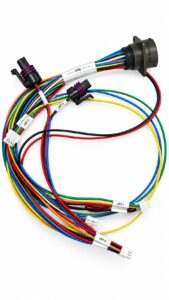
Copper-clad aluminum wire is a conductor material with an aluminum core and an outer copper cladding, used in cable assemblies(see What Is a Wiring Harness? Key Components, Functions & Applications) where lower weight and material cost are prioritized over maximum conductivity, thermal stability, and long-term termination reliability.
A production lot fails a conductivity spot check, and the incoming reel feels lighter than the copper control sample. The wire still looks right — copper-colored, clean surface, no obvious kinks or damage. A continuity meter beeps along the entire length. None of those responses should stop the investigation.
When the Reel Feels Lighter: Starting the CCA Investigation
The exact QC scenario matters here. Copper-clad aluminum wire can pass visual inspection and continuity because the outer copper cladding carries the surface appearance and enough contact for basic circuit completion. The aluminum core, however, reduces weight and changes the conductor’s electrical and mechanical behavior. A conductivity spot check that reads below the expected IACS conductivity baseline is often the first signal that something is wrong, especially when the reel is lighter than a copper control sample of the same gauge and length.
The correct response is a go/no-go triage before any cutting, stripping, crimping, or export packaging. Quarantine the reel, record actual length and weight, check resistance per unit length, and then perform a destructive nick-and-cross-section check. In custom cable assembly projects where the approved drawing specifies copper conductor, this screening protects the entire production batch from a material substitution that may only appear as a subtle weight difference at receiving.
Treat any material substitution concern as a lot-level issue, not a single-sample anomaly. If one reel is lighter and the resistance reading is off, the entire delivery should stay on hold until verification is complete. A decision made too early — based on color or continuity — can release aluminum-core conductor to crimping or export packaging.
Triage Step 1: Density and Weight-Per-Unit-Length Checks
Start with mass per meter or mass per 1,000 ft. Compare the actual value against the expected copper range for the same gauge and strand count. Copper has a specific gravity of about 8.89, while aluminum is around 2.70. That means copper-clad aluminum wire is notably lighter at the same diameter, even when the copper cladding gives it a convincing surface finish.
Conductor weight tolerance for pure copper rarely fluctuates more than ±2% to ±3% per standard extrusion lots. Therefore, an incoming reel running 10% or more below the verified copper control tare weight cannot be attributed to normal manufacturing variance; it indicates immediate material substitution or severe hollow core/under-gauging, requiring lot quarantine.
Triage Step 2: Resistance Per Meter and IACS Conductivity Baseline
Next, measure milliohm-per-meter or ohm-per-1,000 ft at a known temperature. Record the exact gauge, stranding, and temperature class, then compare the reading against the expected copper resistance range. Electrical resistivity is the material property that links conductor length and cross-section to resistance. A higher-resistivity material produces more milliohms per meter at the same geometry.
Pure copper is 100% IACS conductivity. Copper-clad aluminum wire typically falls below the expected copper baseline because the aluminum core has higher resistivity than the cladding. Use the gauge-specific resistivity range — not a single arbitrary reading — and apply temperature compensation to 20°C before pass/fail. A resistance outside the expected copper range triggers nonconformance under IPC/WHMA-A-620 and applicable product-level conductor resistance expectations.
Do not use resistance alone as the final disposition. Thicker copper cladding or an upsized gauge can mask CCA and bring the resistance reading back into the copper range. Resistance testing is a triage gate, not the decisive verification.
Destructive Verification: Nick, Scrape, and Cross-Section Inspection
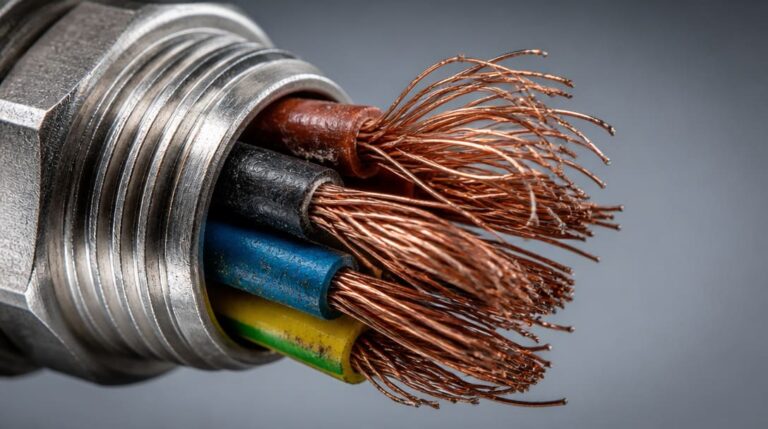
The definitive check is destructive. Make a clean perpendicular cut and inspect the cross-section. Copper is orange-red; an aluminum core is silver-white. A visible silver-white core under the copper surface is definitive copper-clad aluminum wire. Nick or scrape the outer cladding to expose the core if the cross-section is unclear.
Measure copper cladding thickness against ASTM B566 requirements and the drawing if CCA is not approved. ASTM B566 establishes cladding thickness and dimensional expectations for copper-clad aluminum conductor, so a thin or discontinuous cladding becomes a direct nonconformance signal. Under IPC/WHMA-A-620, a visible aluminum core or cladding that does not match the specified conductor material is nonconforming. Material substitution alone cannot make it acceptable.
Run the same destructive check on multiple locations along the reel. A single clean cross-section may still miss local cladding variation or mixed-material conditions. Document the cut location, measurement result, and a photograph for the supplier quality record.
CCA Detection Decision Tool
The following decision table links each test method to the physical property being checked, pass/fail criteria, and the required action. Use it as a field-ready triage reference before accepting or rejecting a lot.
| Test method | What you are checking | Pass criteria | Fail criteria | Action |
|---|---|---|---|---|
| Weight / density check | Specific gravity and mass per unit length against the expected copper range for the gauge and strand count | Mass per meter or per 1,000 ft falls within the copper control tolerance | Reel is more than 10–15% lighter than the copper control sample at the same length | Quarantine the lot; do not release to cutting or stripping |
| Resistance per meter | Milliohm per length against gauge-specific copper range and IACS conductivity baseline | Resistance matches the expected copper value after temperature compensation | Resistance exceeds the copper range for the gauge, stranding, and temperature class | Reject the lot; do not proceed to crimping |
| Destructive nick / cross-section | Core material and copper cladding thickness | Homogeneous copper cross-section and cladding thickness per drawing | Visible aluminum core or copper cladding thinner than ASTM B566 or drawing requirements | Reject as nonconforming under IPC/WHMA-A-620 |
| Optional XRF / eddy current | Elemental composition or effective conductivity signature | Copper-dominant signature in the tested area | Aluminum or mixed-metal signature beneath the copper surface | Use for screening; confirm with cross-section |
X-ray fluorescence identifies near-surface elemental composition by detecting characteristic X-rays, helping reveal aluminum beneath a thin copper cladding. Eddy current testing uses induced current response to evaluate effective conductivity, which shifts when a lower-conductivity aluminum core lies beneath the copper surface. Both are screening tools — the destructive cross-section remains the decisive test under IPC/WHMA-A-620.
Field Failure Modes: What Goes Wrong When CCA Passes Continuity
CCA can pass simple continuity because the copper cladding carries enough surface contact to complete the circuit. The aluminum core, however, changes long-term behavior in ways that continuity cannot reveal.
- Galvanic corrosion: After crimping, moisture exposure can create a galvanic couple between the copper cladding and the aluminum core, increasing resistance and damaging the termination over time.
- Aluminum cold flow: Aluminum creeps under compression. A crimp that feels tight during assembly can lose termination pressure after thermal cycling, leading to a loose or intermittent connection.
- Higher resistance and heat generation: The lower-conductivity aluminum core reduces effective current-carrying capacity compared with pure copper. Under load, the conductor can run hotter, potentially damaging insulation.
- Intermittent opens: The combined effect of corrosion, cold flow, and thermal expansion can create intermittent opens that are difficult to trace in the field.
Relying on a single resistance reading is unsafe. Thicker copper cladding or an upsized gauge can bring resistance back into the copper range and mask CCA. That is why destructive cross-section verification must anchor the acceptance decision.
Lot Disposition and Supplier Corrective Action
If the resistance does not match the gauge-specific copper range or the cross-section shows a visible aluminum core, the lot is nonconforming under IPC/WHMA-A-620. Physically quarantine the lot, mark it clearly, and stop further cutting, stripping, crimping, and export packaging.
Document the failed test method, measurements, photographs, and sample identification for the supplier. Request a formal corrective action: material certificates, lot traceability, ASTM B566 test data if CCA is suspected, and a cause analysis explaining how the material entered the copper supply chain.
Update incoming inspection to include weight-per-length, resistance-per-meter, and periodic destructive cross-section checks. These checks should be built into wire harness manufacturing work instructions so that nonconforming conductor never reaches the crimping stations or assembly line.
Suppliers such as EDOM Electronics support OEM buyers(see What Wiring Harness Do I Need? Key Factors for OEM Buyers) with requirement review, connector matching, sample coordination, production follow-up, inspection, and export-ready packaging for custom cable assemblies and wire harnesses. For CCA-related material questions, the same discipline should include a documented go/no-go sequence before any cutting or crimping begins.
Frequently Asked Questions
Can continuity testing detect copper-clad aluminum wire?
No. Continuity testing only confirms that current can flow. The outer copper cladding carries enough surface contact to pass continuity, so the aluminum core remains hidden.
What is the fastest way to confirm CCA in an incoming reel?
Compare weight per meter against a copper control sample, then make a perpendicular cut and inspect the cross-section. A silver-white core under the copper surface is definitive CCA.
Is CCA acceptable under IPC/WHMA-A-620 if the drawing only says copper?
No. IPC/WHMA-A-620 requires the conductor material to match the specified requirement. Material substitution alone does not make an aluminum-core conductor acceptable.
How much lighter is copper-clad aluminum wire than pure copper?
Pure copper has a density of ~8.89 g/cm³, while aluminum is ~2.70 g/cm³. Depending on the cladding volume ratio (typically 10% or 15% under ASTM B566), CCA is roughly 55% to 63% lighter than pure copper of the exact same gauge and conductor length. A lot weight deficit exceeding 10–15% is an absolute red flag triggering quarantine, as standard wire tolerance never accounts for such a drop.
Can resistance testing alone identify CCA?
Not always. Thicker copper cladding or an upsized gauge can bring resistance back into the copper range. Resistance testing should be combined with weight checks and destructive cross-section verification.
Key Takeaways
- Run the sequence in order: weight/density and resistance triage first, destructive nick/cross-section second, then lot disposition.
- A light reel, failed conductivity spot check, or unexpected resistance reading is enough to quarantine the lot before crimping or export packaging.
- CCA can pass visual inspection and continuity, so only a destructive cross-section can provide a definitive go/no-go call.
- Under IPC/WHMA-A-620, visible aluminum core or resistance outside the gauge-specific copper range makes the lot nonconforming; material substitution cannot override the drawing.
- Document the failed test, quarantine the material, and request supplier corrective action with traceability and ASTM B566 test data where CCA is suspected.
For teams that need documented incoming inspection and export-ready packaging, explore quality inspection and export packaging support.