Direct answer: Tractor wiring harness supplier evaluation, as detailed in our Agriculture Wiring Assemblies: What OEM Buyers Need to Know is a process-level capability audit that verifies operator skill, engineering drawing review, crimp process documentation, and batch traceability, used to shortlist OEM manufacturers without relying on misleading proxies like factory headcount or two-week promises.
How to Evaluate Tractor Wiring Harness Manufacturers for OEM Orders
Step 1: Replace Headcount with Operator Skill Verification
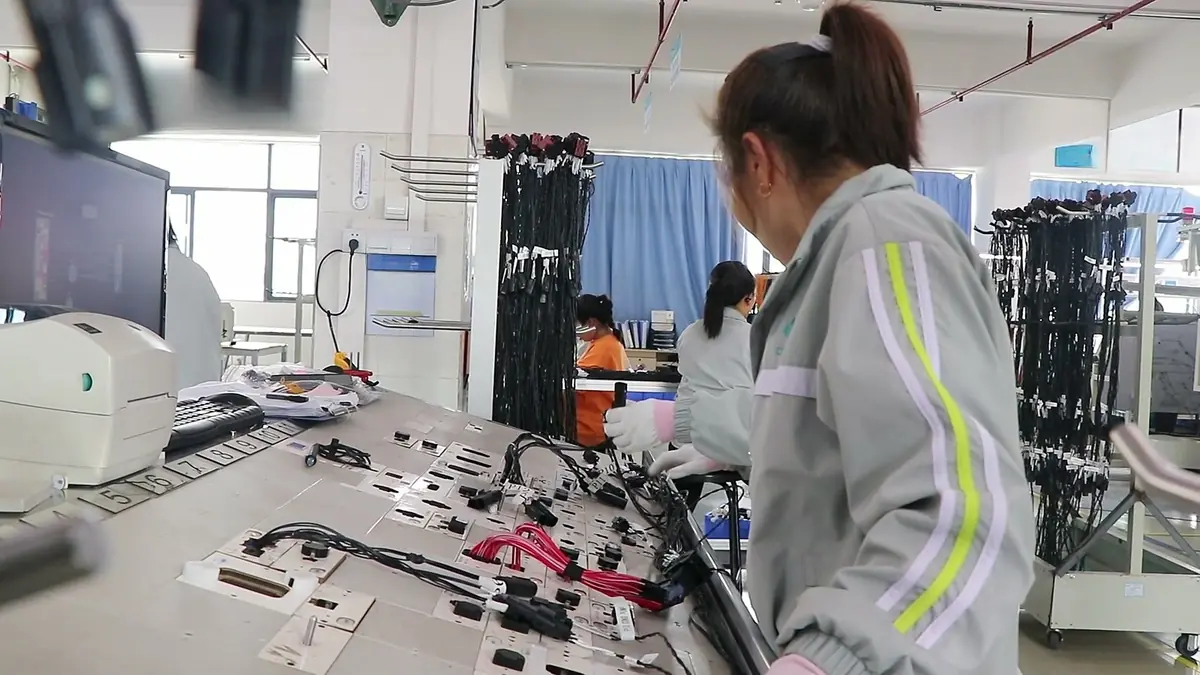
Start by removing the headcount question from your RFQ. Most tractor wire harness work is manual assembly, so the critical variable is not how many people work in the building, but how well individual operators execute crimps, terminal insertions, and hand-soldered joints. A manufacturer with fewer, stable, well-trained operators will often outperform a larger facility with high turnover and inconsistent workmanship.
Ask the supplier these questions instead: How are operators trained and verified before they touch customer harnesses? How long do they stay in hand-soldering roles? Are workmanship samples available for review before the first production batch? For Deutsch DT connectors, manual terminal insertion and silicone seal placement directly affect pin push-out resistance and moisture sealing. Weather Pack connectors require the same discipline — a slightly misaligned cable seal or terminal latch will pass visual inspection but fail later under vibration or pressure washing.
Suppliers that maintain dedicated hand-soldering stations with calibrated soldering irons, documented operator sign-offs, and retained workmanship samples demonstrate the kind of process control that raw headcount cannot replace. If you are evaluating custom cable assembly or wire harness programsas discussed in our How Specialized Cable Assemblies Solve OEM Design Challenges, this operator-level evidence matters more than factory floor size.
We regularly see inquiries where the buyer’s first question is headcount. Our answer is always the same: wire harness quality is determined by how well each crimp is executed and how thoroughly drawings are reviewed — neither of which is correlated with factory size.
Step 2: Demand Milestone-Based Lead Time Transparency
The question “Can you deliver in two weeks?” often rewards the most optimistic salesperson rather than the most reliable production partner. A realistic tractor harness schedule starts with drawing confirmation, which typically takes three to four days if the engineering team actually checks pin-outs, wire gauge, and connector availability. Standard connector, terminal, and wire material procurement then takes about two weeks. If the drawing specifies original-brand components — common for SAE J1939[1] and ISO 11783[2] applications where OEM connector approvals matter — material lead time often extends to three or four weeks.
A two-week promise usually signals one of three shortcuts: the drawing was not fully confirmed, non-original substitute materials were proposed, or crimp and assembly quality control was rushed. The better question is: “What is your milestone lead time after drawing approval for standard versus OEM-branded components, and which milestones trigger status updates?” That answer reveals whether the supplier plans material availability against a real production sequence or simply quotes an aggressive date to win the order.
Step 3: Test Engineering Drawing Review Before You Commit
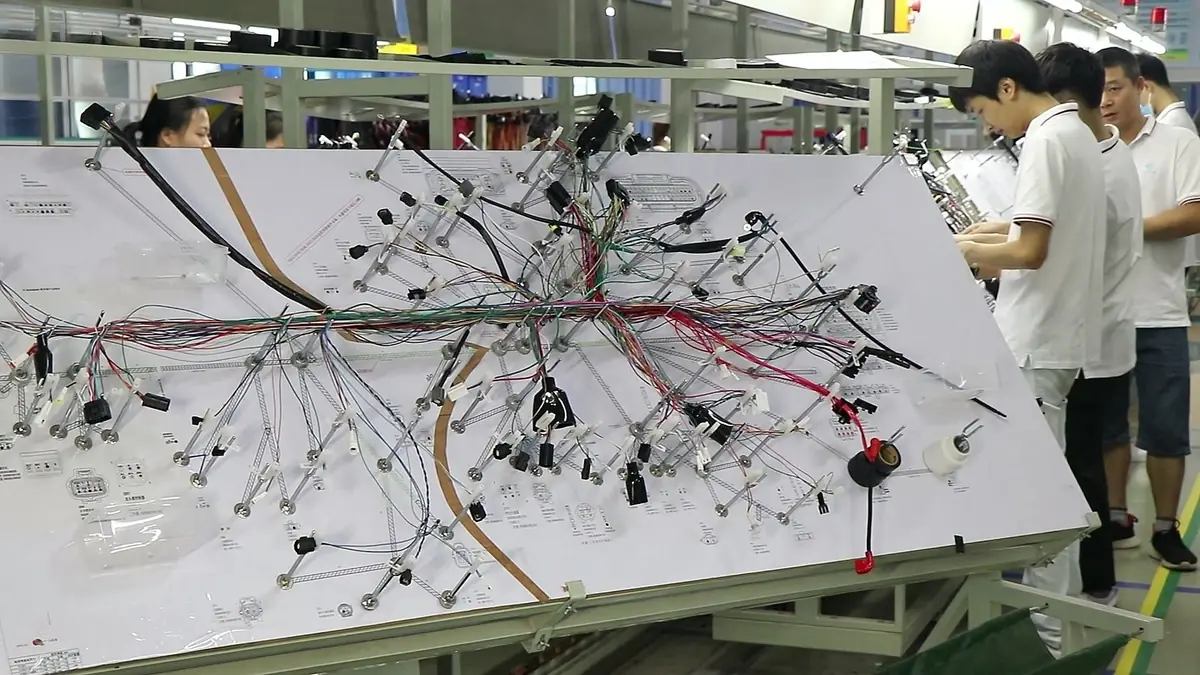
Before you place an OEM order, ask whether the supplier will review your drawing and flag pin-out conflicts, wire gauge versus current-load mismatches, connector seal availability, and routing constraints before quoting or production lock. Many suppliers will quote a drawing without challenging anything — and then discover the problem on the production floor, where it costs you time and rework.
Request a redlined example from a similar tractor or off-highway harness. A competent engineering review should point out issues such as XLPE insulation temperature limits in engine bay routing, AWG sizing changes for high-vibration sections, and IP67 sealing requirementsas covered in our Rugged Robotics Cable Assemblies: Key Design Considerations when Deutsch DT or Weather Pack connectors are specified. For custom cable assembly projects, this pre-production review is often the clearest differentiator between a supplier that quotes and a supplier that prevents failures.
Step 4: Require Crimp Process Documentation, Not Just Final QC
Crimp failure remains one of the most common long-term failure points in tractor harnesses. A final continuity pass does not catch a near-miss crimp that will open up later under vibration, thermal cycling, or moisture ingress. The supplier should be able to show crimp height, pull force, and cross-section verification records at setup and during production, plus documentation of how often crimp parameter changes are logged.
Insist on process documentation for crimp die maintenance, terminal batch checks, and heat-shrink tubing seal or adhesive cure conditions where applicable. Heat-shrink tubing used for sealing or strain relief must be specified and controlled by manufacturer, shrink ratio, and adhesive type — not simply applied by eye. For export orders, this documentation also feeds the quality inspection and export packaging trail that buyers need downstream.
Step 5: Verify Batch Traceability Before You Shortlist
Ask how raw material batches — wire, terminals, heat-shrink tubing — are traced to finished assembly lots, and what documentation ships with each batch. For SAE J1939 and ISO 11783 applications, batch traceability supports field recall containment and supplier audits. A manufacturer that cannot map a terminal lot to the harnesses built with it creates a serious liability for an OEM or distributor.
The better question is: “If a terminal lot from your supplier fails after shipment, can you identify all harnesses built with it within one business day?” A yes answer should include the lot code format, the recording point in production, and the final inspection record that ties each serialized harness back to its component lots.
Comparison Table: Common Evaluation Questions vs. What They Actually Measure
Use this table to audit your current supplier quotes. The left column lists the questions most buyers ask. The middle column shows what those questions actually reveal. The right column gives the better question to ask if you want to predict real quality and delivery performance.
| Audit Dimension | Common Surface Question | Engineering Audit Question | Hard Pass/Fail Criteria & Target Artifact |
|---|---|---|---|
| Operator Capability | “How many workers are in your plant?” | “What percentage of operators hold IPC/WHMA-A-620 Class 3 certifications, and what is your station sign-off policy?” | Documented operator training logs, IPC-certified trainer on staff, dedicated crimp & hand-soldering sample boards. |
| Crimp Process Control | “Do you do terminal pull tests?” | “What is your SPC frequency for crimp height/width and micrographic cross-section analysis?” | CCH/CCW measured at setup and every reel/shift; pull-test force meeting SAE/USCAR-21 specs; zero voids/cracks under 10x+ magnification cross-section. |
| Pre-Production DFM | “Can you produce to this print?” | “Do you submit redline DFM reports on current carrying vs. gauge derating, pin-out conflicts, and IP67/IP69K sealing routes?” | Formal redline DFM proposal before tooling lock; checks XLPE insulation temperature ratings and terminal fretting corrosion risks under engine vibration. |
| Lead Time Integrity | “Can you ship in 2 weeks?” | “What is your milestone gantt chart across drawing approval, raw wire/housing procurement, and sub-tier OEM terminal delivery?” | Milestone commitment: 3-5 days for drawing review/tool check; 10-15 days for standard raw stock; 3-6 weeks for franchised DEUTSCH/Aptiv parts. |
| Batch Traceability | “Do you provide Certificates of Conformance?” | “If a terminal or wire batch shows insulation cracking in the field, can you trace every affected harness serial number within 24 hours?” | Full 1:1 ERP serialization mapping finished harness barcodes to sub-tier wire lot numbers, copper heats, terminal reels, and production operator ID. |
Compare your current quotes against these five filters. If the answers are vague, request a structured supplier evaluation checklist or schedule a drawing review before committing to samples. Suppliers such as EDOM Electronics support OEM buyers with requirement review, connector matching, sample coordination, production follow-up, inspection, and export-ready packaging for custom cable assemblies and wire harnesses.
Frequently Asked Questions
Is factory headcount a good indicator of tractor wiring harness quality?
No. Tractor harness assembly is largely manual work, so quality depends on operator training, hand-soldering skill, crimp verification, and drawing review discipline. A smaller facility with stable operators and documented process controls can produce more reliable harnesses than a larger one with high turnover and no workmanship records.
Can a supplier really deliver tractor harness prototypes in two weeks?
Only if the drawing is already fully confirmed and all materials are in stock. In most cases, drawing confirmation takes three to four days, standard connector and terminal procurement takes about two weeks, and OEM-branded components often take three to four weeks. A two-week promise without those caveats usually means a shortcut was taken.
What documentation should I request for crimp quality control?
Request crimp height, pull force, and cross-section verification logs at setup and during production. Also ask for crimp die maintenance records, terminal batch check sheets, and heat-shrink curing or adhesive cure documentation when heat-shrink tubing is used for sealing.
Why do SAE J1939 and ISO 11783 applications require stricter material traceability?
Because these off-highway data and control networks often support field recall containment and OEM audits. If a wire or terminal lot fails after shipment, the supplier must be able to trace which finished harnesses used that lot — ideally within one business day — to limit liability and corrective action scope.
Should I ask for a redlined drawing review before placing a sample order?
Yes. A supplier that returns a drawing with pin-out conflicts, wire gauge concerns, or connector seal availability questions has performed real engineering review. A supplier that simply quotes without any comments may not be looking at the drawing closely enough to prevent production problems.
Key Takeaways
- Replace headcount with operator skill verification at hand-soldering and crimp stations. Headcount tells you nothing about workmanship consistency on tractor harnesses.
- Demand milestone-based lead time transparency: drawing confirmation, standard component procurement, and OEM-branded component procurement are separate milestones with different realistic durations.
- Require documented crimp process controls — crimp height, pull force, cross-section, and die maintenance — not just a final continuity pass.
- Ask for redlined drawing reviews and batch traceability mapping before you shortlist any tractor wire harness manufacturer.
- Use the comparison table to audit your current quotes and replace misleading questions with process-level capability checks.
Once your shortlist narrows, review deeper production capabilities in the wire harness manufacturing process. A supplier that demonstrates these five filters during sourcing is far more likely to hold the same standard through production, inspection, and export shipment.
Need Fast-Turn DFM Review on Your Tractor Harness Drawing?
Send us your harness 2D pinout schematic or connector BOM. EDOM’s engineering team provides a comprehensive DFM audit, terminal crimp cross-reference, and rapid 3–5 day prototype scheduling with full IPC/WHMA-A-620 Class 3 test reports.